


iTunes Error 9006: 8 Ways to Fix It on iPhone
iTunes Error 9006 may appear when you try to update, restore, or download firmware for an iPhone through iTunes. When it occurs, the update or restore process may suddenly stop, preventing iTunes from completing the task. Fortunately, this error is often related to network connections, security software, outdated iTunes versions, or Apple server communication. In this guide, we'll explain what causes iTunes Error 9006 and walk you through 8 practical ways to fix it.

- Why Does iTunes Error 9006 Occur?
-
How to Fix iTunes Error 9006: 8 Methods
- Method 1. Update iTunes, Apple Devices, and Your Computer
- Method 2. Check Your Internet Connection
- Method 3. Restart Your iPhone, iTunes, and Computer
- Method 4. Check Antivirus, Firewall, VPN, and Security Software
- Method 5. Check the USB Cable and Port
- Method 6. Try Another Network or Computer
- Method 7. Repair iTunes Error 9006 with TunesKit iTunes Repair HOT
- Method 8. Repair the iOS System Without Data Loss
- Verdict
Why Does iTunes Error 9006 Occur?
iTunes Error 9006 usually occurs when iTunes has trouble downloading the software required to update or restore an iPhone or iPad, or when your computer cannot communicate properly with Apple's software update servers. Common causes include the below:
- 01 Unstable or interrupted Internet connection. A slow or unreliable network can interrupt the firmware download or update process.
- 02 Unable to connect to Apple servers. Temporary server communication problems may prevent iTunes from downloading the required software.
- 03 Firewall or security software interference. Antivirus software, firewalls, VPNs, or other security tools may block iTunes from accessing Apple's update servers.
- 04 Outdated iTunes or Apple software. An older version of iTunes may cause compatibility or update problems.
- 05 Incomplete or corrupted firmware download. A failed IPSW download can stop the restore or update process and trigger Error 9006.
- 06 Computer or system connection issues. Temporary software glitches or network settings on your Mac or Windows PC may also interfere with the update or restore.

 Further Reading: 7 Ways to Fix iTunes Error 0x80090302
How to Fix iTunes Error 9006: 8 Methods
If iTunes Error 9006 interrupts an iPhone or iPad update or restore, start with the basic connection and software checks below before moving on to advanced repair. For Windows users, Apple now provides the Apple Devices app for updating and restoring iPhone and iPad. On newer versions of macOS, these tasks are handled through Finder, while iTunes remains relevant on older supported systems.
Method 1. Update iTunes, Apple Devices, and Your Computer
Outdated Apple software or operating system components can interfere with the update or restore process. Start by making sure everything is up to date.
- Step 1. On Windows, update the Apple Devices app through the Microsoft Store. If you still use iTunes, install the latest available version.
- Step 2. On a Mac, go to System Settings > General > Software Update and install available macOS updates. Current macOS versions use Finder instead of iTunes for managing an iPhone or iPad.
- Step 3. Restart the computer after updating, reconnect your device, and try the update or restore again.

Apple also recommends updating the Mac or PC and using the latest Apple Devices app or iTunes when troubleshooting update and restore errors.
Method 2. Check Your Internet Connection
iTunes Error 9006 can occur when the computer cannot reliably download software or communicate with Apple's servers. A stable Internet connection is therefore one of the first things to check.
- Step 1. Open a website in your browser to confirm that your Internet connection is working normally.
- Step 2. If you are using Wi-Fi, reconnect to the network or restart the router.
- Step 3. Temporarily disconnect a VPN or proxy if one is enabled, and then retry the update or restore.
- Step 4. If possible, switch to a stable Ethernet connection.

Method 3. Restart Your iPhone, iTunes, and Computer
Temporary processes or connection errors can sometimes interrupt an iOS software download. Restarting the devices involved gives them a fresh connection before you try again.
- Step 1. Quit iTunes, Apple Devices, or Finder.
- Step 2. Restart your iPhone or iPad.
- Step 3. Restart your Mac or Windows PC.
- Step 4. Reconnect the device and retry the update or restore.
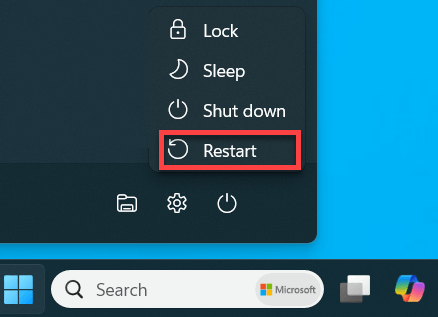
Apple also includes restarting both the computer and the Apple device among its recommended troubleshooting steps for update and restore errors.
Method 4. Check Antivirus, Firewall, VPN, and Security Software
Security software can sometimes interfere with communication between Apple software and online services.
- Step 1. Make sure your antivirus, firewall, and other security software are up to date.
- Step 2. Check whether the security software is blocking iTunes, Apple Devices, or related Apple services.
- Step 3. If necessary, temporarily adjust the security settings while connected to a trusted network.
- Step 4. Retry the update or restore, and restore your normal security settings afterward.
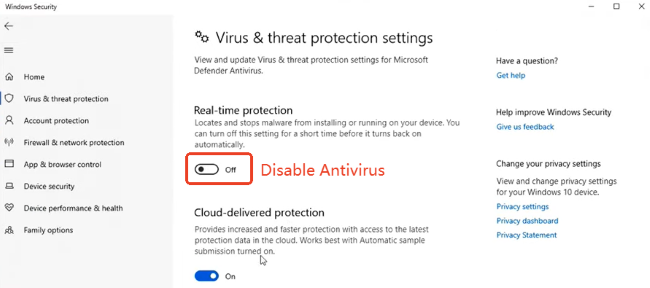
Apple notes that security software may need to be updated, changed, or removed when it interferes with iTunes or the Apple Devices app.
Method 5. Check the USB Cable and Port
Although Error 9006 is often associated with downloading or communication, a poor physical connection can also interrupt an update or restore.
- Step 1. Connect your iPhone or iPad directly to a USB or USB-C port on the computer instead of using a hub or keyboard.
- Step 2. Make sure the cable is in good condition.
- Step 3. Try another USB port if the error appears again.
- Step 4. If available, test with another compatible cable.

Apple specifically recommends connecting the device directly to the computer and trying another cable or USB port when update or restore errors occur.
Method 6. Try Another Network or Computer
If Error 9006 continues after the basic checks, test the update or restore in a different environment. This can help determine whether the problem comes from the current computer or network.
- Step 1. Connect the computer to another reliable Internet connection.
- Step 2. Retry the update or restore.
- Step 3. If the error remains, connect the iPhone or iPad to another updated Mac or Windows PC.
- Step 4. Try the update or restore again.

Apple also recommends using another computer on a different network when an update or restore error persists.
Method 7. Repair iTunes Error 9006 with TunesKit iTunes Repair
If the basic fixes do not work, the problem may involve damaged or abnormal iTunes components. Instead of reinstalling iTunes components manually, TunesKit iOS System Recovery includes a dedicated iTunes Repair feature on Windows and Repair Sync Errors on Mac.
The feature is designed specifically for errors that occur during iTunes updates, restores, backups, syncing, and device connections, and TunesKit currently lists support for more than 200 iTunes errors. The iTunes repair function is available for free. Also, it can fix other iOS issues such as iPhone software update failed, iPhone black screen of death, and iPhone stuck on hello screen, etc.
Fix iTunes Error 9006 with TunesKit
TunesKit iOS System Recovery offers a free iTunes Repair feature to quickly detect and fix iTunes Error 9006 and 200+ other iTunes issues.
 600,000+ Downloads
Follow steps here to fix iPhone error 9006 with TunesKit iOS System Recovery.
Step 1. Connect iPhone to PC
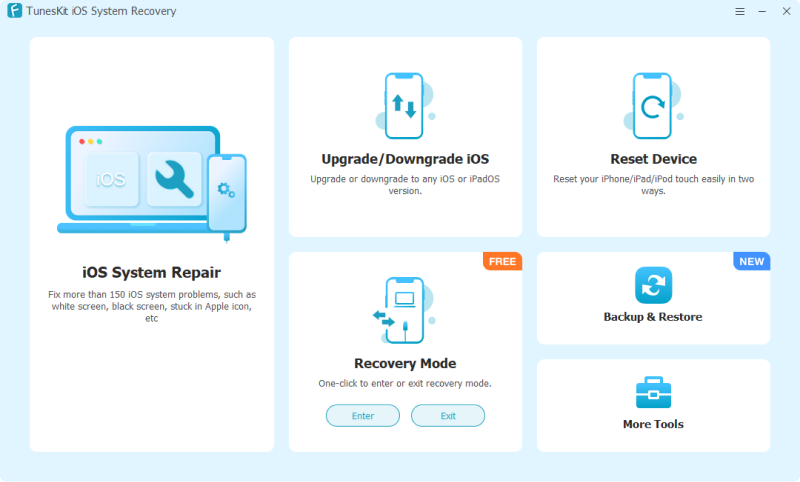
Download and launch TunesKit iOS System Recovery. Select More Tools on the main screen. On Windows, choose iTunes Repair. On Mac, select Repair Sync Errors.
Step 2. Detect the iTunes problem
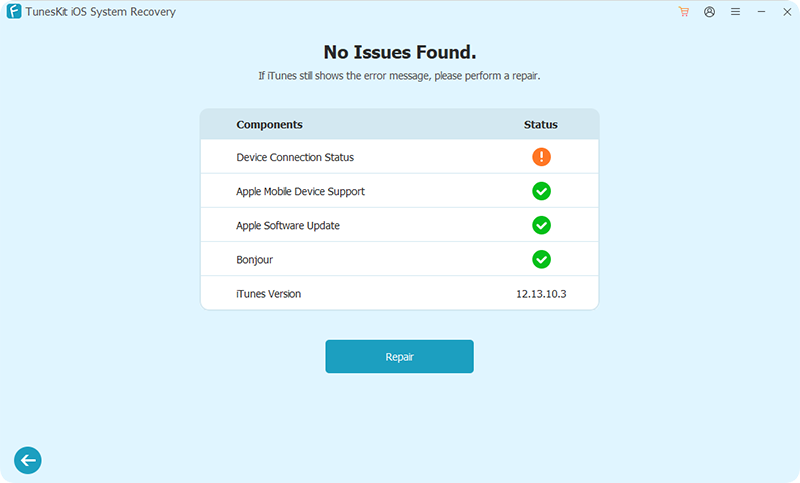
TunesKit will check the related iTunes components automatically. Once an issue is detected, click Repair to continue.
Step 3. Apply the repair
Wait for the repair process to finish. Choose Restart on Windows or Done on Mac when prompted, then open iTunes again and retry the update or restore.

Method 8. Repair the iOS System Without Data Loss
If iTunes itself is working normally but the iPhone still cannot complete the update or restore, the problem may involve the iOS system instead. In this situation, you can switch to the iOS System Repair feature in TunesKit iOS System Recovery.
Its Standard Repair mode is designed to repair common iOS system problems while preserving existing user data. TunesKit also supports current iOS versions, including iOS 27.
Here's how to fix iOS system without data loss using TunesKit iOS System Recovery.
- Step 1. Launch TunesKit iOS System Recovery and connect the device to your computer. Choose iOS System Repair and click Start.
- Step 2. Select Standard Repair. Confirm that the detected device model and firmware information are correct, then click Download. TunesKit will download and verify the appropriate firmware package.
- Step 3. When the firmware is ready, click Start Standard Repair to begin. Keep the iPhone or iPad connected until the process finishes. After the repair, reconnect the device to iTunes, Finder, or Apple Devices and check whether iTunes Error 9006 has disappeared.

Verdict
iTunes Error 9006 can interrupt an iPhone or iPad update or restore, but in most cases, it can be resolved by checking your network, updating Apple software, or troubleshooting the connection. If these basic fixes don't work, TunesKit iOS System Recovery provides a more direct solution. Its iTunes Repair feature can fix common iTunes errors for free, while Standard Repair helps resolve underlying iOS system issues without erasing your data. Try the methods above in order to get your device updating or restoring normally again.