


iPad Is Disabled and Won't Connect to iTunes? Fix It [2026]
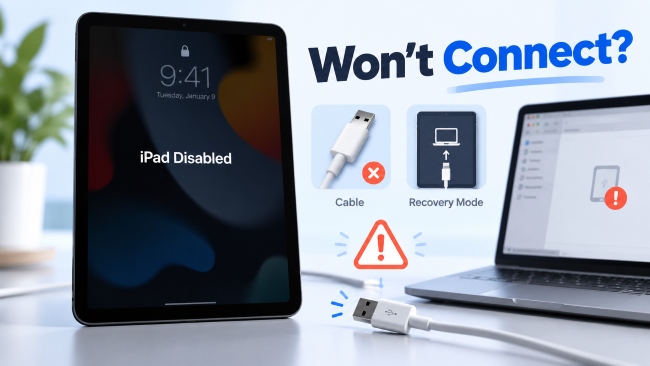
If your iPad is disabled and won't connect to iTunes, the problem may be the cable, USB port, computer software, or an incorrect Recovery Mode setup. Also, "Connect to iTunes" is legacy wording: current Macs use Finder, while Windows PCs use Apple Devices for iPad recovery.
This guide shows how to get your disabled iPad detected again and what to do if the computer still cannot recognize it. If you are dealing with a different lockout message, see our complete guide on how to unlock a disabled iPad.
- Quick Answer
- Why Won't My Disabled iPad Connect to iTunes or the Computer?
- Fix 1. Put the Disabled iPad into Recovery Mode Correctly
- Fix 2. Check the Cable, USB Port, and Computer
- Fix 3. Update or Restart the Computer and Apple Software
- What If the Computer Still Can't Detect the Disabled iPad?
- When Should You Seek Hardware Service?
- FAQs About a Disabled iPad Not Connecting to a Computer
- Conclusion
Quick Answer
Try the solution that matches your problem:
| Problem | What to Try |
|---|---|
| iPad does not appear on the computer | Check the cable, charging port, and USB connection |
| iPad connects but cannot be restored | Enter Recovery Mode correctly |
| Still not detected in Recovery Mode | Update Apple software and try another port or computer |
| Computer connection is unavailable | Try Find My or an eligible on-screen reset |
| Apple recovery software is the problem | Try another supported desktop workflow |
 Important:
Fixing the connection itself does not erase your iPad. However, choosing Restore, using Find My erase, or using most screen-lock removal methods will erase the current device data.
Why Won't My Disabled iPad Connect to iTunes or the Computer?
A disabled iPad may fail to appear in iTunes, Finder, or Apple Devices for several reasons:
- The iPad is not correctly in Recovery Mode.
- The USB cable only supports charging or is damaged.
- The iPad charging port or computer USB port has a connection problem.
- Finder, Apple Devices, macOS, or Windows is outdated.
- A software conflict is preventing the computer from recognizing the iPad.
- A Mac has not allowed the connected USB accessory.
- The iPad or its charging port may have a hardware problem.
Fix 1. Put the Disabled iPad into Recovery Mode Correctly
For a forgotten-passcode recovery, simply connecting a disabled iPad to the computer may not be enough. Put it into Recovery Mode, then restore it with Finder or Apple Devices. This does not require the iPad to have been previously synced with or trusted by that computer.
For an iPad Without a Home Button
- Step 1. Turn off the iPad.
- Step 2. Connect it to your Mac or Windows PC with a USB cable.
- Step 3. Quickly press and release the volume button closest to the Top button.
- Step 4. Quickly press and release the other volume button.
- Step 5. Press and hold the Top button. Keep holding it even when the Apple logo appears.
- Step 6. Release the button only when you see the Recovery Mode screen showing a computer and cable.

For an iPad With a Home Button
- Step 1. Turn off the iPad and connect it to the computer.
- Step 2. Press and hold the Home button and Top/Side button together.
- Step 3. Keep holding them through the Apple logo until the Recovery Mode screen appears.

Restore the iPad
On a current Mac, open Finder. On Windows, open Apple Devices.
- Step 1. Select the iPad when it appears.
- Step 2. When you see Restore or Update, choose Restore.
- Step 3. Wait while the computer downloads iPadOS and completes the restore.
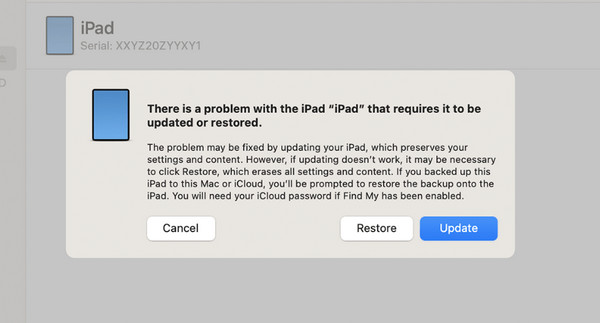
If your main question is what the legacy message means rather than why the computer cannot detect the device, see our guide to iPad Is Disabled, Connect to iTunes.
Fix 2. Check the Cable, USB Port, and Computer
If the disabled iPad still does not appear in Apple software, check whether the problem comes from the physical connection or the computer itself.
- Step 1. Use a USB cable that supports both charging and data transfer.
- Step 2. Check the iPad charging port for debris or visible damage.
- Step 3. Connect the iPad directly to another USB port on the computer. Avoid USB hubs or docks if possible.
- Step 4. Try another compatible USB cable.
- Step 5. If the iPad is still not detected, connect it to another Mac or Windows PC.
Trying another cable, USB port, or computer can help determine whether the problem comes from the iPad, the cable, the port, or the original computer.

Fix 3. Update or Restart the Computer and Apple Software
An outdated system or Apple device-management app can also prevent the iPad from appearing.
On Mac
- Step 1. Update macOS to the latest version available for your Mac.
- Step 2. Restart the Mac and reopen Finder.
- Step 3. Reconnect the iPad and enter Recovery Mode again.

On Mac laptops with Apple silicon, you may see an Allow accessory to connect? message when connecting a new USB accessory. Choose Allow. If necessary, this behavior can be checked under System Settings > Privacy & Security > Accessories.
On Windows
- Step 1. Make sure Windows is up to date.
- Step 2. Install or update the Apple Devices app.
- Step 3. Restart the computer and reopen Apple Devices.
- Step 4. Reconnect the iPad in Recovery Mode.

Apple currently uses Apple Devices for this recovery workflow on Windows. Older supported computer setups may still use iTunes.
What If the Computer Still Can't Detect the Disabled iPad?
If Recovery Mode, another cable, updated software, and a different computer still do not solve the problem, you may need an alternative recovery path.
Option 1. Erase the iPad with Find My
If Find My was enabled before the iPad became disabled, you can erase it remotely without connecting it to your computer. If the iPad is offline, the erase request remains pending and starts when the device reconnects.
- Step 1. On another device, go to iCloud.com/find or open Find My.
- Step 2. Sign in with the Apple Account linked to the disabled iPad.
- Step 3. Select the iPad.
- Step 4. Choose Erase and follow the onscreen instructions.
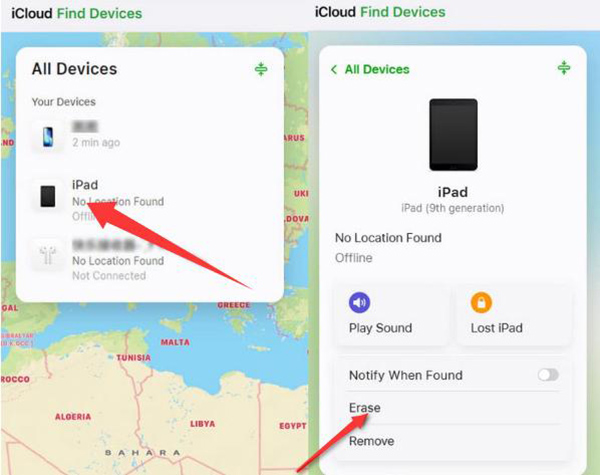
Find My remote erase also leaves Activation Lock enabled, so the linked Apple Account password is required to reactivate the device.
 For detailed instructions, see how to unlock a disabled iPad using Find My.
Option 2. Use TunesKit iPhone Unlocker
If Apple's desktop recovery software is causing the problem but the computer can still communicate with the iPad, TunesKit iPhone Unlocker provides another guided workflow for removing supported iPad screen locks without iTunes.
- Step 1. Launch TunesKit iPhone Unlocker and connect the disabled iPad. Then choose Unlock iOS Screen.
- Step 2. Follow the onscreen instructions. Put your iPad into Recovery Mode or DFU Mode if prompted.
- Step 3. Download the matching firmware package, and click Unlock to remove the screen passcode.

Using Unlock iOS Screen also does not automatically remove Activation Lock.
TunesKit is not a solution for a damaged USB port or another hardware failure. If the computer cannot communicate with the iPad at all, troubleshoot the physical connection first.
Option 3. Use Apple's On-Screen Reset
If the iPad runs iPadOS 15.2 or later and shows Apple's newer lockout interface, you may be able to reset it directly from the Lock Screen without a computer. The iPad must be connected to Wi-Fi or cellular service, signed in to an Apple Account, and have Find My enabled beforehand.
For iPadOS 17 or later, use Forgot Passcode? > Start iPad Reset
For iPadOS 15.2–16, the Lock Screen can instead show Erase iPad
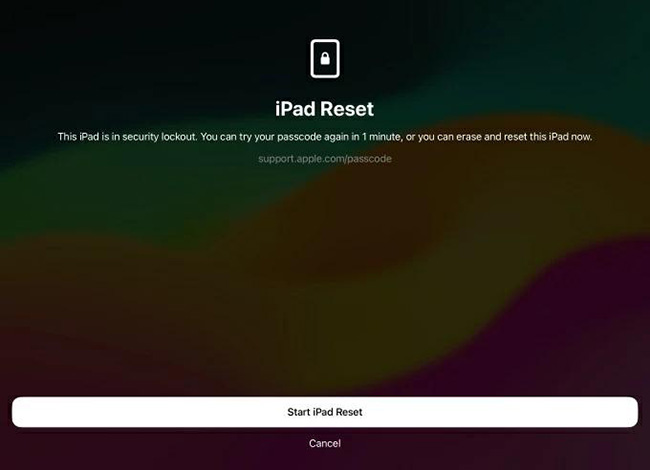
 Note: This option may not appear on a traditional older "iPad is Disabled" screen.
For more alternatives that do not rely on iTunes, see how to unlock a disabled iPad without iTunes.
Note: This option may not appear on a traditional older "iPad is Disabled" screen.
For more alternatives that do not rely on iTunes, see how to unlock a disabled iPad without iTunes.
When Should You Seek Hardware Service?
If the iPad still cannot be detected after trying Recovery Mode, another compatible cable, another USB port, updated software, and a different computer, the problem may involve the iPad's port or other hardware.
At that point, avoid repeating the same restore attempts. Contact Apple Support or an Apple Authorized Service Provider for further diagnosis.
FAQs About a Disabled iPad Not Connecting to a Computer
-
Do I need to trust the computer to restore a disabled iPad?
No. Recovery Mode does not require the computer to have been previously trusted or synced with the iPad.
-
What if my iPad still won't enter Recovery Mode?
Check that you are using the correct button sequence for your model. If it still fails, try another cable or computer. Repeated failure may indicate a hardware problem.
-
Will fixing the connection erase my iPad data?
No. Changing the cable, USB port, or computer does not erase data. Choosing Restore or another erase/reset method does. See
how to unlock a disabled iPad without losing data
for details.
Conclusion
If your iPad is disabled and won't connect to iTunes or the computer, first determine whether the problem is with the connection, Recovery Mode, or the computer itself. If the iPad still cannot be detected, you may need another recovery option.
For other lockout messages and recovery situations, see our complete disabled iPad guide.