- Utilities
- Unlock
- Data Management
- Multimedia
- Solutions
- Support


Planning to upgrade to iOS 27? Before installing the update, take a few minutes to learn about its new features, check whether your iPhone supports iOS 27, and complete the necessary preparations for a smoother upgrade.
Siri AI is the biggest upgrade in iOS 27. It supports more natural conversations, understands personal context, and can complete tasks across apps such as Messages, Mail, Photos, and Music.
Apple Intelligence now works across more system apps. It can summarize content, suggest actions, create reminders, improve searches, and help users complete multi-step tasks.
iOS 27 improves app launch speed, photo loading, AirDrop transfers, and network switching. These changes can make both new and older supported iPhones feel faster and more responsive.
The Photos app adds tools such as Spatial Reframing, Extend, and improved Clean Up. Users can change photo composition, expand image borders, and remove larger unwanted objects.
iOS 27 gives parents more control over websites, apps, schedules, and communication safety. Features such as Ask to Browse and improved Screen Time tools help protect younger users.
 Back Up Your iPhone
To protect your data from unexpected issues, back up your iPhone with iCloud, Finder, or iTunes before installing iOS 27.
 Free Up iPhone Storage
Free up enough storage space before installing iOS 27 to avoid download or installation problems.
 Stable Internet Connection
Use a stable Wi-Fi connection to download iOS 27 smoothly and reduce the risk of update failures.
 Charge Your Device
Ensure your device has sufficient battery life or connect it to a power source while performing the update.
 Devices Supported
 Not Supported
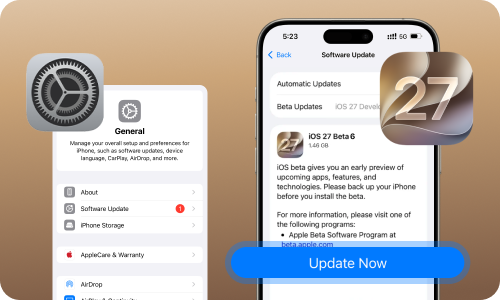
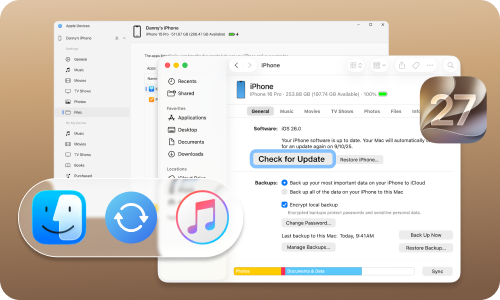
You can update your iPhone in several ways, including through Settings, Finder on Mac, the Apple Devices app or iTunes on Windows, or TunesKit iOS System Recovery when a normal update doesn't work.
This is the most convenient way to update to iOS 27. It requires no computer and lets you download and install the update directly from the Settings app in just a few steps, making it ideal for most users who want a quick and straightforward upgrade.
You can also update your iPhone to iOS 27 from a computer using Finder on Mac, Apple Devices, or iTunes on Windows PCs. This method is useful if you prefer managing the update from a computer or if the update is not working properly through Settings.
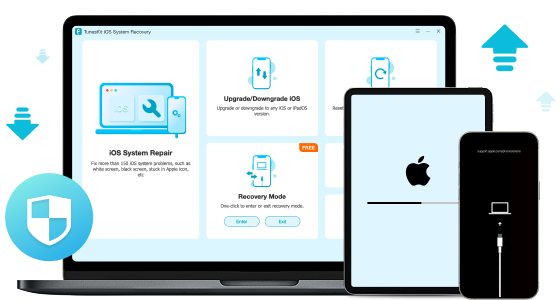
If the normal upgrade process fails, TunesKit iOS System Recovery offers a simple alternative for installing compatible iOS firmware. It's especially helpful when you don't want any data loss or system issues during the update.
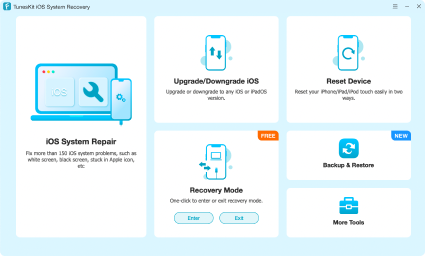
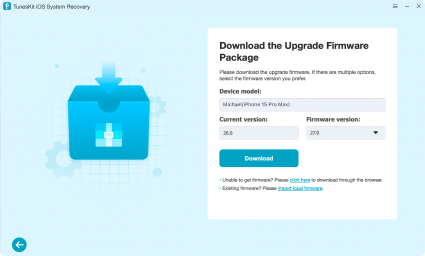
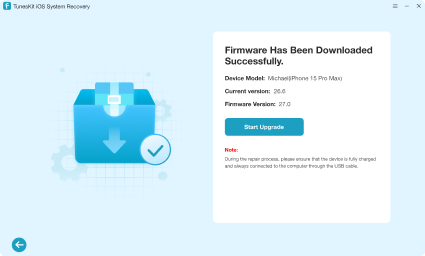

Update to iOS 27 easily in simple clicks, without losing any data.
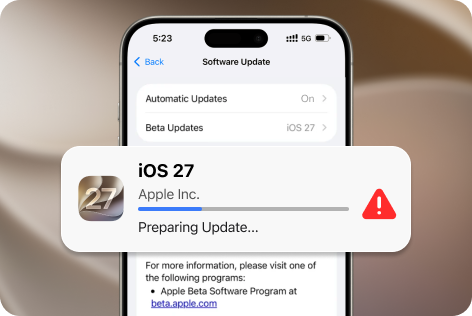
Having trouble downloading, preparing, verifying, or installing an iOS update? These common iOS update problems can prevent the process from completing, but most can be fixed with the right steps. Not sure where your iPhone update is stuck? See our complete guide to fixing an iPhone stuck on Software Update.

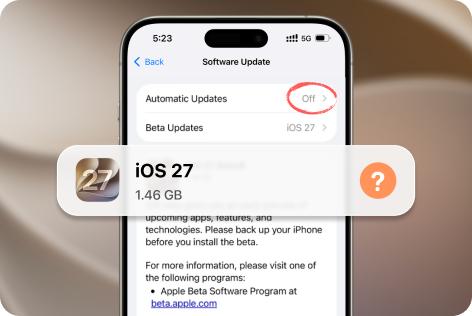
iOS 27 may not appear due to disabled Beta Updates, incorrect beta enrollment, device incompatibility, rollout delays, network problems, or temporary iOS glitches.
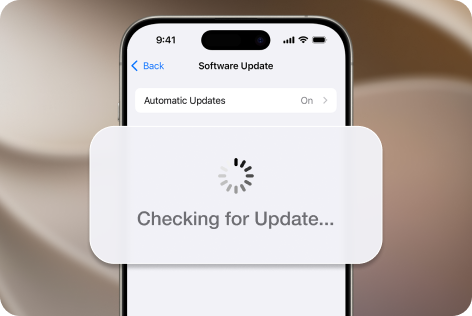
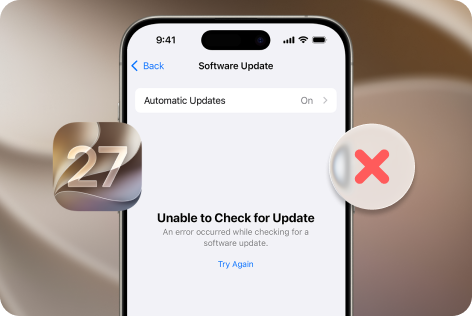
Your iPhone may get stuck on Checking for Update because of insufficient storage, unstable Wi-Fi, device incompatibility, Apple server issues, corrupted update files, or temporary iOS glitches.

This error is usually caused by unstable Wi-Fi, Apple server outages, insufficient storage, device incompatibility, outdated beta profiles, or temporary iOS system glitches.
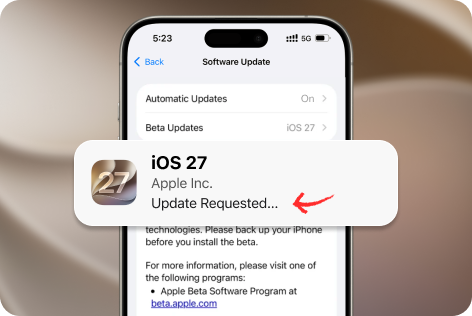
An iPhone may get stuck on Update Requested due to poor Wi-Fi, temporary server delays, insufficient storage, corrupted update files, or temporary iOS glitches before the download begins.
This issue is commonly caused by insufficient storage, corrupted update files, or temporary iOS system glitches. Network or Apple service delays can also affect the update process.
Slow Wi-Fi, insufficient storage, large or corrupted update files, busy Apple servers, and temporary software errors can make an iPhone update take unusually long.
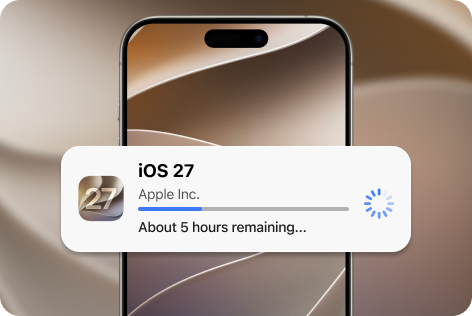
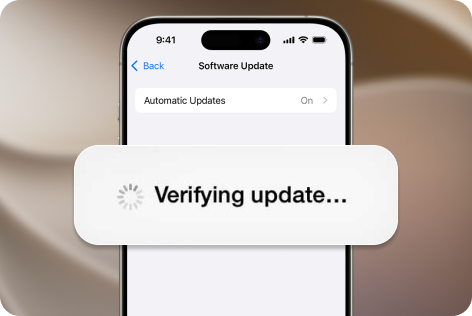
An iPhone may get stuck on Verifying Update due to network problems, an incomplete update file, insufficient storage, or a temporary iOS glitch.

Insufficient storage, network problems, an incomplete update file, insufficient power, or temporary iOS bugs can prevent your iPhone from installing the update successfully.
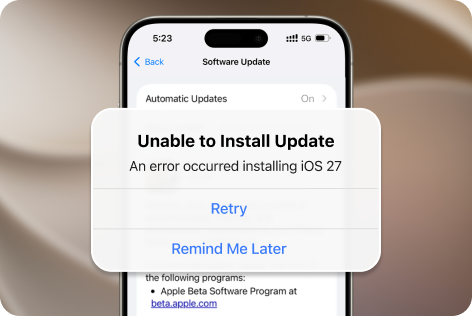
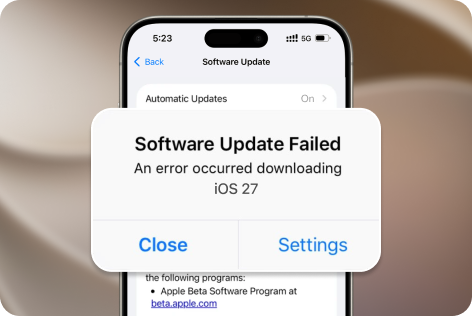
Unstable Wi-Fi, Apple server issues, insufficient storage, interrupted updates, or temporary iOS glitches can cause an iPhone software update to fail.
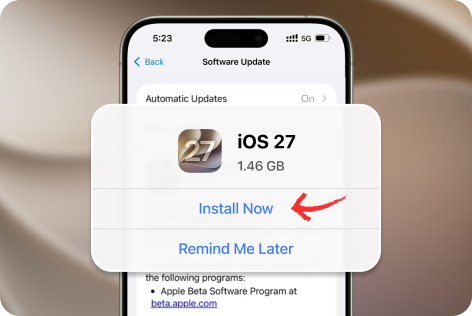
Unstable internet, insufficient storage, low battery, corrupted update files, or temporary software glitches can cause a new iPhone to remain stuck on Install Now.
Low battery, insufficient storage, unstable Wi-Fi, large update files, or software glitches can cause the iPhone update progress bar to stop moving.
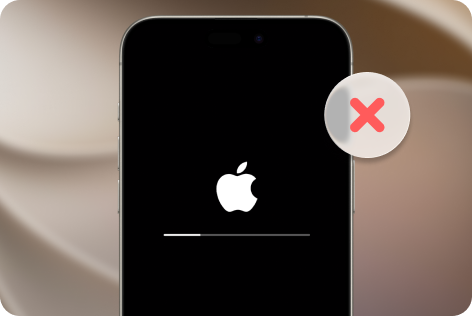
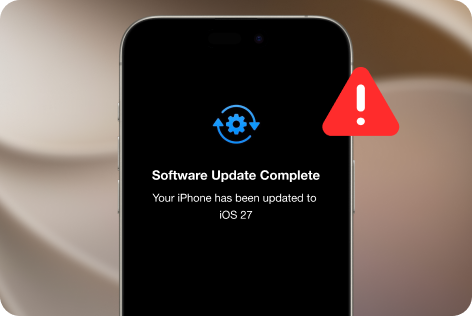
Poor Wi-Fi, insufficient storage, overheating, corrupted data, or incomplete installation can leave your iPhone stuck on the Update Completed screen.

Easily repair common iOS system problems with simple guided steps, a high success rate, and Standard Repair that preserves your data.
Noticing issues after updating iOS? Problems such as battery drain, overheating, lag, stuck errors can appear after an update and often have practical fixes.
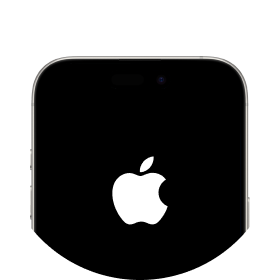
The problem is usually caused by a failed update, a software glitch, or a recovery issue during startup.
Stuck on Apple Logo
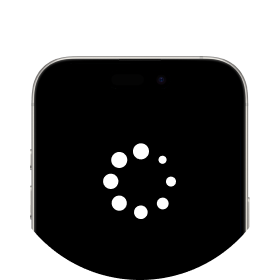
An iPhone boot loop after the iOS 27 update is usually caused by a failed or interrupted update process.
Stuck in Boot Loop
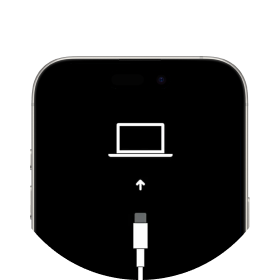
This issue often occurs due to interrupted updates, failed firmware installation, or computer connection problems.
Stuck in Recovery Mode
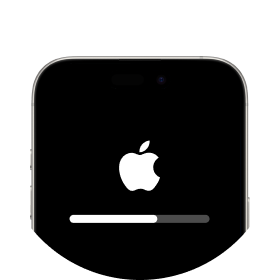
A deeply discharged battery, an incomplete update, or an iOS startup problem can prevent an iPhone from turning on after iOS 27.
iOS 27 Won't Turn On
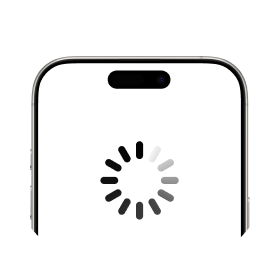
Background system tasks, low storage, and software glitches can make your iPhone slow after updating.
iPhone Running Slow
iOS bugs, incompatible apps, and poor battery health can cause faster battery drain after updating.
Battery Drain Fast
Background indexing, iOS bugs, incompatible apps, and heavy system activity can cause iPhone overheating.
iOS 27 Overheating
This problem can be caused by software glitches, network errors, or incorrect settings.
iPhone No Service
Before downgrading iOS, check signing status, back up your data, and confirm backup compatibility. Then choose TunesKit iOS System Recovery or Apple tools with a signed IPSW file.

The iOS version you want to downgrade to must usually still be signed by Apple. Unsigned versions cannot normally be installed.

Downgrading may erase your iPhone, so back up important data via iCloud or iTunes before you start.

A backup created on a newer iOS version may not be restorable to an iPhone running an older iOS version.
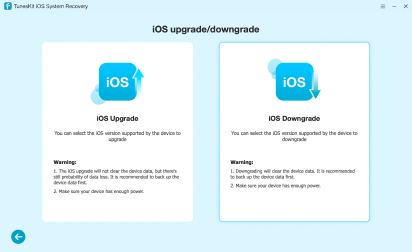
Use TunesKit iOS System Recovery to choose an available firmware version and follow the on-screen instructions to downgrade your iPhone.
Download a signed IPSW file, then use Finder, Apple Devices, or iTunes to manually restore your iPhone to a supported iOS version.
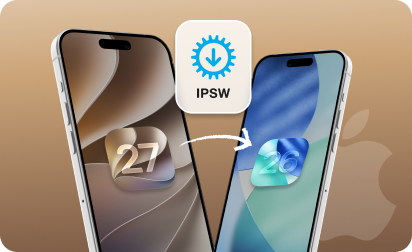
Find quick answers to the most common questions about iOS updates, including whether you should update, data safety, storage requirements, update time, and what to do if an update fails.
Yes, in most cases. Apple recommends keeping iOS up to date for the latest security fixes, improvements, and features. Make sure your iPhone supports the update before installing it.
No. A normal iOS update keeps your data and settings unchanged. However, backing up your iPhone before updating is still recommended in case something unexpected happens.
Your iPhone may not update because it is incompatible with the latest iOS 27, lacks storage, has network problems, cannot reach Apple's update server, or the update fails to complete.
There is no fixed time. It depends mainly on the update size, internet speed, and the amount of data on your iPhone. Large updates usually take longer than minor updates. See our guide on how long an iPhone update normally takes.
The required space varies by update. Your iPhone needs enough free storage to download and prepare the update. If space is low, you can offload unused apps or remove unnecessary content.
TunesKit iOS System Recovery
Repair iOS update issues with simple steps and get your iPhone back to normal again. No data loss.