


10 Easy Solutions to Fix iPhone Software Update Failed (iOS 27/26 Supported)
Does the "Software Update Failed" message pop up when attempting to upgrade your iPhone to the latest iOS 27 Beta or iOS 26? Apple fans often have high hopes of experiencing a slew of new capabilities on their iPhone. However, they often encounter this annoying problem. Don't worry now. The 10 methods outlined here will help you fix the iPhone software update failed issue successfully. Let's dive in!

Why iPhone Software Update Failed?
iPhone software update failed issues happens for a variety of reasons. We've listed the most frequent ones.
- 01 Device Shut Down During the Process – If you power off your smartphone during the updating process, the issue arises. Disruption to the procedure rendered the iPhone software upgrade ineffective.
- 02 Unable to Connect to the Apple Update Server – When trying to update the software on your iPhone, the Apple update server could not establish a connection with it. There is an Apple server problem that many users may experience.
- 03 Less Storage Space – Unfortunately, your device doesn't have enough free space.
- 04 Wrong Network Connection – The network your phone is attempting to connect to may be down, or your phone may not have an active internet connection. This may occur if you're using a cellular data plan and aren't near a Wi-Fi hotspot.

How to Fix iPhone Software Update Failed?
Here are some of the best practices to implement if your iPhone is facing trouble while updating the new iOS software.
Method 1. Check Your Network Connection
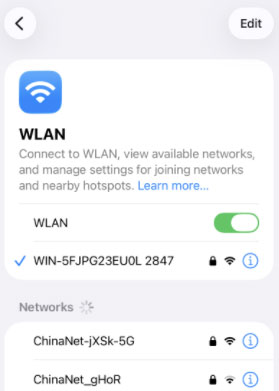
A poor or unstable internet connection is one of the most common reasons why an iPhone update fails. Before trying more advanced solutions, make sure your network is working properly.
- Step 1. Verify that your iPhone is connected to a stable Wi-Fi network. Open Safari and try loading a webpage to confirm that the internet connection is working.
- Step 2. Avoid downloading iOS updates over cellular data or public Wi-Fi networks, as they may be slow or unreliable.
- Step 3. If your Wi-Fi connection is unstable, restart your router or switch to a different network, then try downloading the update again.
Method 2. Check Apple Update Servers
Since iOS 27 Beta launch, the new iOS has been eagerly awaited. Because of this, once an update is released, millions of people worldwide immediately begin downloading it. Due to the high volume of updates, Apple's servers may get overloaded, so iOS 26 software update failed on your iPhone.
You can go to the Apple System Status page to check whether it's OK. If all icons are green, it means everything is fine. If there is a yellow icon, it may be wise to wait until the problem has been resolved before trying again.

Method 3. Close the Settings App and Try Again
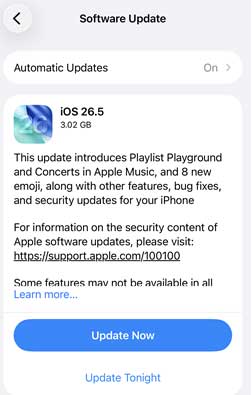
Temporary glitches in the Settings app or iOS update services can sometimes cause the "Software Update Failed" error. Restarting the Settings app may help refresh the update process.
- Step 1. When the error message appears, tap Close to dismiss it.
- Step 2. Force close the Settings app from the App Switcher and wait a few seconds.
- Step 3. Reopen Settings > General > Software Update, then tap Update Now again.
Method 4. Restart Your iPhone
If the software update failed issue is caused by software bugs, you can try to restart or reboot your iOS device. By doing this, some simple glitches may be solved immediately. Here is the quick steps to restart your iPhone.
- Step 1. Press and hold the Side button and either the Volume Up or Down button until you see the power-off slider.
- Step 2. Then drag the slider, and wait 30 seconds for your iPhone to turn off.
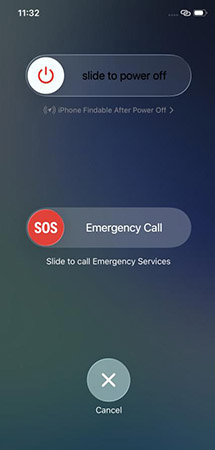
- Step 3. Finally, press and hold the Side button until the Apple logo appears to turn it back on.
Method 5. Reset Network Settings
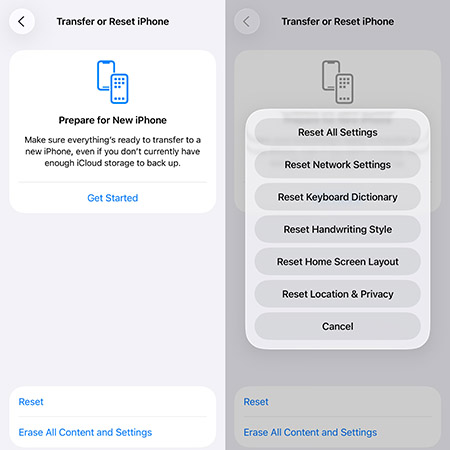
It's highly recommended to use a secure Wi-Fi network when you want to update your device to iOS 27 Beta. Thus, if your device can't connect to a Wi-Fi network or Wi-Fi is not working, the software update failed problem may arise. To solve this issue, you can simply reset your network settings by following the steps below.
- Step 1. Open the Settings app on your iPhone.
- Step 2. Go to General > Transfer or Reset iPhone > Reset > Reset Network Settings. Follow the instructions to confirm the action.
Method 6. Fix via TunesKit iOS System Recovery - Advanced Solution
When fixing your iOS system such as iOS 27/26 software update failed, go no further than TunesKit iOS System Recovery. It allows you to swiftly and easily resolve over 150+ common iOS problem on your own, without the need to contact an Apple technical support representative.
This iOS repair tool will get you out of whatever jam you find yourself in, whether software update failed, stuck in recovery mode, DFU mode, white Apple logo screen, or if your screen goes dark, frozen, or disabled. Not to mention, the recovery process is 100% secure, which means you don't have to worry about any data loss.
Key Features of TunesKit iOS System Recovery
Fix the 150+ iOS device issues without data loss, one-click to enter and exit recovery mode for free, factory reset iOS device without a passcode.
 600,000+ Downloads
To inspire you, here is a step-by-step tutorial on how to fix iPhone software update failed problem using the amazing TunesKit iOS System Recovery.
Step 1 First, download and launch TunesKit iOS System Recovery on your computer. Now, connect your iOS device iPhone to the computer through the USB cord. Once TunesKit detects your device, choose the iOS System Repair feature and click the Start button.

Step 2 There will be two options, "Standard Repair(no data loss)" and "Deep Repair (erase all data)". Standard Repair is highly recommended without data loss.

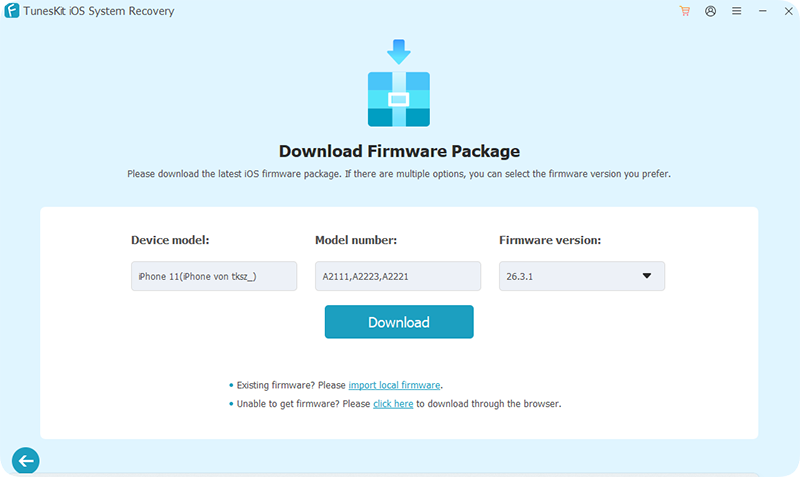
Step 3 Next, confirm your device information manually and search for a compatible firmware package of your choice. Hit the Download button to download the firmware package.
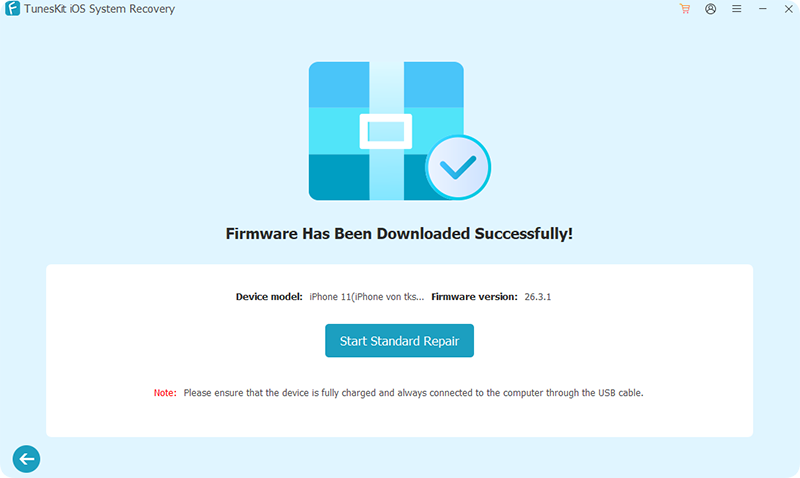
Step 4 When the download completes, click on the "Start Standard Repair" button to begin fixing the iOS system. Make sure not to disconnect your device mid-process.
Method 7. Free Up iPhone Storage
Your iOS 27 Beta download may fail if your device runs short on storage space. This is because it can't save the most recent iOS data. Deleting old files is a good way to make room for new ones.
Go to Settings > General > iPhone Storage to check and free up your iPhone storage.

Method 8. Update iOS via iTunes
The next step includes utilizing iTunes if you are still stuck with the iOS software update failed issue. It might be a quick and simple solution. If you're having trouble in updating your iOS, try these steps to fix the issue.
- Step 1. Download and install the most recent version of iTunes on your computer.
- Step 2. Then launch the iTunes program and connect your Apple device to your computer. iTunes will automatically detect your device.
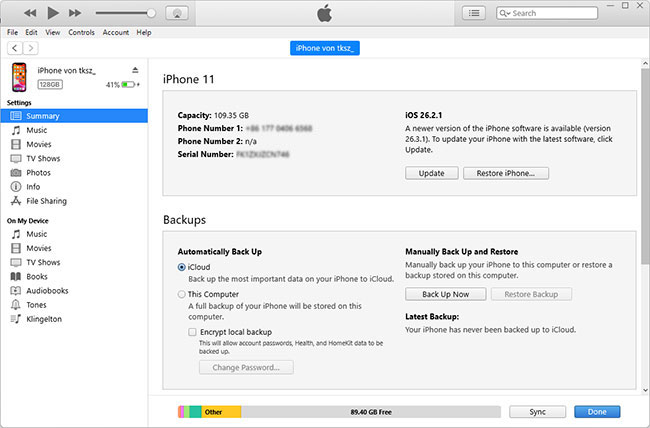
- Step 3. Now, select "Summary" from the available choices, and press "Update" option to see if any newer versions are available. If an option to download and update appears on your screen, choose it.
Method 9. Update via IPSW File
Another way to resolve the iPhone software update failed problem is to update your iOS via IPSW file. IPSW files can be used with iTunes on Windows or Finder on macOS 10.12 or later. Just make sure that you have the most recent version of iTunes/Finder installed on your computer before attempting to upgrade an iOS device using IPSW firmware files.
- Step 1. Connect your Apple gadget to your PC.
- Step 2. Click on the device and open it in iTunes or Finder.
- Step 3. Click "Update" while holding the "Option" key on a Mac.
- Step 4. Click "Update" while holding the "SHIFT" key on a Windows computer.

 Note
Note
You'll need to choose the IPSW file you downloaded earlier. Proceed with the standard iOS upgrade.
Method 10. Delete Update File and Download iOS 27 Beta Again
Are you still experiencing iPhone software update failed problem? Then you can try the last method which is to remove the iOS update file and then download the update again. Here are the exact steps.
- Step 1. Open the Settings app on your iPhone. Then tap General > iPhone Storage.
- Step 2. Scroll down to find and tap the iOS update file.
- Step 3. Tap Delete Update button. Follow the on-screen prompt to remove this iOS update file.
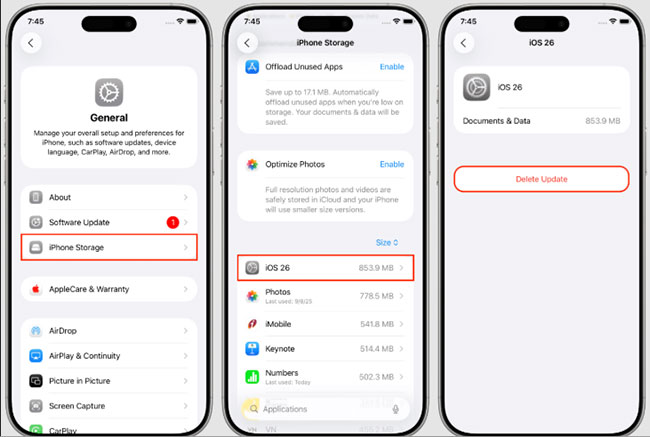
- Step 4. Move to Settings > General > Software Update to download and install the latest iOS update again.
FAQs About iPhone Software Update Failed
-
Will I lose my data if the iPhone update fails?
In most cases, no. However, it's strongly recommended to back up your data before updating to avoid potential data loss.
-
What to do if the iPhone is stuck on verifying update?
Force restart your iPhone and try the update again. If that doesn't work, use a repair tool like TunesKit iOS System Recovery to fix the issue without data loss.
-
How much free space is needed to install an iOS update?
Generally, at least 3–5 GB of free storage is recommended to install an iOS update smoothly. Larger updates like major version jumps (e.g., iOS 17 to iOS 26) may need more.
Conclusion
Getting to the bottom of why your iPhone software update failed might be time-consuming. But totally worth it. Next time, when you face this issue, follow the strategies outlined in this article to fix the problem independently. TunesKit iOS System Recovery is worth a go if nothing else helps. The problem may be resolved with only a few clicks of the mouse.


