


Top 9 Solutions to Fix Safari Running Slow on iPhone
"Why is Safari running so slow on my iPhone? I've tried close the Safari app and restart it, as well as restarted the device but it doesn't work. Is there any solution to speed it up?"
Safari is the default browser on iPhone and is widely used for browsing the web, searching for information, and accessing online services. However, Safari may become slower over time, causing delayed page loading, freezing, or unexpected crashes. If you are facing the issue of Safari running slow on iPhone, don't worry. This guide covers 9 effective solutions to fix Safari running slow on iPhone.

- Why Is Safari Running Slow on My iPhone?
-
How to Fix Safari Running Slow on iPhone?
- Method 1: Close Unneeded Tabs
- Method 2: Clear History and Website Data
- Method 3: Restart Your iPhone Regularly
- Method 4: Check iPhone Storage Space
- Method 5: Disable Background App Refresh
- Method 6: Disable Automatic Downloads
- Method 7: Reset Network Settings
- Method 8: Use TunesKit iOS System Recovery to Fix iOS Bugs HOT
- Method 9: Disable JavaScript
- The Bottom Line
Why Is Safari Running Slow on My iPhone?
If Safari is running slow on your iPhone, the problem is usually caused by software, network, or browser-related issues rather than hardware. Here are the most common reasons:
- 01 Too Much Cached Data: Safari stores website cache, cookies, and browsing history to speed up loading. Over time, this data can accumulate and cause Safari to become sluggish.
- 02 Poor or Unstable Internet Connection: A weak Wi-Fi or cellular connection can make web pages load slowly, even if Safari itself is working normally.
- 03 Too Many Open Tabs: Keeping dozens or even hundreds of tabs open consumes memory and system resources, which can slow down Safari's performance.
- 04 Outdated iOS Version: An older version of iOS may contain bugs or compatibility issues that affect Safari's speed. Updating to the latest iOS version often improves performance.
- 05 Problematic Website Extensions: Safari extensions or content blockers may interfere with page loading, especially if they are outdated or incompatible with your current iOS version.
- 06 Low iPhone Storage: When your iPhone is running out of storage, the system has less space for temporary files and background processes, which can lead to slower app performance, including Safari.
- 07 Software Glitches: Temporary iOS bugs or system errors can cause Safari to freeze, lag, or respond slowly. Restarting your iPhone or repairing the iOS system can often resolve these issues.
- 08 High Background Activity: If multiple apps are running in the background or your iPhone is downloading updates and syncing data, Safari may have fewer system resources available, resulting in slower browsing.
 View Also: Safari Keeps Crashing on iPad? Solved!
How to Fix Safari Running Slow on iPhone?
After learning the possible causes, it's time to fix the problem. Start with the simple troubleshooting tips below, and if the issue persists, move on to the more advanced solutions until Safari runs smoothly again.
Method 1: Close Unneeded Tabs
There is no doubt that the more Safari pages you open, the more memory the browser consumes. Although Safari for iOS performs quite well at managing memory, keeping hundreds of tabs open can eventually cause serious lag. Closing unneeded tabs saves memory and immediately helps keep browsing smooth.
- Step 1. Open Safari on your iPhone.
- Step 2. Press and hold the "Tabs" button (the two overlapping squares) at the bottom right corner of the screen.
- Step 3. Tap "Close All [X] Tabs" in the pop-up menu to empty all pages at once.

Method 2: Clear History and Website Data
Like all other apps, the longer you use Safari, the more viewing data, website cache, and search history it generates. This inevitably takes up capacity on your iPhone and causes the browser to run slower. Emptying this temporary data is one of the most effective ways to speed up Safari's performance.
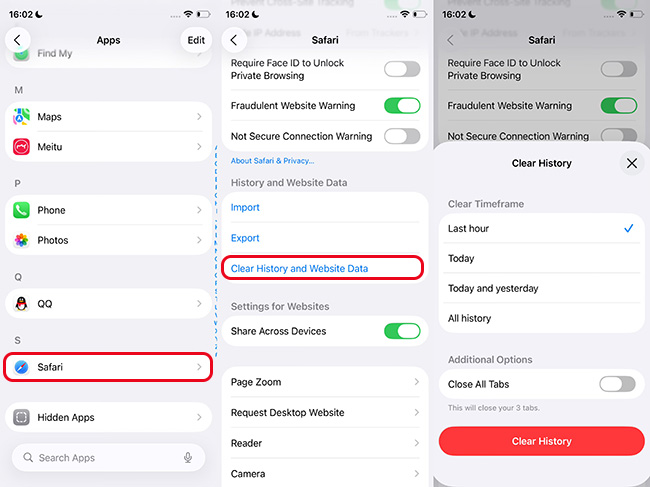
- Step 1. Open your iPhone Settings and tap on "Apps > Safari."
- Step 2. Scroll down and tap on "Clear History and Website Data."
- Step 3. Choose the time range you want to clear and confirm your choice to wipe the cache.
Method 3: Restart Your iPhone Regularly
Most iPhone users leave their devices powered on for weeks or months at a time, but restarting the iPhone regularly is highly recommended. Just like closing background apps, turning off the iPhone forces the system to dump temporary files that are hoarding system resources. A quick reboot provides a fresh slate for your network connections and applications.
- Step 1. For iPhone X and newer (Face ID models), press and hold the Side button and either Volume button simultaneously.
- Step 2. When the power off slider appears, drag it to the right to turn off the device, and wait about 30 seconds.
- Step 3. Press and hold the Side button again until the Apple logo appears on the screen.

Method 4: Check iPhone Storage Space
As we all know, storage space on the iPhone is limited. While it is inevitable to save photos, videos, and large files, a nearly full hard drive will severely throttle system performance, including Safari. Checking whether your available storage is dangerously low is a vital troubleshooting step.
Keeping at least a few gigabytes of free space is crucial for a smooth experience.
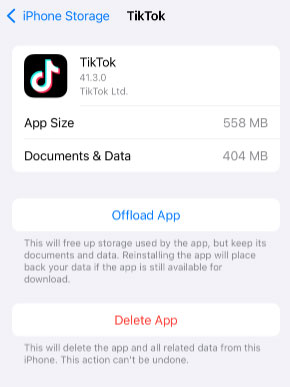
- Step 1. Open Settings and navigate to "General."
- Step 2. Tap on "iPhone Storage".
- Step 3. Review the storage bar at the top and utilize Apple's recommendations to offload unused apps or delete large files.
Method 5: Disable Background App Refresh
When you swipe away from an app to return to your Home screen, those apps often remain active in the background. They continue to receive information and refresh their content, which inevitably takes up processing power and network bandwidth. You don't need to disable all background apps, but turning off unnecessary ones can free up resources for Safari.
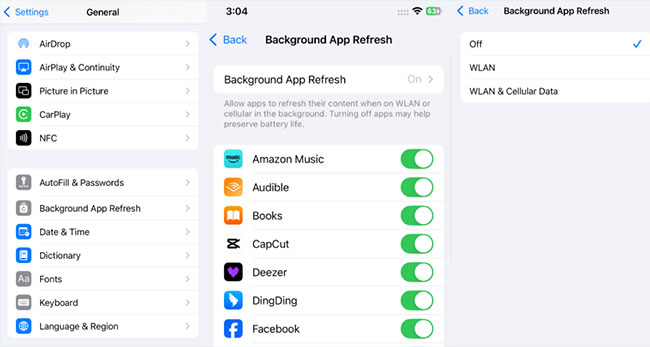
- Step 1. Go to Settings and tap on "General."
- Step 2. Select "Background App Refresh."
- Step 3. Toggle off the switch entirely, or scroll through the list to disable it individually for apps you don't use often.
Method 6: Disable Automatic Downloads
If you set your iPhone to automatically update apps in the background, it can quietly consume your network bandwidth and slow down your web browsing. Manually updating these apps when you aren't actively using Safari is a much better approach for maintaining a fast connection.
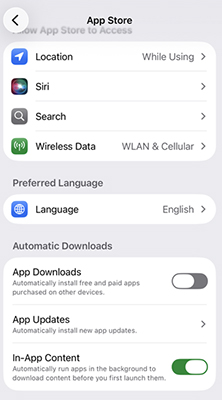
- Step 1. Open Settings and scroll down to select "Apps > App Store."
- Step 2. Locate the "Automatic Downloads" section.
- Step 3. Toggle off "App Updates" and "App Downloads" to prevent them from running silently.
Method 7: Reset Network Settings
If network connectivity is the main culprit behind Safari slowing down, and switching between Wi-Fi and cellular data hasn't worked, resetting your network settings is your final option. This will flush out cellular routing data and clear network glitches. Keep in mind that this will erase all your saved Wi-Fi passwords, Bluetooth connections, and VPN configurations.
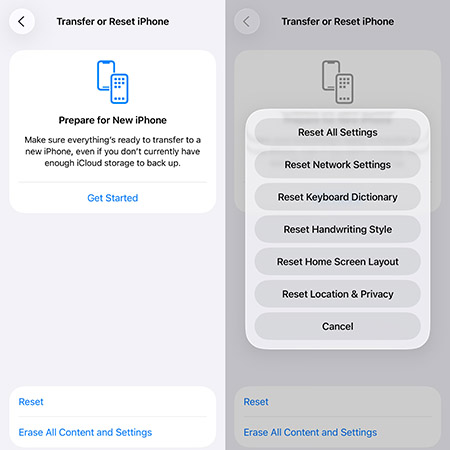
- Step 1. Go to Settings, tap "General," and scroll to the very bottom.
- Step 2. Tap on "Transfer or Reset iPhone," then select "Reset."
- Step 3. Tap "Reset Network Settings" and enter your device passcode to confirm the action.
Method 8: Use TunesKit iOS System Recovery to Fix iOS Bugs
If you have tried clearing your cache, restarting your device, and managing your storage, yet Safari is still crawling at a snail's pace, you might be dealing with a deeper software glitch. Sometimes, the core iOS system develops underlying bugs that standard troubleshooting simply cannot resolve. When the operating system itself is compromised, built-in apps like Safari are often the first to suffer from severe performance drops and persistent lagging.
Fortunately, you don't need to visit an Apple Store or factory reset your device to fix these stubborn system errors. By utilizing a dedicated repair tool like TunesKit iOS System Recovery, you can deeply scan and repair your operating system without losing a single byte of your personal data. This powerful software is designed to fix over 150 different iOS issues like iPhone Safari not working, seamlessly resolving the hidden bugs that are causing Safari to freeze or run slowly.
Fix Safari Slow Issues in One Click
Repair iOS system glitches without data loss and restore Safari to smooth, fast performance in just a few clicks.
 600,000+ Downloads
Step 1. Connect iPhone to PC
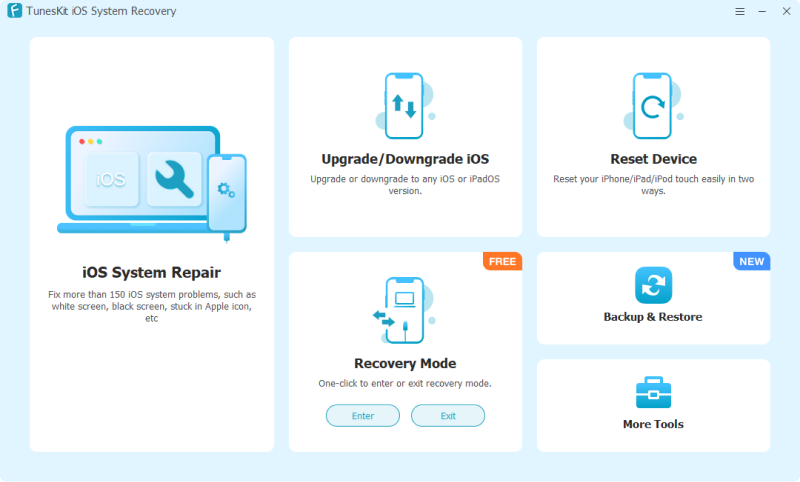
Launch TunesKit on your computer and connect your iPhone using a USB cable. Click on "iOS System Repair" and hit the "Start" button to begin the process.
Step 2. Select the Standard Repair mode
Select the "Standard Repair" mode from the interface. This mode is highly recommended because it easily fixes common iOS performance issues without wiping out any of your current data.

Step 3. Download Firmware Package and Start Fixing
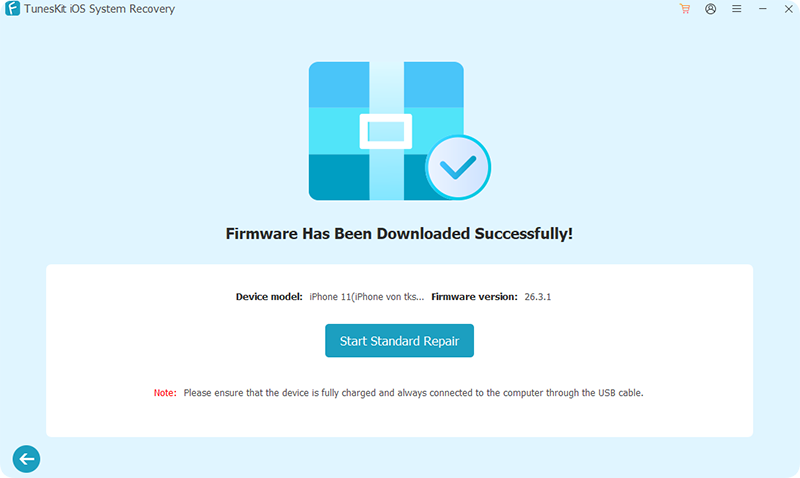
Confirm your device information and download the corresponding firmware package. Once the download is complete, click "Start Standard Repair" to let the software automatically fix your iOS system and restore Safari's blazing-fast speed.
Method 9: Disable JavaScript
Disabling JavaScript can stop heavy website elements from loading, which technically speeds up page rendering on older devices. However, this may result in many interactive features of modern websites failing to function properly.
This is a highly disruptive step that should only be used as a last resort.
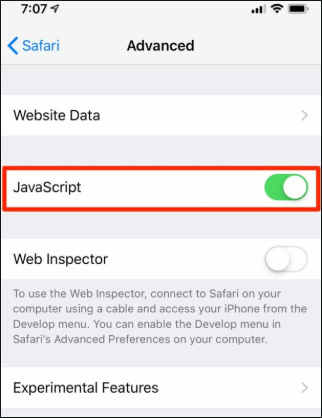
- Step 1. Navigate to Settings and select "Safari."
- Step 2. Scroll to the very bottom of the page and tap "Advanced."
- Step 3. Toggle off the switch next to "JavaScript."
The Bottom Line
Safari running slow on your iPhone can usually be resolved with simple troubleshooting steps like clearing cache or checking your network connection. If the issue is caused by iOS system glitches, TunesKit iOS System Recovery offers a quick and reliable solution. It can repair various iOS issues without data loss, helping restore Safari's speed and ensuring a smoother browsing experience.