


iPhone Storage Full? 7 Ways to Free Up Space
Is your iPhone storage full, leaving you unable to take photos, download apps, install iOS updates, or save new files? Photos, videos, apps, Messages attachments, downloads, and System Data can quickly use up available space, especially on iPhones with smaller storage capacities.
If you keep seeing a storage warning, this guide explains how to fix iPhone storage full with 7 practical ways to identify what's taking up space and free up storage without immediately erasing your device.

- Why Is My iPhone Storage Full?
-
7 Tips to Fix iPhone Storage Full
- 1. Check iPhone Storage and Remove Unused Apps
- 2. Delete Unnecessary Photos and Videos
- 3. Optimize iPhone Storage with iCloud Photos
- 4. Remove Large Messages, Downloads, and App Media
- 5. Clear Safari History and Website Data
- 6. Restart and Update Your iPhone
- 7. Fix Possible iOS Issues with TunesKit iOS System Recovery
- FAQs About iPhone Storage Full
- Conclusion
Why Is My iPhone Storage Full?
Your iPhone storage can fill up quickly even if you don't download many large files. In most cases, the space is being used by photos, videos, apps, messages, downloads, cached files, and system data.
Common reasons include:
- 01 Too many photos and videos. High-resolution photos, 4K videos, Live Photos, and screen recordings can take up a large amount of space.
- 02 Apps and app data are using too much storage. Social media, streaming, gaming, and messaging apps may store caches, downloads, and other local data.
- 03 Messages contain large attachments. Photos, videos, GIFs, and files shared through Messages can gradually consume several gigabytes.
- 04 Offline downloads are stored on the device. Music, movies, podcasts, maps, and files downloaded for offline use still count toward iPhone storage.
- 05 System Data has grown too large. Caches, logs, files, indexes, and other system resources can increase over time.
- 06 Recently Deleted items are still using space. Deleted photos, videos, or files may remain on the iPhone until they are permanently removed.
- 07 Your iPhone has limited storage capacity. On devices with smaller storage, normal apps, media, and system files can use most of the available space over time.
Once you know what is taking up the most space, you can choose the right way to free up your iPhone storage.
7 Tips to Fix iPhone Storage Full
Once you know what is taking up space on your iPhone, you can start freeing up storage. The following methods cover photos, apps, messages, downloads, browser data, and possible iOS issues. Start with the storage-cleaning methods before moving on to system-level troubleshooting.
1. Check iPhone Storage and Remove Unused Apps
Before deleting files randomly, check what is actually using the most space on your iPhone.
- Step 1. Go to Settings > General > iPhone Storage.
- Step 2. Wait for your iPhone to calculate the storage usage.
- Step 3. Review categories such as Apps, Photos, Messages, iCloud Drive, iOS, and System Data.
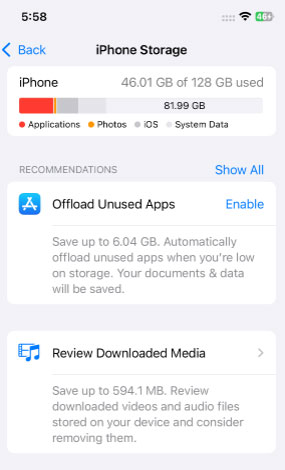
You may also see storage recommendations from iOS. If an app takes up a lot of space but you rarely use it, tap the app and choose Offload App or Delete App.
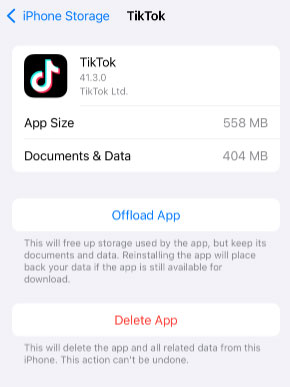
Offloading removes the app itself while keeping its documents and data, so you can reinstall it later without starting over. Deleting the app removes both the app and its related local data.
2. Delete Unnecessary Photos and Videos
Photos and videos are often among the biggest storage users, especially if you record high-resolution or long videos.
Open the Photos app and remove screenshots, duplicate images, old videos, screen recordings, and other content you no longer need. Before deleting important media, make sure you have a backup if necessary.
Deleted photos and videos normally remain in Recently Deleted for up to 30 days, so removing them from your main library may not immediately free all of the space. Open Photos > Collections > Recently Deleted, select the items, and permanently delete them if you're sure you no longer need them.

You can also check the Duplicates collection and merge duplicate photos or videos to save additional space.

3. Optimize iPhone Storage with iCloud Photos
If you have a large photo library but don't want to permanently delete your photos and videos, Optimize iPhone Storage can reduce the amount of local space they use.
- Step 1. Open Settings and tap your name.
- Step 2. Go to iCloud > Photos.
- Step 3. Make sure iCloud Photos is enabled and select Optimize iPhone Storage.
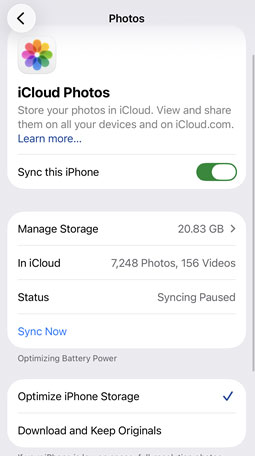
When this feature is enabled, full-resolution photos and videos are stored in iCloud, while space-saving versions can be kept on the iPhone when storage is needed.
Keep in mind that iCloud storage and iPhone storage are separate. You need enough available iCloud storage for your original photos and videos.
4. Remove Large Messages, Downloads, and App Media
Photos aren't the only files that can consume several gigabytes. Messages, streaming apps, social media apps, and downloaded files may also store large amounts of content locally.
Go to Settings > General > iPhone Storage and check apps that use a large amount of space. Remove large Messages attachments and conversations you no longer need.
You should also review offline music, movies, podcasts, maps, and videos downloaded from streaming apps.
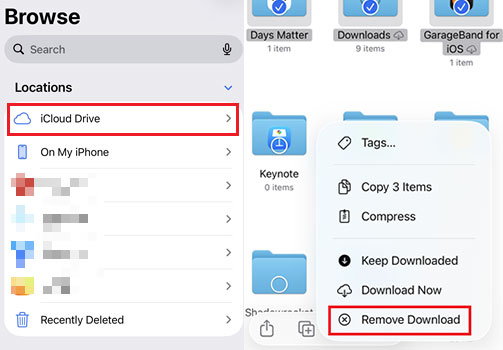
For files stored in iCloud Drive but downloaded to your iPhone, open the Files app, touch and hold the file, and choose Remove Download when available. This removes the local copy while keeping the file in iCloud.
Messaging apps such as WhatsApp can also accumulate photos and videos over time. Review their storage settings and remove unnecessary media or disable automatic downloads when appropriate.
 Further Reading: How to Reduce WhatsApp Storage - Top Solutions
5. Clear Safari History and Website Data
Safari stores browsing history, cookies, caches, and other website data. These files are usually small individually, but they can accumulate after long-term use.
Open Safari, access your browsing history, and choose the option to Clear History. Select the time range you want to remove and confirm the action.
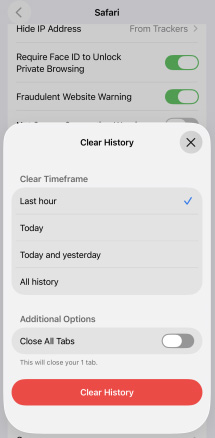
Clearing Safari data can free some storage and may also help if Safari has accumulated excessive cached content.
6. Restart and Update Your iPhone
If you've deleted a significant amount of content but iPhone Storage still shows little or no available space, the storage information may not have refreshed correctly.
Restart your iPhone first and then return to Settings > General > iPhone Storage to check the storage again.
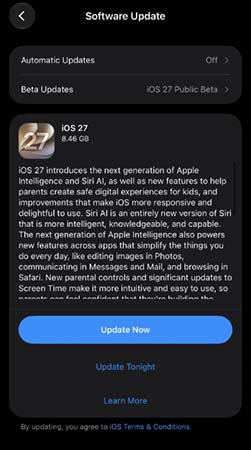
You should also check for an available iOS update by going to Settings > General > Software Update. If there is an available update, simply tap the Update Now button. Updates can include fixes for software problems that affect storage management or system behavior.
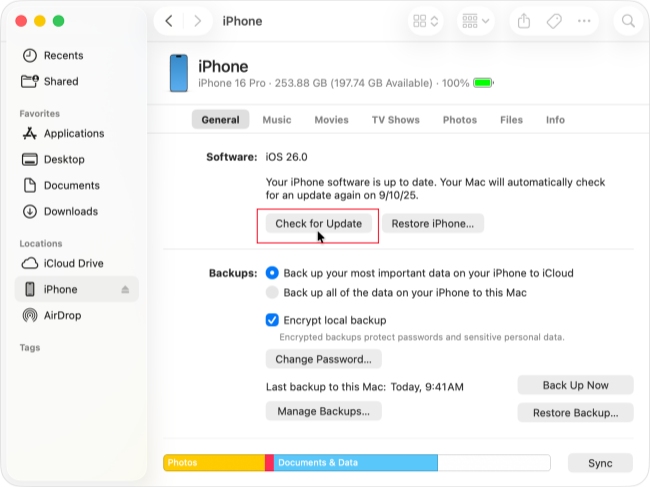
If there isn't enough free space to update directly from the iPhone, you can connect it to a Mac and use Finder, or use the Apple Devices app on a Windows PC. Trust your PC when prompted, if your iPhone is recognized, move to the General/Summary option, then select the Check for Update option to download and install the latest iOS version.
7. Fix Possible iOS Issues with TunesKit iOS System Recovery
If you've deleted unnecessary files, cleared Recently Deleted, removed large app data, restarted the iPhone, and updated iOS but the storage information still appears abnormal, a software-level iOS issue may be involved. In this case, you can try TunesKit iOS System Recovery before considering a factory reset. It is designed to repair various iOS and iPadOS system problems and supports current iPhone models and iOS versions.
For this type of problem, start with Standard Repair, which is designed to repair common iOS issues without erasing existing data. It can also fix other iOS issues like iPhone storage full after deleting everything, iPhone charging slow, and iPhone laggy issues, etc.
Fix iPhone Storage Full with TunesKit
Repair possible iOS system issues that cause abnormal storage problems without erasing your data with Standard Repair.
 600,000+ Downloads
Step 1. Connect Your iPhone
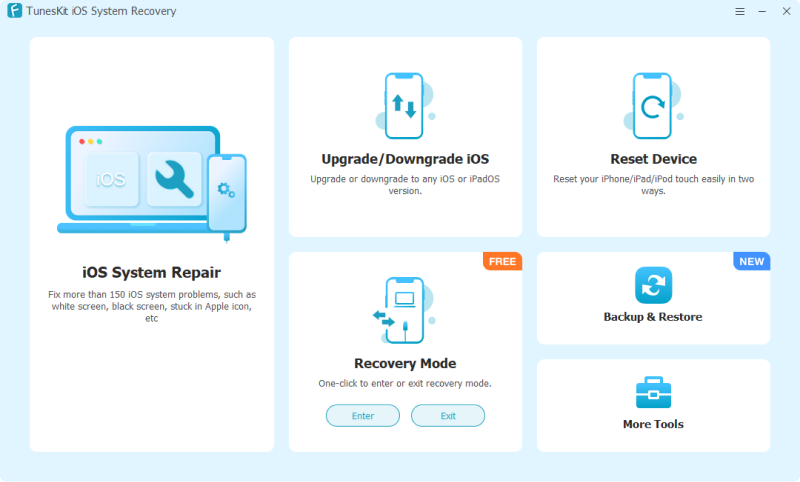
Install and launch TunesKit iOS System Recovery on your Windows PC or Mac. Connect your iPhone with a USB cable, choose iOS System Repair, and click Start.
Step 2. Choose Standard Repair
Select Standard Repair first. This mode is designed to repair common iOS system issues while keeping your existing data. If Standard Repair doesn't resolve a more serious system problem, you can consider Deep Repair after backing up your device.

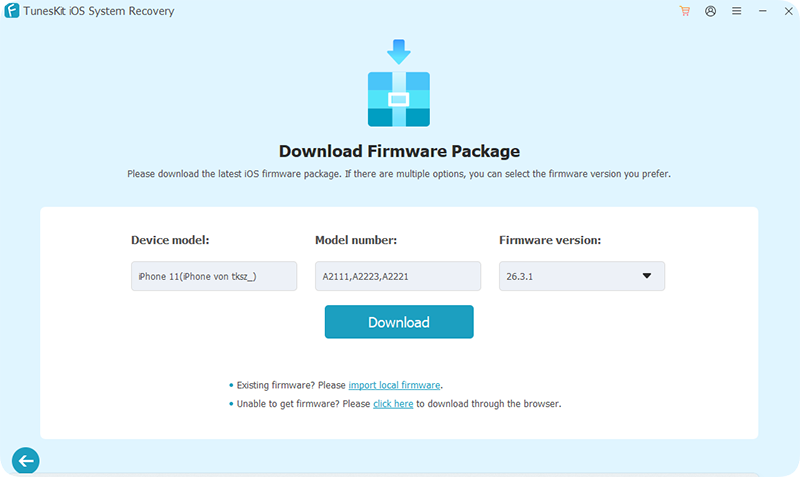
Step 3. Download the Firmware Package
Confirm that the detected iPhone model and firmware information are correct. Click Download to get the required firmware.
Step 4. Start the iOS Repair
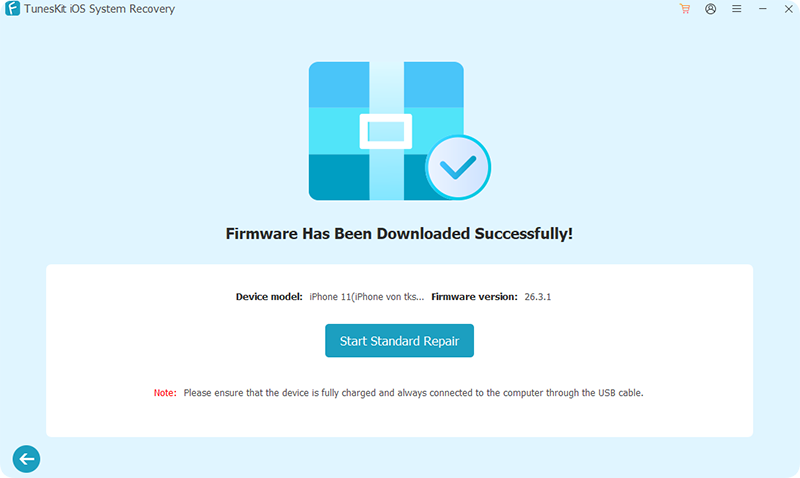
After the firmware package is downloaded and verified, click Start Standard Repair and keep the iPhone connected until the process is complete. When your iPhone restarts, go back to Settings > General > iPhone Storage and check whether the storage information is displaying normally.
FAQs About iPhone Storage Full
-
What Takes Up the Most Storage on an iPhone?
Photos, videos, apps, Messages attachments, downloaded media, and System Data are common storage users. The exact amount varies depending on how you use your iPhone.
-
Why Is System Data So Large on My iPhone?
System Data can include caches, logs, indexes, temporary files, Siri voices, and other resources used by iOS. Its size can change over time. Restarting your iPhone and keeping iOS updated may help if the reported amount appears unusually large.
-
Will Updating iOS Free Up iPhone Storage?
An iOS update is not mainly designed to free storage, but it may fix software issues that affect storage management or reporting. If your storage remains incorrect after deleting files, updating iOS is worth trying.
Conclusion
When your iPhone storage is full, start by checking Settings > General > iPhone Storage to find out what is using the space. Removing unnecessary photos, apps, downloads, Messages attachments, and cached data can usually free up storage quickly. If the storage information still looks incorrect after regular cleanup and an iOS update, TunesKit iOS System Recovery can provide an additional way to fix iOS system issues without immediately erasing your device.