


iPhone Running Slow After iOS 27 Update? How to Fix It
Is your iPhone running slow after updating to iOS 27? You might notice laggy animations, slow-loading apps, or delayed responses. Some slowdowns are temporary, while others may indicate app, battery, or software problems. This guide explains the possible causes and how to fix them.
If your iPhone is slow after an iOS update, give background tasks time to finish, then restart your device. If the problem continues, check storage, app updates, and power settings before trying advanced fixes.
- What Is Making Your iPhone Feel Slow?
- Why Is My iPhone Slow After an iOS Update?
-
How to Fix iPhone Slow After an iOS Update
- Method 1. Wait for Background Update Tasks to Finish
- Method 2. Restart Your iPhone
- Method 3. Check Available Storage
- Method 4. Update iOS and Problematic Apps
- Method 5. Check App and Network Performance
- Method 6. Check Low Power Mode and Device Temperature
- Method 7. Review Battery Health
- Method 8. Reset All Settings
- Method 9. Repair iOS with TunesKit Standard Repair HOT
- FAQs About iPhone Running Slow After an iOS Update
- Conclusion
What Is Making Your iPhone Feel Slow?
Different symptoms can point to different causes. Use this table to find where to start.
| What You Notice | Possible Cause | What to Try |
|---|---|---|
| iPhone feels slow right after updating | Background update tasks | Wait and monitor |
| Apps take longer to open | App, storage, or software issues | Check storage and app updates |
| Scrolling or app switching feels choppy | Power-saving settings or UI issues | Check Low Power Mode and updates |
| Safari or online apps load slowly | Network problems | Test another connection |
| iPhone is slow and unusually hot | Temperature-related performance limits | Let it cool down |
| Performance drops with battery problems | Battery degradation | Check Battery Health |
| Screen responds slowly to touch | Touchscreen or software issue | Restart; seek service if it persists |
If only one app is slow, start by checking that app. If your entire iPhone feels sluggish, focus on system settings, storage, and battery health.
Why Is My iPhone Slow After an iOS Update?
Several factors can affect iPhone performance after an update.
- 01 Background Tasks After an Update: Your iPhone may continue indexing files, syncing data, and completing setup tasks. These activities can temporarily affect battery life and device temperature.
- 02 Low Storage or Problematic Apps: Limited storage, outdated apps, or app compatibility issues may cause slow loading, freezing, or delayed responses.
- 03 Network Connection Problems: Weak Wi-Fi, cellular congestion, or slow servers can make online apps seem sluggish even when your iPhone is working normally.
- 04 Low Power Mode or High Device Temperature: Low Power Mode can limit performance to save battery. Excessive heat may also cause your iPhone to slow down temporarily.
- 05 Battery Aging or iOS Software Issues: An aging battery may affect peak performance on some devices, while persistent iOS errors can cause freezes, crashes, or other unexpected behavior.
How to Fix iPhone Slow After an iOS Update
Choose the methods that match your symptoms. Start with basic troubleshooting before trying advanced repairs.
Method 1. Wait for Background Update Tasks to Finish
After an iOS update, background tasks may temporarily affect battery life and temperature. If your iPhone also feels sluggish, give these tasks time to finish before trying advanced fixes.
- Step 1. Go to Settings > Battery and look for Ongoing iOS Update or Ongoing Device Setup above the Daily Usage chart, if displayed.
- Step 2. Allow a few days for update-related background tasks to finish while continuing to use your iPhone normally.
- Step 3. Check whether performance improves. If your iPhone remains slow, continue with the next methods.
These notifications may not appear on every device. Their absence does not necessarily mean that all background activity has finished.
 If you're experiencing other problems after updating, see our complete iOS update guide.
Method 2. Restart Your iPhone
If your iPhone responds slowly or experiences occasional glitches, restarting it may help clear temporary software problems without deleting your data.
- Step 1. Go to Settings > General > Shut Down and drag the power-off slider.
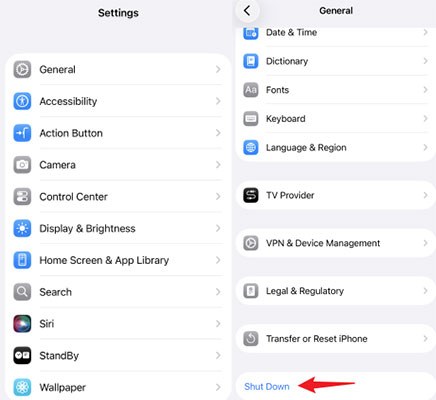
- Step 2. Wait until your iPhone turns off completely. Then press and hold the Side button until the Apple logo appears.
- Step 3. Unlock your iPhone and check whether apps and system navigation respond normally.
If your iPhone is completely unresponsive, use the force restart procedure for your specific model instead.
Method 3. Check Available Storage
Insufficient storage can slow down your iPhone. According to Apple, you should keep at least 1GB of free space to help prevent performance issues.
- Step 1. Go to Settings > General > iPhone Storage and check your available space.
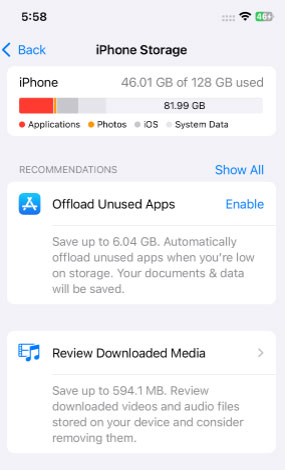
- Step 2. Review the storage recommendations and find apps or files that use unnecessary space.
- Step 3. Select an app and tap Offload App to keep its documents and data, or Delete App to remove the app and its related data. Back up important information before deleting apps.
Method 4. Update iOS and Problematic Apps
Outdated apps or software bugs may cause freezing, slow loading, or compatibility problems after an iOS update. Installing available updates can help resolve known issues.
- Step 1. Go to Settings > General > Software Update and install an available stable iOS update after backing up important data.
- Step 2. Open the App Store, tap your profile picture or account button, and select App Updates.
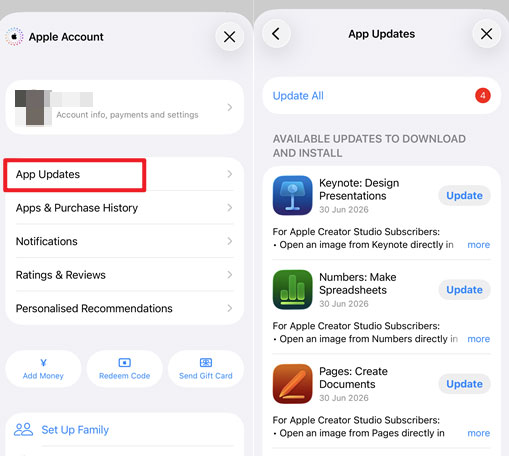
- Step 3. Tap Update next to any app that is slow or unresponsive, then check whether its performance improves.
Method 5. Check App and Network Performance
If only certain apps or websites are slow, the issue may involve the app or internet connection rather than your iPhone's overall performance.
- Step 1. If an app freezes, open the App Switcher, swipe up on the unresponsive app to close it, and reopen it.

- Step 2. If websites or online apps load slowly, switch between Wi-Fi and cellular data, if available, and test again.
- Step 3. Check whether built-in apps, such as Settings, respond normally and whether other websites load. If only one app or website remains slow, investigate that service first.
 Note
Avoid routinely closing every background app. iOS manages background apps automatically, and force-closing them is not a general performance fix.
Method 6. Check Low Power Mode and Device Temperature
Low Power Mode may reduce performance, while high temperatures can trigger temporary system limits. Check both if your iPhone feels sluggish, especially when scrolling or gaming.
- Step 1. Open Settings > Battery. On iPhone 15 and later, tap Power Mode > Low Power Mode. On iPhone 14 and earlier, tap Low Power Mode directly under Battery.
- Step 2. Turn off Low Power Mode if it's enabled, then check whether your iPhone responds more smoothly.
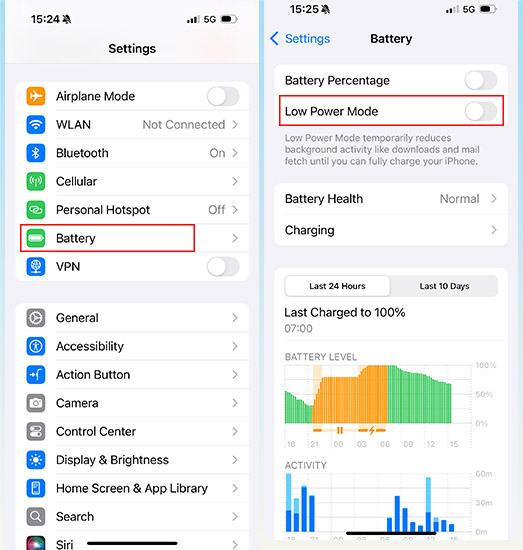
- Step 3. If your iPhone feels unusually hot, stop demanding activities and move it to a cooler environment. Let it cool naturally before testing again.
If overheating continues, see our guide on how to fix iPhone overheating.
 Optional:
If screen animations or scrolling still feel choppy on an older iPhone, go to Settings > Accessibility > Motion > Reduce Motion and Settings > Accessibility > Display & Text Size > Reduce Transparency. Reducing visual and blur effects can make interface transitions feel smoother, though it does not increase processor speed.
Method 7. Review Battery Health
Battery aging can reduce your iPhone's ability to deliver peak power. On some devices, performance management may limit performance to help prevent unexpected shutdowns.
- Step 1. Open Settings > Battery > Battery Health on iPhone 15 and later. On iPhone 14 and earlier, go to Settings > Battery > Battery Health & Charging.
- Step 2. Review Maximum Capacity and any available battery service or performance messages.
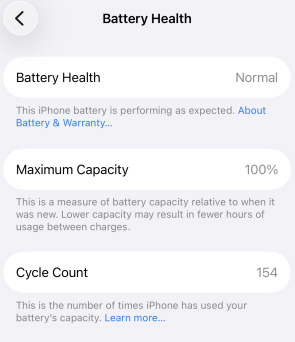
- Step 3. If your iPhone shows a Service recommendation, contact Apple Support or an Apple Authorized Service Provider for an assessment.
A lower Maximum Capacity does not automatically mean performance management is active.
If your iPhone also loses power unusually quickly, see our guide on fixing iPhone battery drain after an iOS update.
Method 8. Reset All Settings
If your iPhone remains slow alongside persistent Wi-Fi, Bluetooth, or other system setting problems, resetting all settings may help resolve incorrect preferences. This resets Wi-Fi passwords, Bluetooth and Apple Watch pairings, Face ID settings, Apple Pay cards, and other preferences. Your photos, messages, apps, and personal files remain intact.
- Step 1. Go to Settings > General > Transfer or Reset iPhone > Reset.
- Step 2. Tap Reset All Settings, enter your passcode, and confirm.
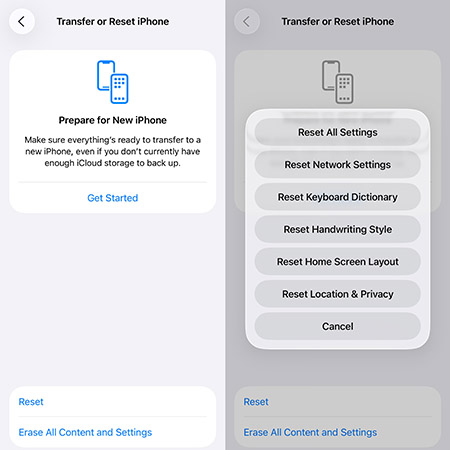
- Step 3. After the reset, reconnect to Wi-Fi, pair your Bluetooth devices, and restore any preferences you need.
Method 9. Repair iOS with TunesKit Standard Repair
If your iPhone remains slow after an iOS 27 update and also experiences persistent freezes, unexpected restarts, or update errors, an underlying iOS software problem may be involved. In this situation, you can try TunesKit iOS System Recovery.
TunesKit Standard Repair mode is designed to fix supported iOS issues, including frozen screens, boot loops, update failures, and Recovery Mode problems, while preserving existing data on supported repairs. It provides a guided repair process and downloads firmware matched to your iPhone model.
- Step 1. Download and launch TunesKit iOS System Recovery on your Windows PC or Mac. Connect your iPhone with a USB cable, select iOS System Repair, and click Start. Choose Standard Repair.

- Step 2. Select your device model and follow the on-screen instructions to enter DFU Mode. If needed, choose the Recovery Mode option instead, then click Next.
- Step 3. Confirm your device and firmware information, then click Download to download and verify the matching firmware package.
- Step 4. Click Repair after the firmware is ready. Keep your iPhone connected until the repair finishes.
Note
Standard Repair is designed to preserve existing data on supported repairs, but backing up your iPhone beforehand is recommended. TunesKit repairs supported software issues, not battery or hardware faults, and cannot guarantee faster performance in every situation.
FAQs About iPhone Running Slow After an iOS Update
-
How long does an iPhone stay slow after an iOS update?
Temporary slowdowns may improve within a few days as background tasks finish. If your iPhone remains slow afterward, check apps, storage, power settings, and other possible causes.
-
Why is my iPhone scrolling or switching apps slowly after an update?
Choppy animations may be related to Low Power Mode, temporary system activity, or software issues. Check whether Low Power Mode is enabled, restart your iPhone, and install available updates. On ProMotion models, Low Power Mode also limits the display refresh rate to 60Hz.
-
Can an iOS update slow down an older iPhone?
Yes, some older iPhones may feel slower after an update, particularly while background tasks are running. Battery condition, available storage, and app compatibility can also affect performance. However, an update does not necessarily make every older iPhone slower.
-
Can I fix a slow iPhone without losing data?
Yes. Restarting, updating software, checking storage, and changing power settings do not normally erase personal data. TunesKit Standard Repair is designed to preserve data on supported software repairs, but backing up important files is still recommended.
Conclusion
If your iPhone runs slowly after an iOS 27 update, start by checking background tasks, apps, storage, and power settings. If the problem continues alongside persistent iOS system errors, TunesKit Standard Repair may help resolve various software issues. For battery or hardware problems, contact Apple Support if needed.