


iPhone Recovery Mode vs DFU Mode: Key Differences Explained
iPhone Recovery Mode and DFU Mode are both used to troubleshoot serious iOS problems, but they work differently and are designed for different situations. Recovery Mode is commonly used to update or restore an iPhone, while DFU Mode provides a deeper level of firmware restoration. Understanding the difference between DFU mode and Recovery mode can help you choose the right option. This guide compares how they work, when to use them, and their key differences.

Recovery Mode vs DFU Mode: Key Differences at a Glance
If you are unsure whether to use Recovery Mode or DFU Mode, start with this quick comparison.
| Feature | Recovery Mode | DFU Mode |
|---|---|---|
| Loads iBoot | Yes | No |
| Loads iOS | No | No |
| iPhone screen | Connect-to-computer screen | Completely black |
| Recovery level | Standard system recovery | Deeper firmware recovery |
| Best for | Update failures, startup issues, standard restore | Problems Recovery Mode cannot resolve |
| Difficulty | Easier | More advanced |
| Update without erasing data | Possible with Update | Not the main purpose |
| Restore erases data | Yes | Yes |
| Install unsigned iOS | No | No |
| Recommended order | Try first | Use if Recovery Mode fails |
Apple's boot documentation distinguishes the two modes by their position in the startup process: Recovery Mode involves iBoot, while DFU Mode operates at a lower level.
For most iPhone problems, try Recovery Mode first. DFU Mode is generally better reserved for deeper troubleshooting when Recovery Mode cannot restore the device successfully.
What Are Recovery Mode and DFU Mode?
Below, we'll explain what Recovery Mode and DFU Mode are and how they work.
What Is iPhone Recovery Mode?
Recovery Mode is a built-in troubleshooting state that allows an iPhone to communicate with a computer even when iOS cannot start normally.
After entering Recovery Mode, you can use Finder on a Mac or the Apple Devices app on a Windows PC to update or restore the iPhone. On older computer setups, iTunes may still be used.
Recovery Mode is commonly useful when:
- Your iPhone is stuck on the Apple logo.
- An iOS update or restore fails.
- Your computer detects the iPhone in Recovery Mode.
- The Connect to Computer screen appears.
- You need to restore an unavailable or disabled iPhone.
Apple currently recommends Recovery Mode for several startup and update/restore problems.

What Is iPhone DFU Mode?
DFU Mode, short for Device Firmware Update Mode, is a lower-level recovery state that allows the iPhone to communicate with a computer without loading iBoot or iOS.
Unlike Recovery Mode, an iPhone in DFU Mode displays a completely black screen. The computer may still detect the device even though nothing appears on the iPhone display.
DFU Mode is mainly used when a standard Recovery Mode restore cannot resolve a serious software or firmware problem.

 Note
Note
DFU Mode doesn't let you freely install any older iOS version. Firmware installation is subject to Apple's signing rules.
When Should You Use Recovery Mode vs DFU Mode?
Choosing the right mode can save time and reduce unnecessary restoration.
Use Recovery Mode First If:
- Your iPhone is stuck on the Apple logo.
- The iPhone is unable to check for update.
- Finder or Apple Devices cannot normally recognize the device.
- Your iPhone displays the Connect to Computer screen.
- You need to update or restore an iPhone that cannot start properly.
Recovery Mode should be the first choice for most users because it is easier to enter and may allow you to choose Update before performing a full restore.
Use DFU Mode If:
Consider DFU Mode when:
- Recovery Mode repeatedly fails to restore the iPhone.
- The iPhone has a serious firmware-related problem.
- The device cannot start correctly after other software troubleshooting.
- An advanced repair procedure specifically requires DFU Mode.
Because DFU restoration is a more advanced process and normally involves restoring the device, back up important data first whenever possible.
How to Enter and Exit iPhone Recovery Mode
There are two ways to enter Recovery Mode: use a one-click tool or manually press a model-specific button combination.
Easiest Way: Enter or Exit Recovery Mode in One Click for Free
Best for
Users who want to enter or exit Recovery Mode quickly without manually operating iPhone buttons.
Manually entering Recovery Mode can be inconvenient because the required button combination varies depending on your iPhone model. If you want a simpler option, TunesKit iOS System Recovery lets you enter or exit Recovery Mode for free with one click.
You do not need to press the Volume, Home, or Side buttons in a specific sequence. This makes the feature particularly useful if you frequently work with different iPhone models, cannot remember the button combination, or have trouble getting the timing right.
Why Use TunesKit to Enter or Exit Recovery Mode?
Free to use for entering and exiting Recovery Mode & One-click operation & No need to remember different steps for different iPhone models
 600,000+ Downloads
Only 2 steps, you can easily enter or exit recovery mode using TunesKit iOS System Recovery.
- Step 1. Download and launch TunesKit iOS System Recovery, then connect your iPhone to the computer with a USB cable.
- Step 2. Find the Recovery Mode section on the main interface, then simply click Enter to put the iPhone into Recovery Mode automatically.
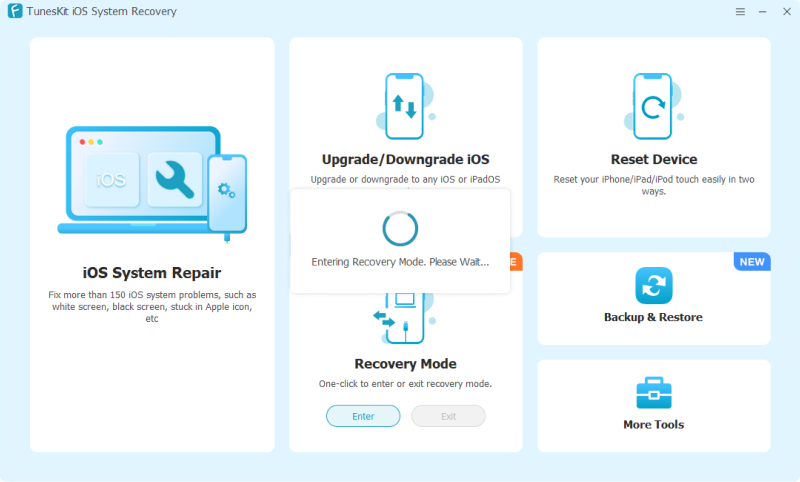
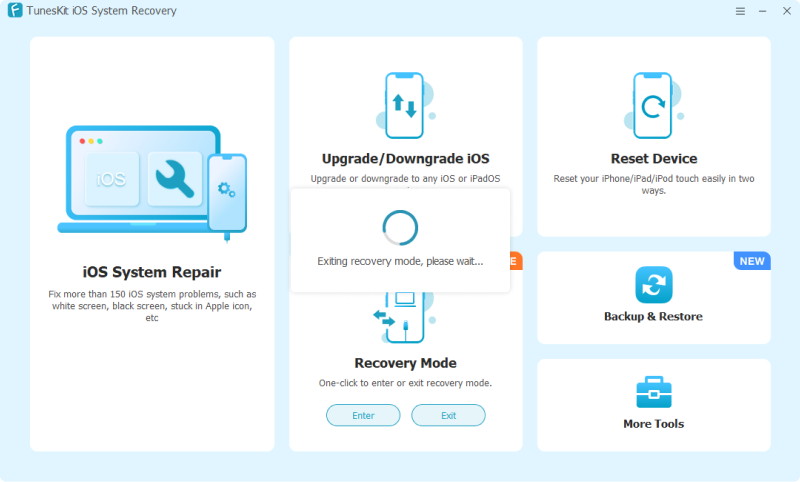
To leave Recovery Mode, reconnect the device if necessary and click Exit. TunesKit will automatically exit Recovery Mode without requiring you to press any buttons.
How to Enter Recovery Mode Manually
You can also put an iPhone into Recovery Mode using physical buttons.
iPhone 8 or Later
- Step 1. Connect your iPhone to the computer.
- Step 2. Quickly press and release the Volume Up button.
- Step 3. Quickly press and release the Volume Down button.
- Step 4. Press and hold the Side button. Keep holding it even after the Apple logo appears.
- Step 5. Release the Side button when the Connect to Computer screen appears.

iPhone 7 and iPhone 7 Plus
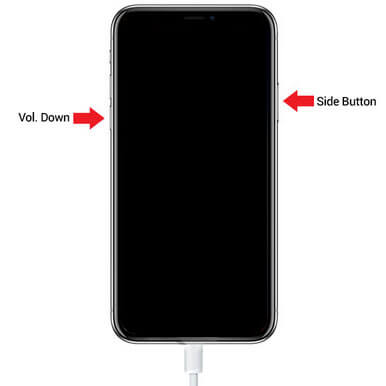
Connect the device to the computer, then press and hold the Side button + Volume Down button until the Recovery Mode screen appears.
iPhone 6s or Earlier
Connect the iPhone to the computer, then press and hold the Home button + Side/Top button until you see the Recovery Mode screen.

How to Exit Recovery Mode Manually
If your iPhone is working normally, a force restart can usually exit Recovery Mode.
However, if the device repeatedly returns to the Recovery Mode screen, simply restarting it may not resolve the underlying iOS problem. In that case, try the repair methods covered later in this guide.
Video Tutorial: How to Enter or Exit Recovery Mode
Watch the video tutorial below to see how to enter or exit iPhone Recovery Mode step by step. It provides a quick visual guide to the process, making the steps easier to follow.
How to Enter and Exit DFU Mode
Entering DFU Mode requires more precise button timing than entering Recovery Mode. The correct steps depend on your iPhone model.
Enter DFU Mode on iPhone 8 or Later
- Step 1. Connect your iPhone to a computer.
- Step 2. Quickly press and release Volume Up, then quickly press and release Volume Down.
- Step 3. Hold the Side button until the screen turns black.
- Step 4. While continuing to hold the Side button, press and hold Volume Down.
- Step 5. After about 5 seconds, release the Side button while continuing to hold Volume Down.

If the iPhone remains completely black and the computer detects a device in recovery, the iPhone has entered DFU Mode. If the Apple logo or Connect to Computer screen appears, repeat the procedure.
Enter DFU Mode on iPhone 7/7 Plus
Connect the device to the computer and hold the Side + Volume Down buttons. After several seconds, release the Side button while continuing to hold Volume Down until the computer detects the device.

Enter DFU Mode on iPhone 6s or Earlier
Connect the iPhone to the computer and hold the Home + Power buttons. Release the Power button while continuing to hold Home until the computer detects the device.
A successful DFU Mode screen should remain completely black.

How to Exit DFU Mode
You can normally exit DFU Mode by force restarting the iPhone.
- For iPhone 8 or later, quickly press Volume Up, quickly press Volume Down, then hold the Side button until the Apple logo appears.
- For iPhone 7/7 Plus, hold the Side and Volume Down buttons until the Apple logo appears.
- For iPhone 6s or earlier, hold the Home and Power buttons until the Apple logo appears.

How to Fix iPhone Stuck in Recovery Mode or DFU Mode
No matter whether your iOS device is stuck on the DFU mode or recovery mode, if you don't want any data loss, a third-party professional iOS repair tool is needed. TunesKit iOS System Recovery is such an efficient program, which can help you fix more than 150 kinds of different iOS system problems with no risk of losing data, including stuck on recovery/DFU mode issues, stuck on white Apple logo, iPad won't turn off, iPhone keeps restarting, etc. You can also use it to bypass iTunes error, enter recovery mode in one click, etc. Recovering iOS back to normal with TunesKit only needs three steps:
Fix iPhone Stuck on Recovery or DFU Mode Without Losing Data
TunesKit iOS System Recovery helps you safely repair your iPhone or iPad stuck in Recovery or DFU mode while keeping all your data intact.
600,000+ Downloads
Step 1. Download and install TunesKit iOS System Recovery to your computer and then simple open it. Use a USB cable to connect your stuck iOS device to the computer and press the iOS System Repair button to begin after it's recognized by the program. Then click the Start button to start repair your iOS problems.
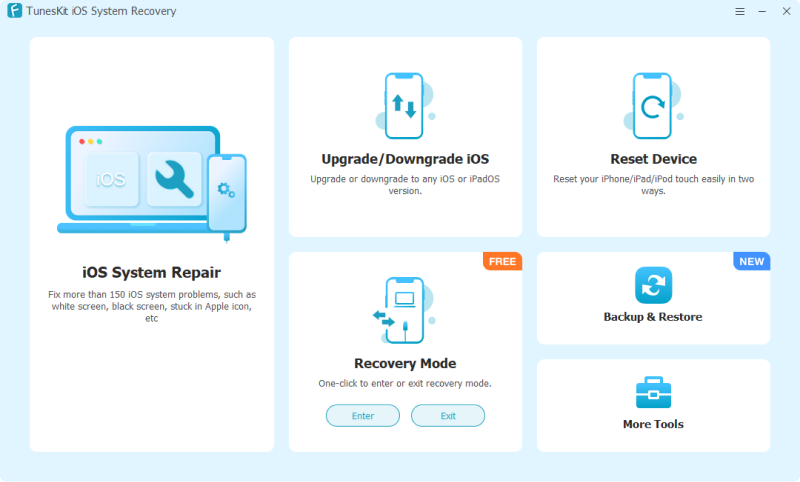
Step 2. Select the Standard Repair, this mode can fix your iPhone or iPad stuck on recovery mode or DFU mode without data loss.

Step 3. Check the device info and correct it if anything is wrong. Click the Download button to download the corresponding firmware package and verify it then.
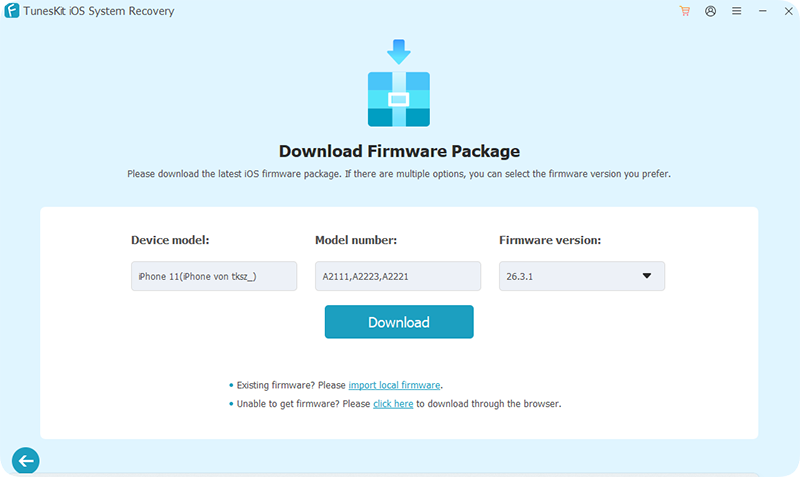
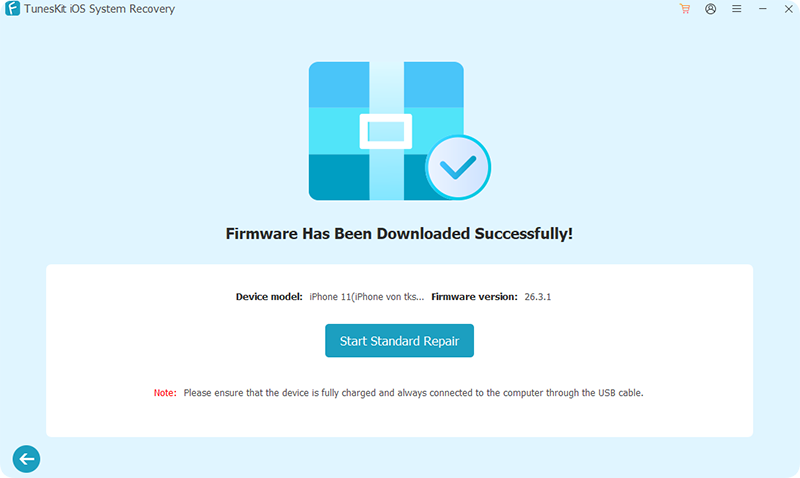
Step 4. After the process is done, click the Start Standard Repair button to let TunesKit starting fix iPhone stuck issue and wait until the repairing process completes.
Conclusion
In conclusion, understanding the differences between iPhone Recovery Mode and DFU Mode helps you choose the right solution when facing iOS system issues. While both modes are powerful troubleshooting tools, they can be complex and risky for ordinary users. TunesKit iOS System Recovery simplifies the process by offering a safe and effective way to fix various iOS problems—including devices stuck in Recovery or DFU mode—without data loss, making it an ideal solution for hassle-free iPhone system repair.