


How to Fix iPhone Developer Mode Not Showing (Updated for iOS 27)
During our testing on an iPhone running iOS 27 Developer Beta, reconnecting the device to Xcode restored the Developer Mode option immediately after rebooting.
Updated to the iOS 27 Developer Beta and suddenly can't find Developer Mode on your iPhone? You're not alone. Many developers discover that the Developer Mode option disappears or fails to appear after installing a major iOS beta update.
In most cases, the feature hasn't been removed. Instead, the update may have reset developer-related services, broken the connection between your iPhone and Xcode, or introduced temporary software issues.
If Developer Mode is missing from Settings > Privacy & Security, this guide explains why it happens and provides step-by-step solutions that work on iOS 27 Beta and earlier iOS versions.

Why Is Developer Mode Not Showing on iOS 27?
If Developer Mode is completely absent from your iPhone after updating to the iOS 27 Beta, the root cause usually falls into one of a few categories:
- Xcode no longer recognizes your iPhone or the trust relationship was wiped.
- The beta update temporarily reset background developer services.
- An early software bug is actively preventing the menu from rendering.
In the vast majority of cases, simply reconnecting the device to Xcode and restarting your iPhone instantly resolves the issue.
How to Fix iPhone Developer Mode Disappear After an iOS 27 Beta Update
If your iPhone Developer Mode is not showing after upgrading, do not panic. You can try the following methods to force the system to restore the missing toggle immediately.
Fix 1: Reconnect Your iPhone to Xcode
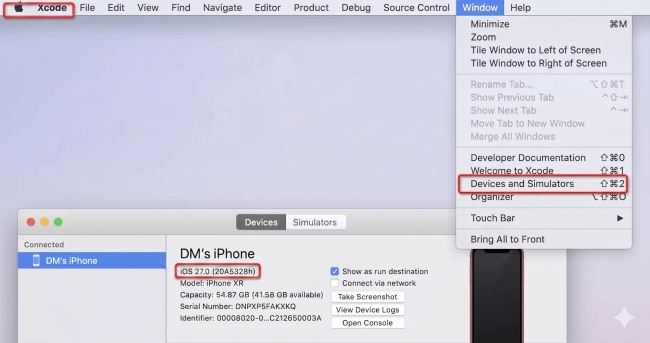
This is widely considered the most effective and reliable solution for active developers. After a major beta transition, Xcode may lose its trusted connection and fail to recognize your physical device properly.
- Step 1. Connect the iPhone to your Mac using a verified USB cable and launch the Xcode application.
- Step 2. Navigate to "Window" in the top menu bar, select "Devices and Simulators," and click on your iPhone to let the device preparation process finish.
- Step 3. Disconnect the device, restart your iPhone, and check your privacy settings again to find the restored menu.
Fix 2: Restart Your iPhone
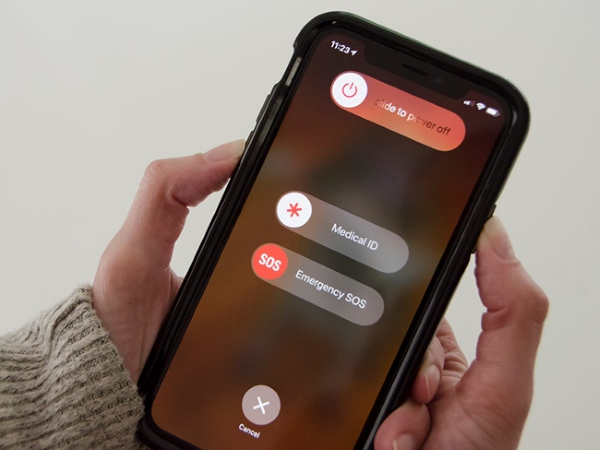
Before diving into advanced troubleshooting, always try restarting your device. Many users find that Developer Mode reappears naturally after a complete reboot because iOS finally finishes its background configuration tasks.
- Step 1. Turn off your iPhone and wait about 30 seconds to let the system fully power down.
- Step 2. Turn the device back on and navigate to Settings, then Privacy & Security, to check whether the developer toggle has returned.
Fix 3: Re-Trust Your Computer
The iOS 27 update might have wiped the existing trust relationship between your iPhone and your Mac. Resetting your privacy settings forces the hardware to establish a brand-new, secure connection.
- Step 1. Open Settings, tap General, and select Transfer or Reset iPhone.
- Step 2. Tap Reset, choose Reset Location & Privacy, and then reconnect your device to your computer to accept the new "Trust This Computer" screen prompt.

Fix 4: Launch a Development-Signed App
Sometimes, the Apple ecosystem just needs a practical push to recognize your current development workflow. Attempting to run a test application can trigger the system to unhide the necessary settings.
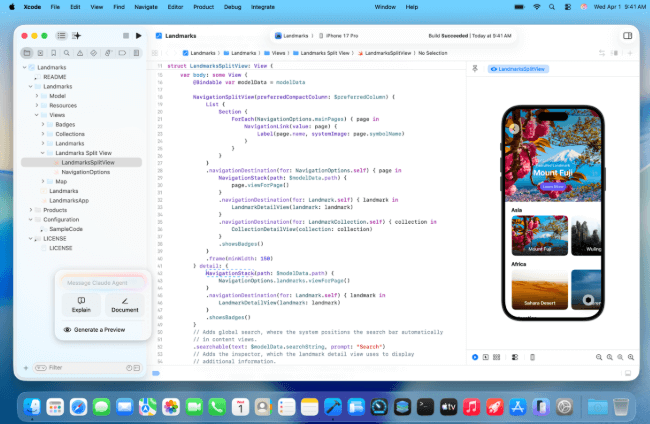
- Step 1. Open Xcode on your Mac, click "Create a new Xcode project", select the basic "App" template, and name it.
- Step 2. Connect your iPhone via USB, tap "Trust This Computer", and select your iPhone as the target device in the top-left corner of the Xcode window.
- Step 3. Click the "Play" button in Xcode to compile and install the blank app onto your phone.
- Step 4. Tap the newly installed app on your iPhone. Once the system blocks it and displays a security warning, navigate to Settings > Privacy & Security to find the Developer Mode toggle fully visible.
 Note
Note
If you receive an "Untrusted Developer" error when opening the app, quickly go to Settings > General > VPN & Device Management to trust your Apple ID, then check your privacy settings again.
Fix 5: Install the Latest iOS 27 Beta Update
Early beta builds are notorious for containing interface bugs that affect system menus. Apple frequently patches these developer-related glitches in subsequent software releases.
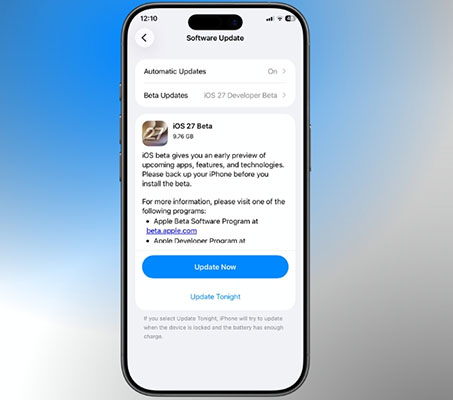
If there is no available update, you can also reinstall the iOS 27 Beta. Always ensure your iPhone is fully backed up and that you have sufficient storage space before attempting a complete reinstallation.
- Step 1. Open the Settings app and tap on General.
- Step 2. Select Software Update and install any newly available beta patches to see if the fresh code restores the missing menu.
Quickly install iOS 27 Developer Beta on your iPhone without a developer account.
 Further Reading:
 Fix 6: Repair Potential iOS System Issues
If the toggle disappeared immediately after installing the beta and standard fixes fail, the update itself may have corrupted system files. In these situations, running a dedicated system repair is a logical step before resorting to a drastic factory reset.
Tools like TunesKit iOS System Recovery are specifically designed to safely patch update loops, system glitches, and abnormal software behavior without erasing your personal data.
- Step 1. Launch TunesKit iOS System Recovery on your computer, connect your iPhone via USB, and select the iOS System Repair > Start > Standard Repair option to protect your files.
- Step 2. Download the correct iOS firmware package and allow the software to safely repair the corrupted operating system.
- Step 3. Once the repair is complete and the phone restarts, reconnect it to Xcode. While the repair tool fixes the underlying corruption, you still need that Xcode connection to satisfy Apple's strict developer requirements.

Fix 7: Reset All Settings
Configuration conflicts frequently occur after transitioning to a major new iOS architecture. Resetting all settings will restore your system preferences to their factory defaults without deleting any of your photos, apps, or personal files.
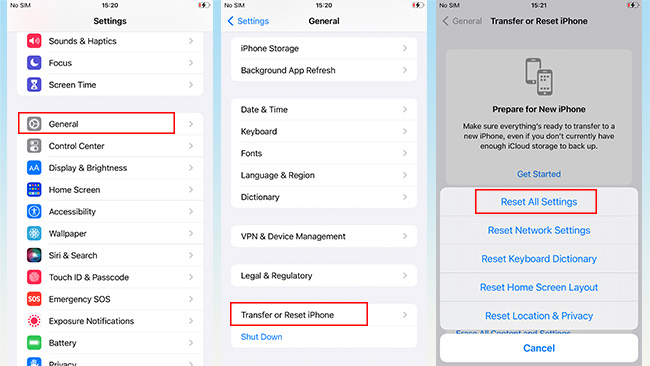
- Step 1. Go to Settings, tap General, and select Transfer or Reset iPhone.
- Step 2. Tap Reset, choose Reset All Settings, and then reconnect your device to Xcode after the phone reboots.
Fix 8: Check for Device Management Restrictions
If you are using an iPhone provided by a school, employer, or enterprise organization, a device management profile might be actively blocking developer features.
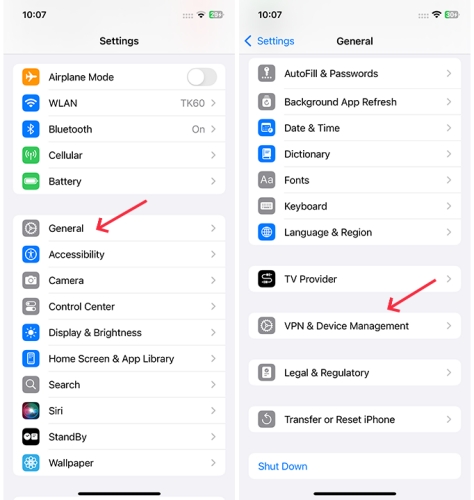
- Step 1. Open Settings on your iPhone and tap on General.
- Step 2. Select VPN & Device Management to see if an organizational profile is installed and restricting your access to Developer Mode.
Easily remove any device management restrictions from iPhone, iPad, and iPod touch without a password.
FAQs: Developer Mode Not Showing on iPhone
-
Did Apple remove Developer Mode in iOS 27?
No, the feature remains fully available for development and testing workflows. If the option is missing, it is almost always related to device recognition failures, software glitches, or temporary beta-related bugs.
-
How to enable Developer Mode in iOS 27?
If you're using iOS 27 Beta, the most common way to enable Developer Mode is directly through the Settings app once it is unhidden.
Step 1. Open Settings on your iPhone, and scroll down to choose Privacy & Security.
Step 2. Choose Developer Mode under the Security section, and click the toggle next to Developer Mode to turn it on.
Step 3. Follow the on-screen instructions, and then restart your iPhone to completely enable Developer Mode.

-
Can I enable Developer Mode without Xcode?
Sometimes. Running a development-signed app can occasionally trigger the setting to appear. However, using Xcode remains the most reliable and consistent method.
-
Can TunesKit make Developer Mode appear automatically?
No, third-party software cannot bypass Apple's core security requirements. A system recovery tool is only helpful when underlying iOS file corruption is preventing your settings from functioning normally.
Final Thoughts
If Developer Mode is not showing after updating to the iOS 27 Beta, do not assume Apple has removed the feature. In most instances, the issue boils down to device pairing problems, reset trust permissions, or bugs introduced during the beta upgrade.
Start with the simplest fixes first: restart your iPhone, reconnect it to Xcode, and ensure you have trusted your computer. If the problem stems from software corruption during the update, repairing the iOS system with a professional tool like TunesKit iOS System Recovery is a smart move before wiping your device. For the vast majority of developers, simply re-establishing that connection with Xcode remains the fastest way to get back to work.