


[2026 Guide] Fix Vertical Lines on iPhone Screen
Seeing sudden vertical lines on your iPhone screen can be alarming. In many cases, the issue may also affect touch response and make the device harder to use. The good news is that the problem is often fixable.
This guide applies to many iPhone models, including the iPhone 17, 16, 15, 14, and earlier devices such as the iPhone 6, 7, 8, XS, and XR. We'll look at the most likely causes of vertical lines on the iPhone screen and walk you through the best solutions for each situation. Follow the steps below to diagnose the problem and try the most effective fixes.

- What Causes Vertical Lines on iPhone Screen?
- Video Guide: How to Fix Vertical Lines on iPhone Screen
- Quick Fixes for Lines on iPhone Display
- The Most Efficient Way to Fix System-Related Lines HOT
- Use TunesKit iOS System Recovery [No Data Loss]
- Advanced Troubleshooting for iPhone Vertical Lines
- Hardware Damage and Repair Costs
- FAQs Related to Lines on iPhone Screen
- Last Line
What Causes Vertical Lines on iPhone Screen?
The colored lines on the iPhone screen in vertical direction could be caused by a few things. No matter which specific situation you're encountering, the following content will give you some idea of why.
- LCD Connection: the LCD cable has been disconnected from the logic board.
- Hardware Damage: vertical lines show on screen usually after dropping or water damage.
- Electro Static Discharge (ESD): your phone generates too much static discharge and triggers vertical lines.
- iPhone System Glitches: potential software issues can make vertical lines appear in the display screen.
Video Tutorial: Fix Vertical Lines on iPhone Screen
In this video, we'll show you several effective solutions to fix the vertical line problem when it appears on your screen.
Quick Fixes for Lines on iPhone Display
Before trying more advanced methods, start with these non-destructive steps. They are designed to refresh the system and clear temporary glitches without affecting your photos, messages, or other personal data.
Force Restart iPhone to Refresh Display Drivers
A force restart completely cuts power to the logic board. This process forces the iPhone to reload every line of code responsible for managing the screen's pixels. It is a highly effective way to clear minor software hangs that result in static vertical stripes.
-
For iPhone 8 or Newer Models:
Step 1. Quickly press and release the Volume Up button, and then followed by the Volume Down button.
Step 2. Hold the Side button and release it when the Apple logo appears on the display. -
For iPhone 7 or iPhone 7 Plus:
Step 1. Press and hold down the Power button and the Volume Down button together.
Step 2. Release them until the Apple logo reappears on the center of the screen. -
For iPhone 6s or Earlier Models:
Step 1. Simultaneously hold down the Home button and the Power button together.
Step 2. Let them go until the Apple logo reappears on the screen.

Clean iPhone Screen to Remove Physical Pressure
It might seem ridiculous, but in some cases, iphone screen showing lines problem are caused by things as little as water drops or dust. These things can be difficult to notice when you have a screen protector on the screen. If the water drops or dust gets stuck between the screen and the screen protector, it is natural that there will be vertical lines across the screen.
Therefore, you might as well remove the screen protector, clean the screen with a cloth, and see if the lines have gone.

Update iOS Software to Fix Known Display Bugs
This issue may result from the bugs of some outdated iOS versions. A user complains to us that vertical lines appear on the iPhone 5s screen, and simply updating the system works. We understand that some users may think that iOS updates are useless in general, but that is not true. Except for the updates of new features, iOS updates often contain bug fixes, which are very important to the normal function of the iPhone.
- Step 1. Go to Settings → General → Software Update.
- Step 2. If there is an available update, tap on the Download and Install button to confirm your update. The updating process will begin, what you need to do is just make sure the Wi-Fi connection is good and wait for the update to finish.

The Most Efficient Way to Fix System-Related Lines
If basic restarts do not solve the problem, you likely have a deeper firmware corruption that requires professional-grade intervention. While Apple's official tools often require a full device wipe, there are more efficient alternatives available.
Use TunesKit iOS System Recovery to Fix Firmware Errors
When standard resets fail, a deeper system repair is usually necessary to resolve persistent display artifacts. TunesKit iOS System Recovery provides a professional way to reinstall your iPhone's operating system without risking your personal photos or messages. This tool is specifically designed to repair over 150 different iOS issues, including the vertical lines glitch. This is the most effective path for fixing ghost lines caused by corrupted system files.
Using this software is straightforward and requires no technical expertise.
Key Features TunesKit iOS System Recovery:
It acts as a bridge between simple resets and the destructive factory restores found in iTunes. No data loss and easy to operate.
 600,000+ Downloads
- Step 1. Download TunesKit iOS System Recovery and install it on your PC. Connect your iPhone to PC with a USB data cable, you'll see your device automatically identified. Select iOS System Repair and then click the Start option.
- Step 2. Choose Standard Repair mode, which can rescue your iPhone from most of the typical issues and ensures data integrity. After that, click the Next button to proceed.
- Step 3. Check your device details on the screen carefully. Then click Download to get firmware package. The downloading process should begin automatically.
- Step 4. Click Repair and it will start to repair your phone. Wait patiently until the process is finished.

Advanced Troubleshooting for iPhone Vertical Lines
If you suspect the issue is a deep-seated software problem and the previous steps failed, you may need to perform a full system restoration. These methods are powerful but carry a significant risk of data loss if you do not have a recent backup.
Factory Reset iPhone to Clear Software Conflicts
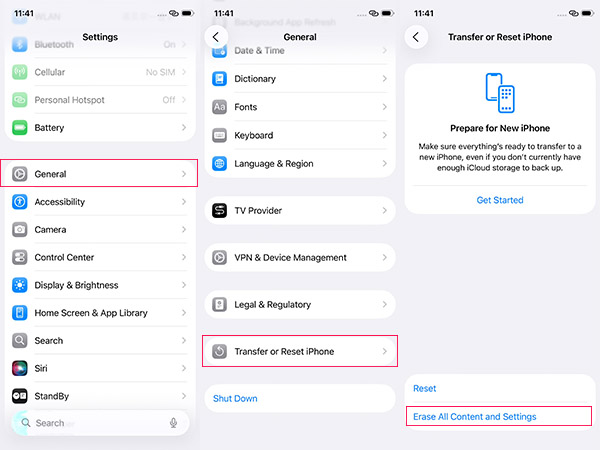
This way requires you to reset your iPhone to its original settings. It will erase all content and settings to provide a clean slate for the operating system. After a factory reset, your iPhone should be error-free if a bad app or a software glitch caused the problem. This method should eliminate them easily.
- Step 1. Open Settings → General → Transfer or Reset iPhone → Erase All Content and Settings → Enter your passcode → Erase iPhone.
- Step 2. Wait until your iOS device gets erased.
Restore iPhone via iTunes/Finder
If your iPhone has vertical lines on the screen, it can be restored from iTunes or Finder. By doing so, it will completely reinstall the iOS software.
- Step 1. Launch iTunes on your Windows or Finder on Mac.
- Step 2. Connect your iPhone to the computer using original iOS cable.
- Step 3. Under the Summary (or General on Mac), select Restore iPhone.
- Step 4. When prompt, click Restore to confirm your restoration procedure.

Perform a DFU Restore to Reset Core Coding
You can also put your iPhone in DFU mode to remove the vertical lines on iPhone. Not only does it restore the phone to factory settings, but it erases and restores all the original coding. You need a computer (PC or Mac) with an updated iTunes program to perform this procedure. Then use iTunes to restore your iPhone and see if the line is gone.


Hardware Damage and Repair Costs
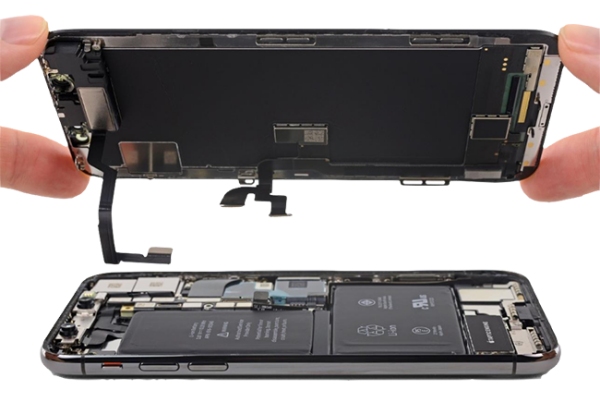
If the vertical lines remain after a DFU restore, the problem is almost certainly hardware-related. This usually means the screen's flex cable is damaged or the display panel itself has experienced a hardware failure. You can often confirm this by performing a "pinch test", where you gently squeeze the area near the top of the phone to see if the lines change.
Repair Your Display
Repair costs in 2026 vary depending on your warranty status and iPhone model. If you have AppleCare+, a screen replacement is typically a flat fee of $29. Out-of-warranty repairs at the Apple Store can range from $129 to over $329 for the latest Pro Max models.
Authorized third-party repair shops offer a more budget-friendly alternative. However, ensure they use high-quality OEM-equivalent parts to maintain the color accuracy and touch sensitivity of your device.
FAQs Related to Lines on iPhone Screen
-
Are vertical lines a sign of permanent screen damage?
Not necessarily. While they can indicate a broken LCD, they are often caused by temporary software crashes or loose internal connections that can be reseated or repaired via firmware updates.
-
Can vertical lines disappear on their own?
It is rare for hardware-based lines to disappear spontaneously. However, if the cause was a temporary software glitch or overheating, the lines may vanish once the device cools down or the system is refreshed.
-
Can water damage cause vertical lines on my display?
Yes, liquid ingress is one of the leading causes of display malfunctions. Even a small amount of moisture can corrode the pins on the display connector, resulting in green, white, or multicolored vertical lines.
-
Will Apple repair vertical lines under warranty?
It depends. Apple will usually repair the screen for free if the device is under warranty and shows no signs of physical or liquid damage. However, if there is even a small crack or a tripped moisture indicator, it will likely be classified as a paid repair.
Last Line
Fixing vertical lines on an iPhone screen requires a methodical approach to rule out software glitches before committing to a hardware replacement. Always start with a force restart and a software check, as these are the quickest paths to a solution.
For a more comprehensive and data-safe fix, utilizing a tool like TunesKit iOS System Recovery can save you a trip to the repair shop. If the vertical lines persist through a full DFU restore, it is time to consult a professional technician for a hardware assessment.


