


How to Fix iPhone or iPad Screen Too Dark and Other Brightness Issues
Is your iPhone or iPad screen too dark even when the brightness is turned up? You may also find that Auto-Brightness is not working, the brightness keeps changing by itself, or the screen brightness will not increase.
These problems can be caused by display settings, accessibility features, Low Power Mode, overheating, an iOS or iPadOS update, or a temporary system issue. This guide explains why your iPhone or iPad brightness is not working properly and provides practical solutions for the most common screen brightness problems.

- Why Is My iPhone/iPad Screen Too Dark
-
How to Fix iPhone or iPad Brightness Problems
- Fix 1: Adjust the Screen Brightness Manually
- Fix 2: Check Auto-Brightness
- Fix 3: Turn Off Reduce White Point
- Fix 4: Disable the Low Light Zoom Filter
- Fix 5: Let the iPhone or iPad Cool Down
- Fix 6: Check Night Shift, True Tone, and Attention Aware
- Fix 7: Restart or Force Restart the Device
- Fix 8: Update iOS or iPadOS
- Fix 9: Reset All Settings
- Fix 10: Repair iOS or iPadOS with TunesKit HOT
- Fix 11: Restore the iPhone or iPad
- Conclusion
Why Is My iPhone/iPad Screen Too Dark
An iPhone or iPad screen may appear too dark because the brightness is set too low, Auto-Brightness is adjusting the display to the surrounding light, or an accessibility setting such as Reduce White Point or the Zoom Low Light filter is enabled. Night Shift and True Tone can also make the screen look warmer or less bright.
The device may also lower its maximum brightness when it becomes too hot, especially during charging, gaming, navigation, video recording, or use in direct sunlight. In other cases, the problem may be caused by a temporary iOS or iPadOS error, a recent system update, a damaged ambient light sensor, or a faulty display.
How to Fix iPhone or iPad Brightness Problems
iPhone or iPad brightness problems can be caused by display settings, accessibility features, overheating, temporary iOS glitches, or hardware issues. Try the following solutions in order, starting with the settings that are most likely to affect screen brightness.
Fix 1: Adjust the Screen Brightness Manually
If your iPhone or iPad becomes too dark, then you are suggested to disable the Reduce White Point feature, which is set to decrease the intensity of bright colors on your iPhone/iPad. If you turn it on, your device screen may get dim. To reverse it, try out the following procedures.
- Step 1. Swipe down from the top-right corner of the screen to open Control Center. On devices with a Home button, swipe up from the bottom edge.
- Step 2. Drag the brightness slider upward.
- Step 3. You can also go to Settings > Display & Brightness and adjust the brightness slider there.
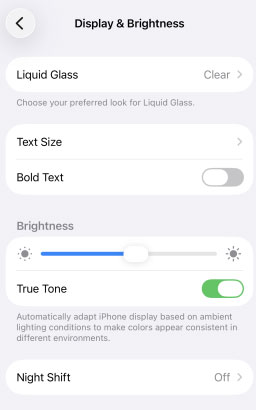
If the slider is already at the highest level but the screen remains dark, continue with the methods below.
Fix 2: Check Auto-Brightness
Auto-Brightness uses the ambient light sensor to adjust the display according to the surrounding light. If it is not working properly, the screen may become too dark or keep changing brightness by itself.
- Step 1. Open Settings app on your iPhone.
- Step 2. Go to Accessibility > Display & Text Size.
- Step 3. Scroll down to Auto-Brightness.
- Step 4. Turn Auto-Brightness off, wait a few seconds, and turn it on again.
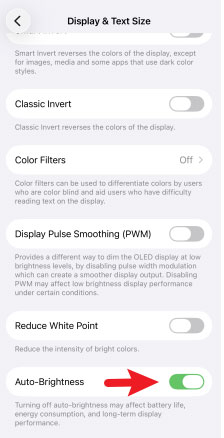
You can also leave it disabled temporarily to check whether it is causing the problem.
Fix 3: Turn Off Reduce White Point
Reduce White Point lowers the intensity of bright colors. When the setting is enabled at a high percentage, the screen may look very dark even when the brightness slider is turned up.
- Step 1. Go to Settings > Accessibility.
- Step 2. Tap Display & Text Size.
- Step 3. Find Reduce White Point.
- Step 4. Turn it off, or lower the percentage using the slider.
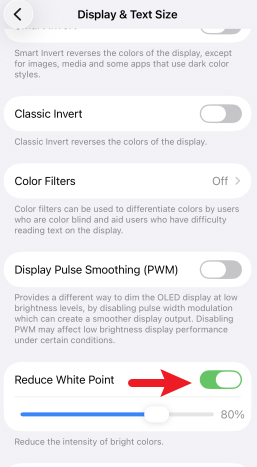
Check the screen again to see whether the brightness has returned to normal.
Fix 4: Disable the Low Light Zoom Filter
The Zoom accessibility feature includes a Low Light filter that can make the entire screen much darker. Turning off Zoom alone is not always necessary. You should first check which Zoom filter is selected.
- Step 1. Open Settings > Accessibility > Zoom.
- Step 2. Tap Zoom Filter.
- Step 3. Select None if Low Light is enabled.
- Step 4. Turn off Zoom if you do not use this accessibility feature.
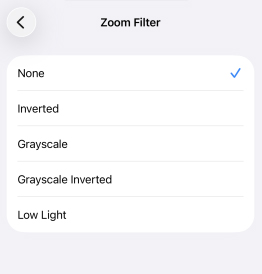
You can also double-tap the screen with three fingers to check whether Zoom is currently active.
Fix 5: Let the iPhone or iPad Cool Down
An iPhone or iPad may reduce its maximum screen brightness when the device becomes too hot. This commonly happens while charging, playing games, using navigation, recording video, or leaving the device in direct sunlight.
- Step 1. Stop charging the device and close power-intensive apps.
- Step 2. Move the iPhone or iPad away from direct sunlight or other heat sources.
- Step 3. Remove the protective case if the device feels unusually warm.
- Step 4. Allow the device to cool naturally before adjusting the brightness again.

Do not place the device in a refrigerator or use ice to cool it quickly, as sudden temperature changes may cause damage.
Fix 6: Check Night Shift, True Tone, and Attention Aware
Some display features can make the screen appear darker or change its color.
To check Night Shift and True Tone:
- Step 1. Go to Settings > Display & Brightness.
- Step 2. Turn off True Tone temporarily.
- Step 3. Tap Night Shift and make sure it is not enabled unexpectedly.
Night Shift mainly makes the screen warmer, but some users may mistake the color change for reduced brightness.
On supported Face ID devices, Attention Aware Features may also dim the display when the device does not detect that you are looking at it.
- Step 1. Open Settings > Face ID & Passcode.
- Step 2. Enter the device passcode.
- Step 3. Turn off Attention Aware Features temporarily.
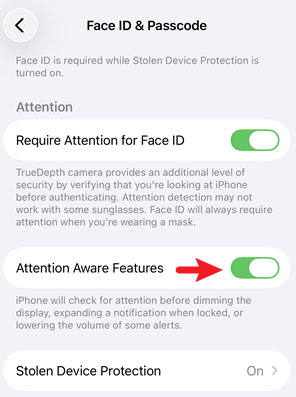
Then check whether the screen still dims by itself.
Fix 7: Restart or Force Restart the Device
A temporary iOS or iPadOS glitch may prevent the display settings from working correctly. Restarting the device can refresh the system without deleting data.
Restart an iPhone or iPad Normally
- Step 1. Open Settings > General.
- Step 2. Scroll down and tap Shut Down.
- Step 3. Drag the power-off slider.
- Step 4. Wait about 30 seconds, then press and hold the side or top button until the Apple logo appears.

Force Restart an iPhone
For iPhone 8, iPhone SE second generation or later, and newer models:
- Step 1. Quickly press and release the Volume Up button.
- Step 2. Quickly press and release the Volume Down button.
- Step 3. Press and hold the Side button until the Apple logo appears.
For iPhone 7 and iPhone 7 Plus, press and hold the Side and Volume Down buttons together until the Apple logo appears.
For iPhone 6s, first-generation iPhone SE, and earlier models, press and hold the Home and Side or Top buttons together until the Apple logo appears.

Force Restart an iPad
For an iPad without a Home button:
- Step 1. Quickly press and release the Volume Up button.
- Step 2. Quickly press and release the Volume Down button.
- Step 3. Press and hold the Top button until the Apple logo appears.

For an iPad with a Home button, press and hold the Home and top buttons together until the Apple logo appears.

Fix 8: Update iOS or iPadOS
If the brightness problem started after update or appears to be caused by a software bug, install the latest available update.
- Step 1. Connect the device to Wi-Fi and a power source.
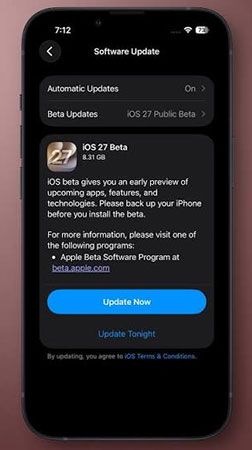
- Step 2. Go to Settings > General > Software Update.
- Step 3. Tap Update Now button if an update is available.
- Step 4. Keep the device connected until the update finishes.
 Note
Note
Back up important data before installing a major system update.
Fix 9: Reset All Settings
Incorrect display, accessibility, network, or system settings may cause brightness problems. Reset All Settings restores system preferences without deleting your photos, apps, messages, or other personal files.
- Step 1. Open Settings > General.
- Step 2. Tap Transfer or Reset iPhone/iPad.
- Step 3. Tap Reset > Reset All Settings.
- Step 4. Enter the device passcode and confirm the reset.
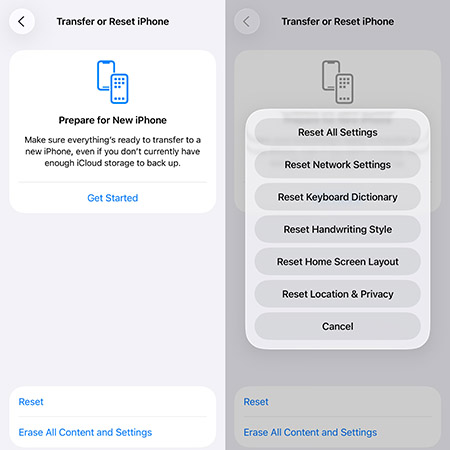
After the device restarts, you may need to reconnect to Wi-Fi, reconfigure display settings, and add some cards or permissions again.
Fix 10: Repair iOS or iPadOS with TunesKit
If the brightness problem appeared after an iOS update and none of the settings above work, the issue may be related to incomplete system files. TunesKit iOS System Recovery can help repair many software-related iPhone and iPad problems.
Its Standard Repair mode is designed to repair common system issues without erasing existing device data. This powerful program can also resolve other problems, for instance, iPhone green screen, iTunes errors without data loss. It's compatible with the latest iOS/iPadOS version,
Fix Brightness Issues with TunesKit
TunesKit iOS System Recovery can repair software-related iPhone and iPad brightness problems with Standard Repair, without erasing existing data.
 600,000+ Downloads
Step 1. Connect iPhone to PC
Connect your iPhone/iPad with computer through an original USB cable. Then run TunesKit iOS System Recovery. Press the iOS System Repair button on the interface, next, choose the Start button.
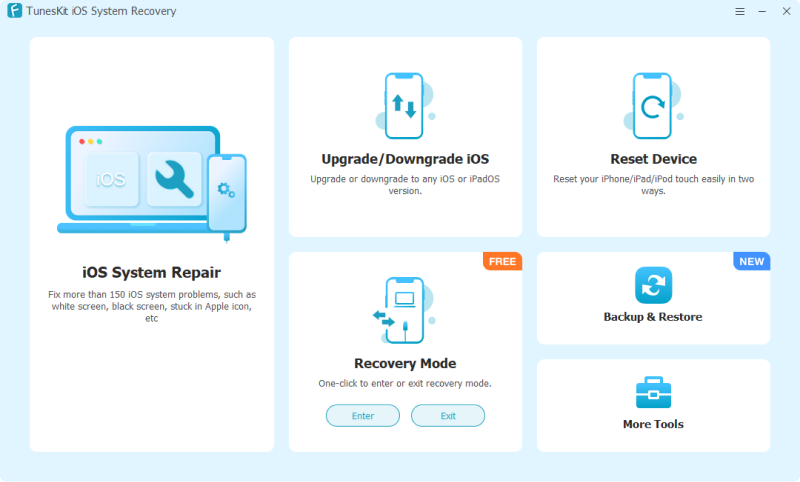
Step 2. Choose A Mode
To fix iPhone/iPad screen brightness issue, simple choose the Standard Repair to continue.

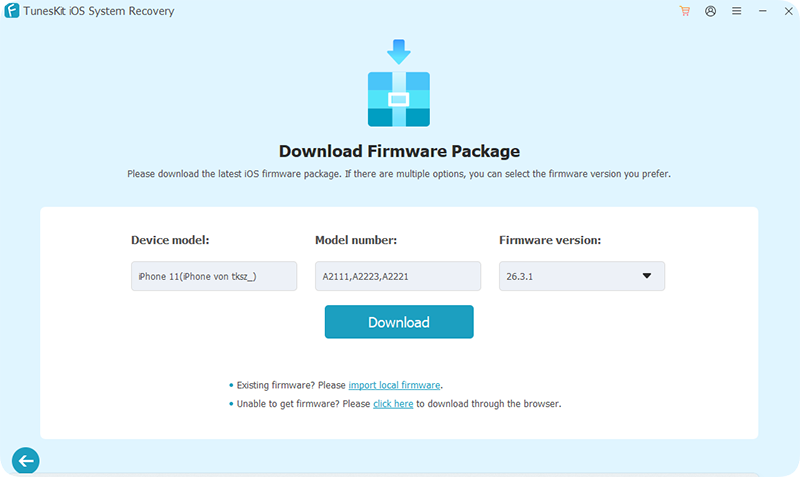
Step 3. Download Firmware Package
Read and check the information about your device given on this page. Once you are sure that all of them are correct, click the Download button to download the firmware package matched with your device.
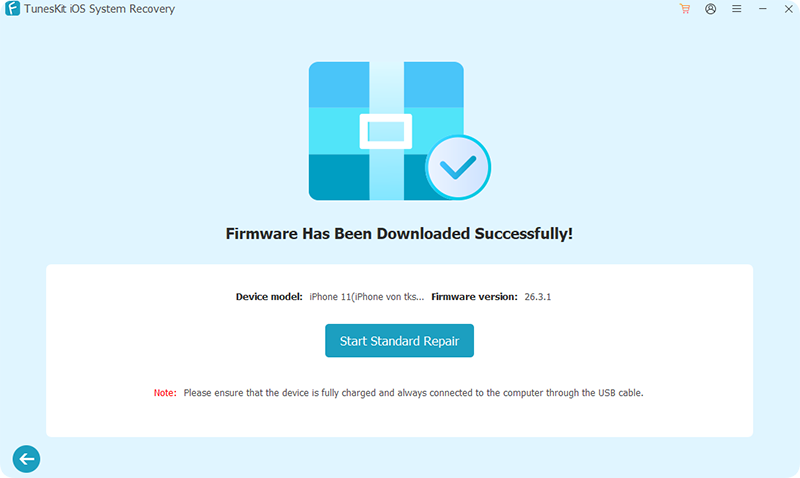
Step 4. Repair iPhone/iPad brightness problems
Tap on the Start Standard Repair button to fix the iOS and wait until it tells you the repair completed. After that, restart your iPhone or iPad, your problem will be worked out.
Fix 11: Restore the iPhone or iPad
A factory restore erases all content and settings, so it should only be used after the non-erasing methods fail.
- Step 1. Back up the iPhone or iPad using iCloud or a computer.
- Step 2. Connect the device to the computer. And trust your computer when prompted.
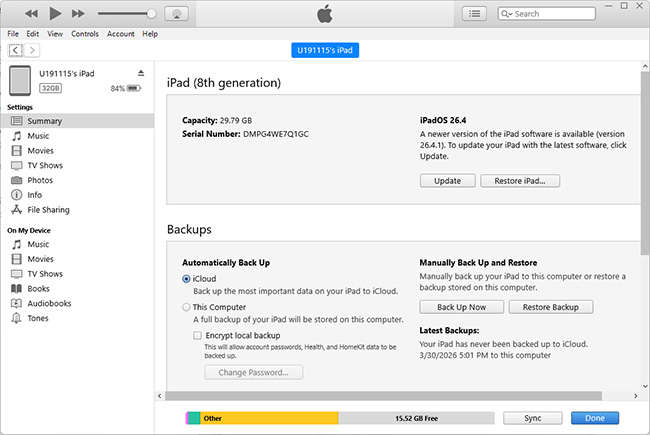
- Step 3. Open Finder on a Mac or Apple Devices on a Windows PC. Use iTunes only on older systems.
- Step 4. Select the iPhone or iPad when it appears.
- Step 5. Click Restore iPhone or Restore iPad.
- Step 6. Confirm the action and wait for the computer to erase the device and reinstall the operating system.
After the restore, set up the device and check the brightness before restoring the backup.
Conclusion
If your iPhone or iPad screen is too dark, start by checking brightness settings, Auto-Brightness, Reduce White Point, Zoom filters, and device temperature. A restart or settings reset may also fix temporary problems. When the issue is caused by an iOS or iPadOS system error, TunesKit iOS System Recovery offers a practical solution. Its Standard Repair mode can help repair common software-related issues without erasing existing data.