


How to Fix iPad Sound Not Working in 11 Ways
Nowadays, many people use their iPads to listen to music, attend online classes, and watch movies or TV shows. Therefore, proper sound functionality is essential for these activities. However, users may sometimes encounter issues where their iPad has no sound. In such cases, the following methods can help resolve the iPad sound not working problem.

- Why Is My iPad Sound Not Working?
- How to Fix iPad Sound Not Working [11 Ways]
- Solution 1: Disable Focus Mode (Do Not Disturb)
- Solution 2: Turn Off Silent Mode
- Solution 3: Disable Bluetooth Connections
- Solution 4: Toggle Mono Audio
- Solution 5: Test In-App Audio Settings
- Solution 6: Inspect Ports and Headphone Hardware
- Solution 7: Force Quit Unresponsive Apps
- Solution 8: Force Restart Your iPad
- Solution 9: Repair System Glitch Using A Professional ToolHOT
- Solution 10: Update the iPad to the Latest iPadOS Version
- Solution 11: Factory Reset the iPad
- The Final Words
Why Is My iPad Sound Not Working?
The possible reasons is various. Here we list some common causes that result in your iPad no sound.
- 01 Volume Muted: If the volume is turned down or muted accidentally, you will hear nothing from your iPad.
- 02 Mute Mode Enabled: Mute is toggled on via Control Center or side switch (on older models).
- 03 Focus Mode: Your iPad may be in silent mode, which disables certain sounds, like notifications and alerts.
- 04 Bluetooth Connection: If your iPad is connected to Bluetooth devices, audio will play through those devices instead of the iPad’s speakers.
- 05 Wrong Audio Output: The iPad might be routing audio to another device, like a TV or speaker, via AirPlay.
- 06 Software Glitch: Temporary software glitches can cause audio problems.
- 07 Outdated iPadOS: An outdated iPadOS version may cause compatibility issues, including sound problems.
- 08 Hardware Damage: The speakers or internal hardware are damaged.
How to Fix iPad Sound Not Working [11 Ways]
After understanding the common causes behind iPad sound issues, the next step is to apply practical solutions to fix the problem. Fortunately, most sound-related issues on an iPad can be resolved with a few simple checks and adjustments. Whether the problem is caused by incorrect settings, software glitches, or external connections, the following methods will help you restore your iPad's audio quickly and effectively.
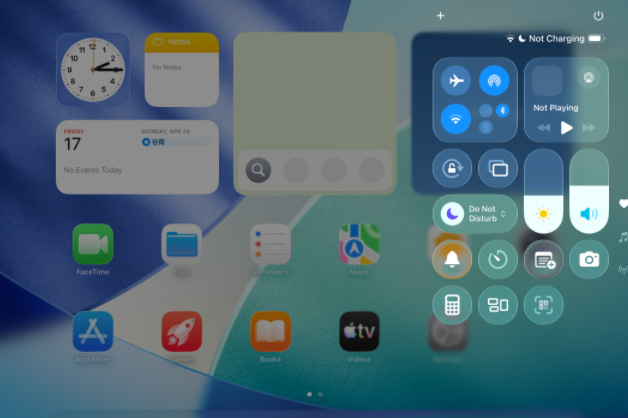
Solution 1: Disable Focus Mode (Do Not Disturb)
Focus modes, which include the classic Do Not Disturb feature, are designed to silence alerts and notifications to reduce daily distractions. If this is accidentally enabled, it can easily block audio and make you think your device's speakers are broken. Disabling it completely restores all normal notification and system audio behaviors.
- Step 1. Swipe down from the very top-right corner of your iPad screen to open the Control Center.
- Step 2. Look for the "Focus" button, which may display a crescent moon icon or say "Do Not Disturb" if it is active.
- Step 3. Tap this icon to turn the Focus mode off, ensuring the button returns to a dark, unhighlighted color.
Solution 2: Turn Off Silent Mode
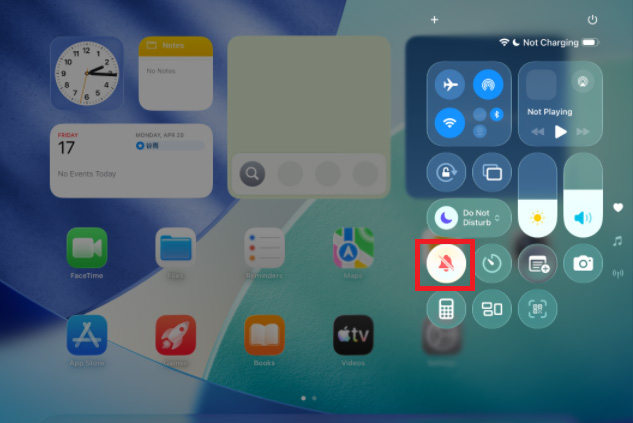
Silent Mode directly mutes system sounds, alerts, and sometimes media audio depending on the specific app you are using. Ensuring this is toggled off is one of the quickest ways to verify your speakers are actually functioning. It acts as a universal override for many audio outputs on your tablet.
- Step 1. Access your Control Center by swiping down from the top-right corner of your screen.
- Step 2. Locate the bell icon, which controls the system's mute function.
- Step 3. Tap the bell icon so it is no longer highlighted red and no longer has a diagonal line running through it.
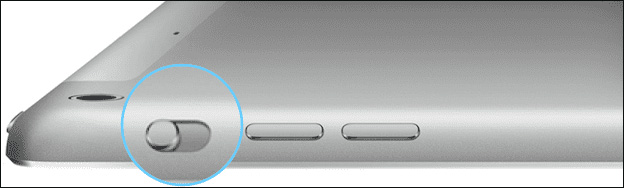
If you happen to have a much older iPad model, you might also have a physical switch on the side of the device right next to the volume buttons. If your device has this switch, flip it so the orange indicator is hidden, which physically takes the iPad out of silent mode.
Solution 3: Disable Bluetooth Connections
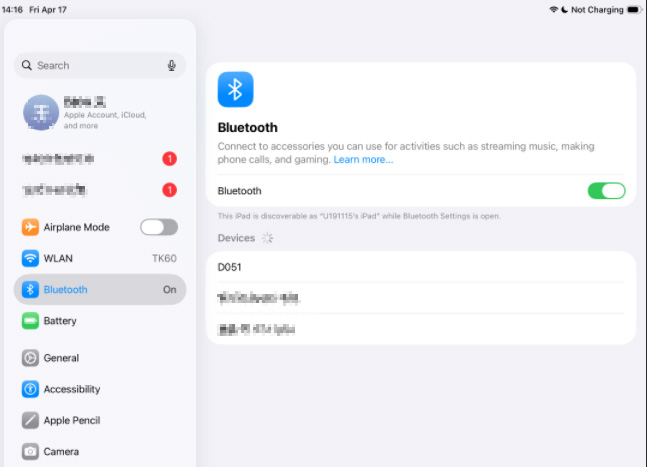
When Bluetooth is active, your iPad might silently connect to nearby wireless headphones or external speakers that you have previously paired. This redirects the audio output away from the built-in iPad speakers, making it seem like the sound is entirely broken. Disabling Bluetooth entirely severs these hidden wireless connections. It forces the tablet to route all audio back to its internal speakers immediately.
- Step 1. Open the Settings app on your iPad or swipe down from the top-right corner to access the Control Center.
- Step 2. Locate the Bluetooth menu in settings or find the blue Bluetooth icon in the control panel.
- Step 3. Toggle the switch to the off position so the icon turns gray, disconnecting any linked audio accessories.
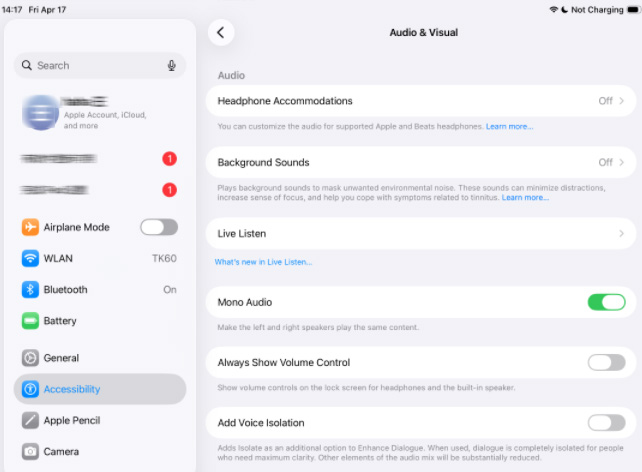
Solution 4: Toggle Mono Audio
Mono Audio combines both the left and right stereo channels into a single track. Sometimes, the iPad's audio system can experience a minor software glitch that causes sound routing to freeze or stall completely. Toggling this specific audio setting off and on often resolves iPad sound not working.
- Step 1. Open the Settings app on your iPad and scroll down the left sidebar to select Accessibility.
- Step 2. Tap on Audio & Visual, which is located under the Hearing section.
- Step 3. Find Mono Audio and toggle the switch on and then immediately back off to reset the internal audio channels.
Solution 5: Test In-App Audio Settings
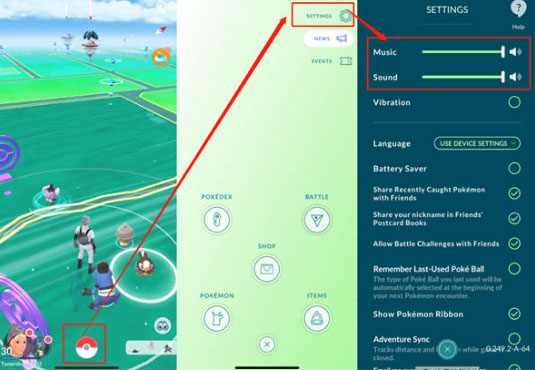
If you find your iPad sound not working only in specific games or media players, the app's internal volume controls might be overriding the main system volume. Checking these independent settings ensures the application itself isn't intentionally muting your media. Adjusting these sliders is often the quick fix when system alerts work perfectly but a video remains silent.
- Step 1. Open the specific application where the audio is currently failing.
- Step 2. Navigate to the app's internal settings menu to adjust dedicated audio sliders or toggle off any mute options.
- Step 3. Check the media player interface directly for a crossed-out speaker icon and tap it to unmute.
Solution 6: Inspect Ports and Headphone Hardware
Physical debris trapped inside your charging port can actually trick the tablet's sensors into thinking headphones are plugged in. This cuts off the external speakers entirely and gets the device stuck in "Headphone Mode." Cleaning the port ensures a proper physical connection, which is a highly effective fix for an iPad sound not working.
- Step 1. Shine a flashlight into your iPad's USB-C or Lightning port to check for accumulated lint, dust, or dirt.
- Step 2. Use a non-conductive tool, like a wooden toothpick, to scoop out debris without scraping the internal metal pins.
- Step 3. If using wired headphones, inspect the cable and test them on another device to rule out a hardware issue.

Solution 7: Force Quit Unresponsive Apps
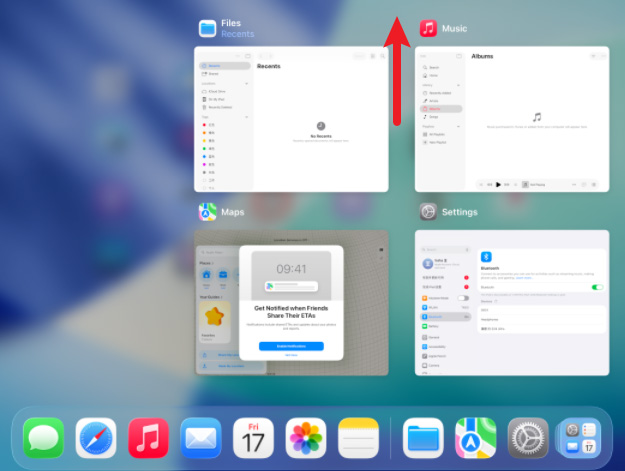
Applications like Apple Music can occasionally experience temporary software freezes that disrupt audio decoding. Force closing the application completely flushes it from the system memory rather than just minimizing it to the background. This provides the software with a fresh start when opened again, instantly clearing out temporary audio bugs.
- Step 1. Swipe up from the bottom edge of your screen and pause in the middle to open the App Switcher.
- Step 2. Swipe horizontally across the screen to locate the Apple Music app card or the malfunctioning application.
- Step 3. Swipe up swiftly on the app's preview window to forcefully throw it off the screen and close it completely.
 Note
Note
Always remember that a quick app restart is often the fastest way to clear unexpected system glitches.
Solution 8: Force Restart Your iPad
A force restart does more than simply turning your device off and on; it clears out the temporary memory cache. This process forces the operating system to completely reload all audio drivers from scratch. It is often the most effective way to eliminate stubborn software glitches causing your iPad sound not working.
- Step 1. Quickly press and release the Volume Up button located near the top of your tablet.
- Step 2. Quickly press and release the Volume Down button right next to it.
- Step 3. Press and hold the Top power button until the screen goes completely black and the Apple logo appears.

Solution 9: Repair System Glitch Using A Professional Tool
To cause no data loss and efficiently resolve the problem of iPad having no sound, here we would like to introduce an iOS system repair tool to you. That is TunesKit iOS System Repair, an professional and powerful iOS repairing tool for iPhone, iPad, and iPod. With TunesKit software, you can quickly and efficiently restore your iPad to normal.
Apart from solving iPad sound not working, this program can also fix other iPad issues like stuck on apple logo, black screen and so on. Moreover, it is able to work out various iPhone problems, too. Finally, this program is fully compatible with all iOS devices and iOS versions. Using TunesKit software to settle iPad sound error only requires three simple-to-operate steps.
Fix iPad Sound Not Working in 1-Click
TunesKit iOS System Recovery quickly repairs system glitches that cause iPad sound not working issues without data loss.
 600,000+ Downloads
Step 1Connect the iPad to the Computer
Launch the TunesKit iOS System Recovery on your computer and connect your iPad with the computer. When the computer has successfully detected your iPad, just click the iOS System Repair > Start button.

Step 2Choose a Mode
The two modes will be shown on the app's interface and then choose Standard Repair. This mode can fix no sound on iPad without data loss.

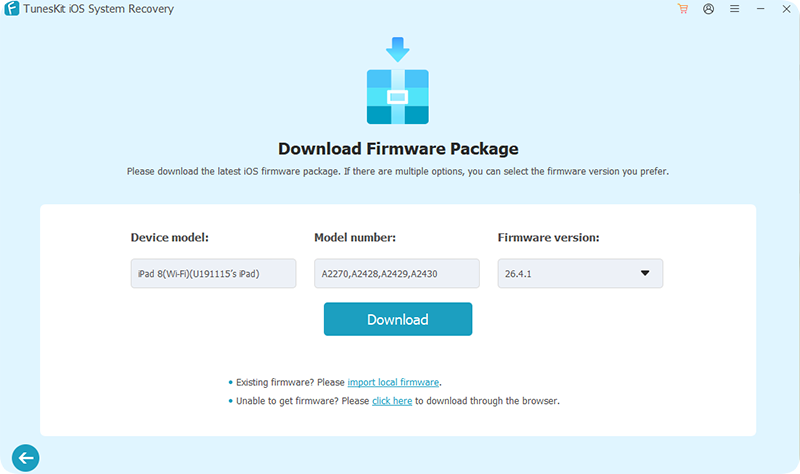
Step 3Download the Firmware Package
Now comfirm your device info including the model and iOS version. If everything is fine, click the Download button and then program will start downloading.
Step 4Repair Sound Not Working on iPad
After the firmware package has been triumphantly downloaded, click on the Repair button to fix your iPad's iOS system. When the iOS is fixed, your iPad sound will function normally.

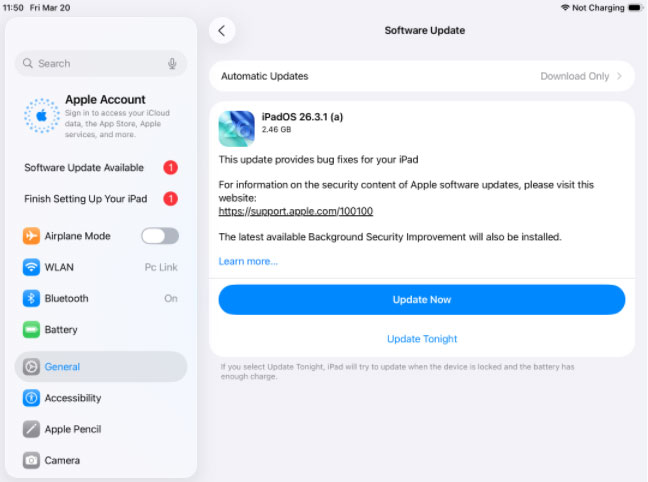
Solution 10: Update the iPad to the Latest iPadOS Version
Apple regularly releases system patches to address known bugs, including systemic audio dropouts. Updating your tablet to the newest iOS 26 version ensures you have the most current firmware for your speakers and Bluetooth controllers. Staying up to date prevents older, unpatched bugs from interfering with your media playback.
- Step 1. Open the Settings app on your iPad and tap the General menu.
- Step 2. Select Software Update to allow the device to check Apple's servers for new operating system versions.
- Step 3. If an update is available, tap the Update Now button to begin the process.
Solution 11: Factory Reset the iPad
When persistent software corruption leaves your iPad sound not working, restoring the device to its factory defaults might be your final software recourse. This completely erases all customized settings and corrupted files that might be blocking your audio output.
You should back up your important data before proceeding, as this action deletes everything on the tablet.
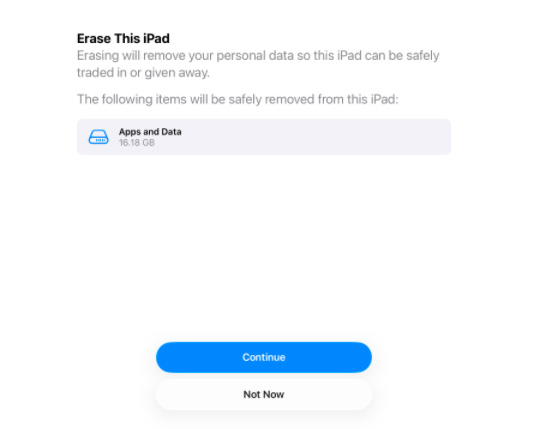
- Step 1. Navigate to Settings, tap on General, and scroll to the very bottom of the right-hand menu.
- Step 2. Select Transfer or Reset iPad to access the system recovery options
- Step 3. Tap Erase All Content and Settings, then tap the Continue button, and follow the on-screen prompts to confirm the permanent factory reset.
The Final Words
In conclusion, this article provides you the full solutions to solve your iPad sound not working problem. To remind you, if your iPad having no sound is due to iOS system issues, you are highly suggested to immediately employ TunesKit iOS System Recovery. Evidence has shown that it will completely help you get out of trouble with 100% success rate and without any data loss.


