


iPad Running Slow? Why It Happens and 6 Ways to Speed It Up
Is your iPad running slow, taking longer to open apps, respond to taps, or switch between tasks? A slow iPad can be caused by low storage, too many background processes, outdated apps or iPadOS, or network problems.
If you're wondering why your iPad is so slow, this guide explains the most common causes and shows you practical ways to speed up your iPad and improve its performance. Start with the simple fixes below before considering more advanced troubleshooting.

Why Is My iPad Running Slow?
If your iPad is running slow, the problem is usually related to storage, software, background activity, or aging hardware. Here are the most common causes:
- 01 Low storage space: When your iPad is nearly full, apps and system processes may take longer to load and respond.
- 02 Too many background tasks: Running multiple apps or allowing too many apps to refresh in the background can use extra memory and system resources.
- 03 Outdated iPadOS or apps: Older software may contain bugs or compatibility issues that make your iPad run slowly.
- 04 Network or hardware limitations: A weak Internet connection can make online tasks feel slow, while an aging battery or older iPad hardware may also affect overall performance.
 Further Reading: Why Is My iPhone Laggy? [6 Quick Fixes]
6 Ways to Fix an iPad Running Slow
If your iPad is running slow, start with the simplest fixes before moving on to system repair or hardware troubleshooting. The methods below address common causes such as insufficient storage, temporary system glitches, outdated software, power-saving restrictions, and iPadOS errors.
Method 1. Free Up iPad Storage
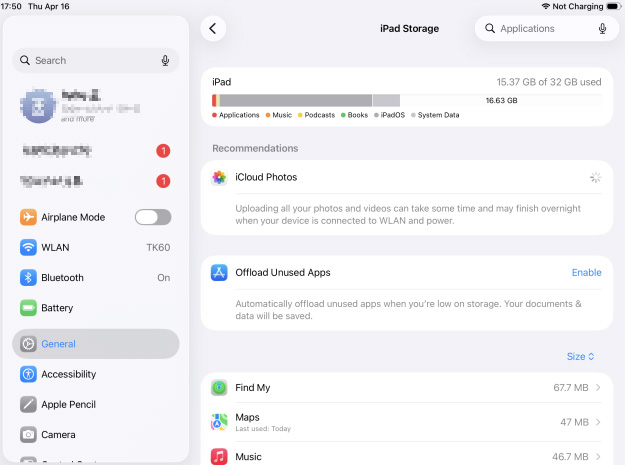
Insufficient storage is one of the first things to check when your iPad runs slowly. iPadOS needs free space for temporary files, app updates, caching, and other system processes. Apple recommends keeping at least 1 GB of storage available to help prevent slowdowns.
Instead of immediately deleting everything, check which apps and files are using the most space. You can also offload an unused app to remove the app itself while keeping its documents and data.
- Step 1. Open Settings on your iPad.
- Step 2. Tap General > iPad Storage.
- Step 3. Check the available storage and review Apple's storage recommendations if they appear.
- Step 4. Select an app you rarely use.
- Step 5. Tap Offload App option to free up storage while keeping its data, or choose Delete App if you no longer need the app or its data.
You can also remove large videos, downloaded files, offline media, and other unnecessary content to create more free space.
Method 2. Restart Your iPad
If your iPad suddenly becomes slow, freezes occasionally, or takes longer than usual to open apps, restarting it is a simple fix worth trying. A restart reloads iPadOS and can clear temporary software glitches without deleting your personal data.
The restart procedure depends on whether your iPad has a Home button. Apple's current instructions are as follows:
For an iPad without a Home button:
- Step 1. Press and hold either Volume button and the Top button at the same time until the power-off slider appears.
- Step 2. Drag the slider and wait about 30 seconds for the iPad to turn off.
- Step 3. Press and hold the Top button again until the Apple logo appears.

For an iPad with a Home button:
- Step 1. Press and hold the Top button until the power-off slider appears.
- Step 2. Drag the slider and wait about 30 seconds.
- Step 3. Press and hold the Top button until the Apple logo appears.

Method 3. Update iPadOS and Your Apps
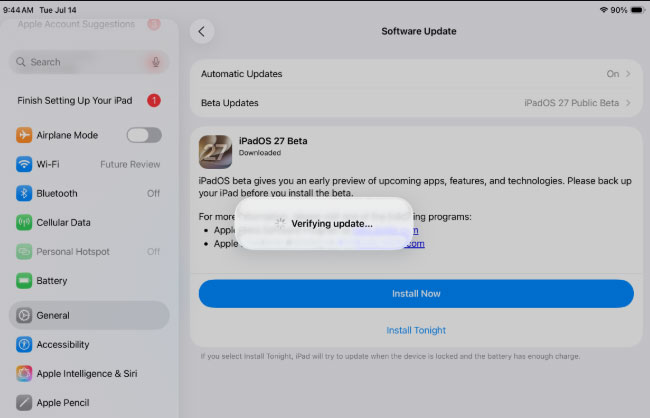
An outdated version of iPadOS or an old app can sometimes cause sluggish performance, crashes, or compatibility problems. Apple regularly releases iPadOS updates that include bug fixes, security improvements, and system changes, so checking for an available update is a useful step when your iPad is running slowly.
Steps to update iPadOS:
- Step 1. Connect your iPad to Wi-Fi and, preferably, a power source.
- Step 2. Open Settings > General > Software Update.
- Step 3. If an update is available, tap the Update Now button and follow the onscreen instructions.
Steps to update app:
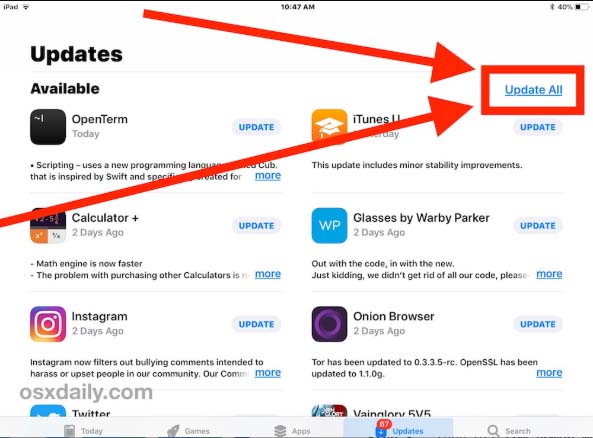
- Step 1. Open the App Store.
- Step 2. Tap your profile picture or account button.
- Step 3. Open App Updates.
- Step 4. Tap Update beside an app or choose Update All.
Method 4. Turn Off Low Power Mode
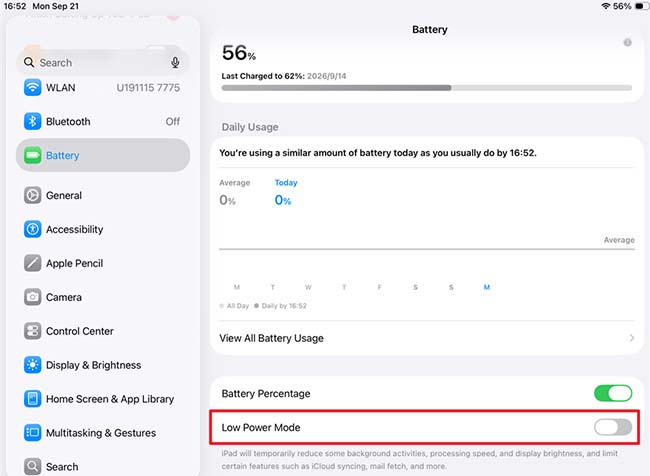
If your iPad feels slower than usual while the battery icon is yellow, check whether Low Power Mode is enabled. Low Power Mode reduces power consumption by limiting or slowing certain background activities and features. Apple specifically recommends checking this setting when troubleshooting a slow iPad.
- Step 1. Open Settings on your iPad.
- Step 2. Tap Battery.
- Step 3. Turn off Low Power Mode.
Use your iPad for a while afterward and see whether its responsiveness improves.
Method 5. Repair iPadOS with TunesKit iOS System Recovery
When freeing up your iPad storage and restart your iPad are no effect, there should be some problems with your iPad. In this case, some professional tools can help you solve the problem. TunesKit iOS System Recovery is a professional iOS system repairing software, with this program, you can easily smoothen your iPad in several steps. Not only iPad running slow, but TunesKit iOS System Recovery can also help you fix most of the iPad issues such as iPad stuck on Hello screen, stuck on the Apple logo, stuck on the black screen. Here is the detailed tutorial to show you how to smoothen your iPad.
Key Features of TunesKit iOS System Recovery
Fix iPad running slow caused by iPadOS glitches without data loss & Compatible with both Windows and macOS
 600,000+ Downloads
Here are the steps to repair a slow iPad with TunesKit iOS System Recovery:
Step 1. Connect iPad to PC
Download and install TunesKit iOS System Recovery on your Windows PC or Mac. Connect your iPad to the computer with a USB cable. Launch TunesKit and choose iOS System Repair, then click Start.
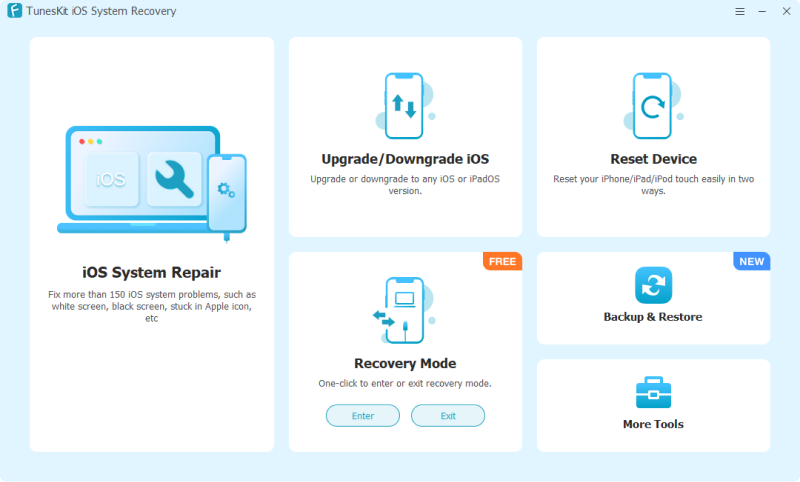
Step 2. Choose Standard Repair
Select Standard Repair if you want to repair the system without deleting your data.

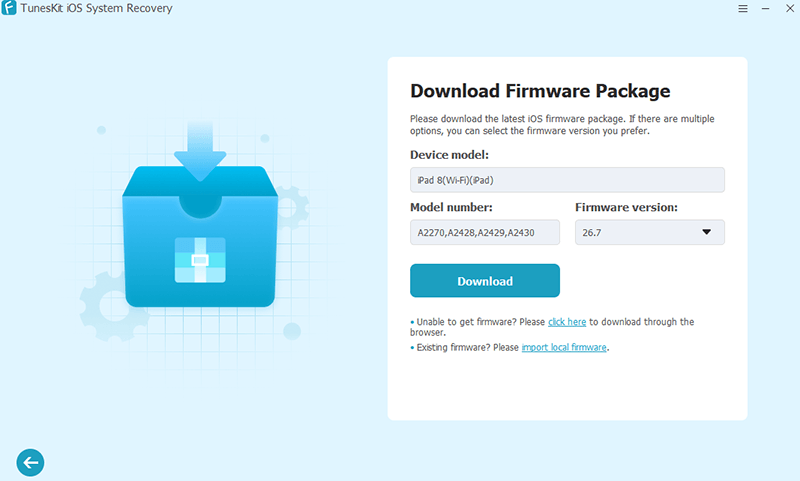
Step 3. Download Firmware Package
Confirm your iPad nformation, then click the Download button to download the matching firmware package.
Step 4. Start to Repair
Once the firmware is ready, click Start Standard Repair and keep your iPad connected until the process is complete. After the repair finishes, your iPad will restart. Check whether apps, animations, and system operations respond normally again.

Method 6. Check the Network, Temperature, and Battery
Sometimes an iPad only appears slow because the problem comes from the network or hardware rather than iPadOS.
If websites, videos, or cloud apps are slow while the rest of the iPad works normally, test another Wi-Fi network or check your Internet connection first. Apple notes that network congestion can make Internet-dependent apps respond slowly.
- Step 1. If the iPad feels unusually hot or cold, stop using it temporarily and let it return to a moderate temperature. Extreme temperatures can reduce device performance.
- Step 2. Open Settings > Battery > Battery Health on supported iPad models and check whether iPadOS reports a battery problem or recommends service.
- Step 3. If an older iPad remains consistently slow after software troubleshooting, contact Apple Support or an authorized service provider to check the battery or other hardware components.

FAQs About iPad Running Slow
-
Does full storage make an iPad slow?
Yes. When your iPad has very little free storage, apps and system processes may take longer to load. Delete unnecessary files, offload unused apps, and remove large downloads to free up space.
-
Why is my iPad slow after an update?
Your iPad may temporarily feel slow after an iPadOS update because the system can continue indexing files, updating apps, and completing background tasks. If the problem lasts for a long time, restart the iPad, check storage, and install any newer updates.
-
Should I close all apps if my iPad is running slow?
Usually, no. You only need to force-close an app when it freezes or stops responding. Regularly closing every app is generally unnecessary and may cause apps to reload completely the next time you open them.
Conclusion
If your iPad is running slow, start with simple fixes such as freeing up storage, restarting the device, updating iPadOS, and checking battery or network conditions. If the slowdown is caused by a deeper system issue, TunesKit iOS System Recovery can help repair iPadOS problems without data loss in Standard Repair mode. With the right fix, you can make your slow iPad run more smoothly again.