


iPhone Disabled for Years? Why It Happens & How to Unlock It
Finding an old iPhone that appears disabled for years can be confusing. You may have pulled a device out of storage, or the screen may suddenly show a countdown lasting millions of minutes.
This guide explains why an iPhone might appear locked for years, whether you can recover stored photos, and how to safely regain access based on your situation.

- Quick Answer: Why Is My iPhone Disabled for Years?
- Why Doesn't Apple Normally Disable an iPhone for Years?
- Why Does an Old iPhone Show Millions of Minutes?
- If You Still Know the Passcode, Protect Your Data First
- Recently Changed the Passcode? Check Previous Passcode
- What Happens to Photos and Data on an iPhone Disabled for Years?
- If You Forgot the Passcode, Waiting for Years Will Not Help
- What About Activation Lock on an Old iPhone?
- FAQs About iPhone Disabled for Years
- Conclusion
Quick Answer: Why Is My iPhone Disabled for Years?
An iPhone that appears "disabled for years" usually falls into one of these two situations:
| Situation | What It Means | What to Do |
|---|---|---|
| Screen shows millions of minutes | An abnormal legacy timer, not Apple's normal security delay | Try restoring the correct date/time before erasing the iPhone |
| iPhone was stored for years and is still locked | Being powered off does not remove the passcode lock | Use the passcode if known; otherwise choose a recovery method |
 If you need a comprehensive overview of general lockouts and standard recovery steps, review our complete guide on iPhone Disabled.
Why Doesn't Apple Normally Disable an iPhone for Years?
Apple's current documented security-delay schedule does not include multi-year countdowns.
The built-in Secure Enclave enforces progressive delays to prevent brute-force attacks. These delays scale from 1 minute, 5 minutes, and 15 minutes, up to 1 hour, 3 hours, and 8 hours. After further failed attempts, the iPhone eventually reaches a recovery-required state.
For the exact breakdown of standard countdown steps, read our reference on how many passcode attempts you get on an iPhone.
Why Does an Old iPhone Show Millions of Minutes?
Historical reports suggest that some older iPhones developed an incorrect system date after prolonged power loss or battery disconnection. In some cases, the date reportedly shifted back toward the Unix epoch in 1970, resulting in an abnormally large lockout timer such as "Try again in 24,000,000 minutes."
On some legacy devices, restoring the correct date and time through a cellular connection or computer synchronization has reportedly cleared the abnormal timer. A network connection may also help the device obtain the correct time.
If You Still Know the Passcode, Protect Your Data First
If you still remember the original passcode, avoid rushing into a factory restore. Erasing the iPhone deletes the current local data stored on it.
- Do not keep guessing: Repeated incorrect passcodes can lead to longer delays or a recovery-required locked state.
- Wait for input availability: If a normal timer is running down, let it expire and enter your passcode carefully.
- Create a backup: Once unlocked, create a current iCloud or computer backup as soon as possible.
If you recall the passcode but the system still rejects access, see our troubleshooting guide on what to do when an iPhone is disabled but you know the passcode.
Recently Changed the Passcode? Check Previous Passcode
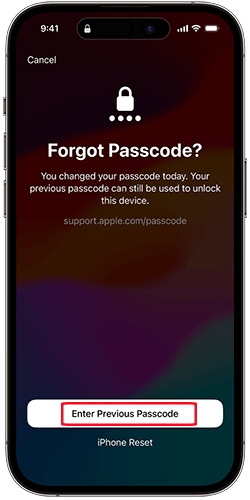
If your device runs iOS 17 or later and was locked recently, Apple's Passcode Reset feature may allow you to regain access using your previous passcode within a 72-hour window.
When eligible, tap Forgot Passcode? on the lock screen and select Enter Previous Passcode to regain access without resetting the device.
 Note
Note
This feature is available on iOS 17 and later, so older iPhones running iOS 16 or earlier will not offer it.
What Happens to Photos and Data on an iPhone Disabled for Years?
Preserving data on a long-dormant iPhone depends entirely on how access is regained:
- Entering the correct passcode: Keeps all local files, photos, and messages intact.
- Eligible Previous Passcode (iOS 17+): Keeps all local files intact.
- Resetting via Finder, Apple Devices, TunesKit, or Find My: Completely wipes local data.
If the device is erased, an existing iCloud or computer backup can restore data that was saved before the erase. Data that was already synced to iCloud may also return after you sign in again. However, unsynced local data is not preserved by the erase process.
For an honest look at what can be recovered, review our analysis on unlocking a disabled iPhone without losing data.
If You Forgot the Passcode, Waiting for Years Will Not Help
If the passcode is completely forgotten, letting a multi-year timer run down achieves nothing. When any countdown reaches zero, the iPhone still requires the valid passcode to unlock.
To regain use of the device, you must reset it through one of the following pathways:
Option A: Reset from the Lock Screen
On iOS 15.2 through iOS 16, look for Erase iPhone. On iOS 17 and later, tap Forgot Passcode? and choose Start iPhone Reset. This method requires an active Wi-Fi or cellular connection, the Apple Account password, and Find My to have been enabled beforehand.

Option B: Restore with Finder or Apple Devices
Connect the iPhone to a computer and put it into Recovery Mode. Use Finder on modern macOS, the Apple Devices app on Windows 10/11, or legacy iTunes on older systems. If you are using an older computer that still supports iTunes, you can restore the iPhone with iTunes instead. See our guide on how to unlock an iPhone with iTunes for the detailed steps.
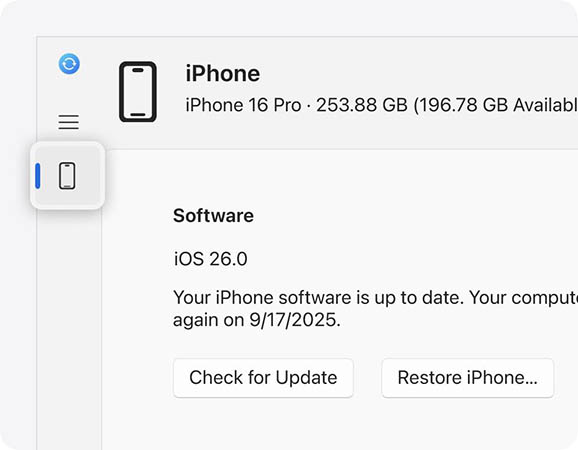
Choose Restore when prompted. This reinstalls iOS and removes the screen passcode, but it also erases the current data stored on the iPhone. If your device is not recognized after entering Recovery Mode, see our guide on iPhone disabled won't connect to iTunes or a computer.
Option C: Use TunesKit iPhone Unlocker
If you prefer a guided computer-based process, TunesKit iPhone Unlocker provides another way to remove a supported iPhone screen passcode. Note that removing the screen passcode erases the current local data and does not remove Activation Lock. For detailed steps, see our TunesKit iPhone Unlocker user guide.

Option D: Erase with Find My
If Find My was enabled prior to the lockout, visit icloud.com/find from any browser. Select the device and trigger Erase This Device. If the phone is offline, the erase request remains pending until it reconnects to the internet.

What About Activation Lock on an Old iPhone?
Screen Passcode Lock and Activation Lock are two independent security barriers.
Erasing a disabled iPhone removes the lock screen, but if Find My was enabled before the iPhone was erased, Activation Lock remains associated with the device. During setup, you may be asked for the Apple Account linked to that iPhone and its password. Make sure you can access the account before erasing an old device.
FAQs About iPhone Disabled for Years
-
Do I really need to wait years for the iPhone to unlock?
No. Apple's current security-delay system does not include multi-year countdowns. On some older iPhones, extremely long timers have been linked to incorrect system date and time.
-
Will restarting remove a years-long disabled timer?
No, not reliably. Restarting does not bypass a normal passcode delay and may restart the current timer. For legacy date/time issues, a reboot alone may not fix the problem.
-
Can I unlock an old disabled iPhone without losing photos?
Yes, but only if you can regain access without erasing the device, such as by entering the correct passcode or an eligible previous passcode. Resetting or restoring the iPhone erases current local data.
-
Can I unlock it if I no longer remember the Apple Account?
Yes, you may still be able to remove the screen passcode, but you may not be able to activate the iPhone afterward. If Find My was enabled, Activation Lock may require the Apple Account linked to the device during setup.
Conclusion
An iPhone that appears "disabled for years" is not following Apple's normal current security-delay schedule. If the screen shows millions of minutes, check for a possible legacy date/time issue before erasing the device. If you know the passcode, prioritize preserving the current data. If the passcode is forgotten, a reset or restore may be required, so check your backup and Apple Account access first.