


iPhone Is Disabled But I Know the Passcode: What to Do
If you remember your passcode but your iPhone is disabled, you may still be able to regain access without erasing the device. What you should do depends on whether you know the current passcode or only a previous one. This guide explains both situations and what to do if the passcode still doesn't work.
If you want to understand the lockout itself and compare all recovery options, see our complete guide to iPhone Disabled.

- Quick Answer: What to Do If iPhone Is Disabled But You Know the Passcode
- Why Is My iPhone Disabled If I Know the Passcode?
- What to Do If You Know the Current iPhone Passcode
- What If You Know the Previous Passcode Instead?
- What If You Still Can't Unlock the Disabled iPhone?
- Can I Unlock a Disabled iPhone Without Losing Data If I Know the Passcode?
- FAQs About iPhone Disabled But I Know the Passcode
- Final Words
Quick Answer: What to Do If iPhone Is Disabled But You Know the Passcode
If you know the current passcode, wait until another attempt becomes available and enter it carefully. Do not erase the iPhone first.
If you recently changed the passcode and only remember the previous one, Passcode Reset on iOS 17 or later may let you regain access within 72 hours without erasing the device.
| Your Situation | What to Do | Data Loss |
|---|---|---|
| Know the current passcode | Wait for another attempt and enter it | No |
| Know the previous passcode | Try Passcode Reset within 72 hours | No |
| Correct passcode isn't accepted | Troubleshoot before restoring | Depends |
| Cannot use any valid passcode | Reset or restore the iPhone | Yes |
Why Is My iPhone Disabled If I Know the Passcode?
Your iPhone can still say "iPhone is Disabled" even if you know the correct passcode because the lockout was triggered by incorrect passcode attempts made earlier. Knowing the correct passcode does not immediately cancel an active security delay.
This can happen if you entered the wrong passcode several times by mistake, someone else tried to unlock your iPhone, or accidental touches caused multiple failed attempts. Once the iPhone enters a timed lockout, you need to wait until another passcode attempt becomes available.
For example, if your screen says "iPhone is Disabled. Try again in 15 minutes", knowing the passcode does not let you skip the waiting period. Wait for the timer to end, then enter the correct passcode carefully.
 For more details on how failed attempts affect the waiting time, see how many passcode attempts you can make on an iPhone.
What to Do If You Know the Current iPhone Passcode
If you are sure you know the current passcode, your goal should be to regain access without erasing the iPhone.
Step 1. Wait for the Lockout Timer
If the screen says something like "iPhone is Disabled. Try again in 15 minutes", wait until the countdown finishes. Do not keep restarting the iPhone or entering possible passcodes. Neither action bypasses the security delay.
Step 2. Enter the Correct Passcode Carefully
When another attempt becomes available, enter your current passcode once and carefully check each digit. If it works, your iPhone should return to normal access without requiring a restore.
If the iPhone allows you to enter the passcode but repeatedly says that the code is incorrect, stop making repeated attempts. In that situation, see our guide on what to do when an iPhone won't accept the correct passcode.
Step 3. Back Up Your iPhone
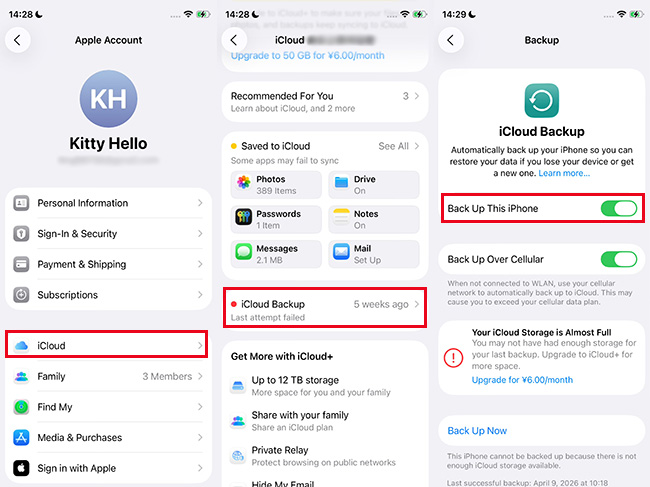
Once you regain access, back up your iPhone to iCloud or a computer. A recent backup can help protect your data if you need to erase or restore the device later.
What If You Know the Previous Passcode Instead?
If you recently changed your iPhone passcode but forgot the new one, your previous passcode may still help. On iOS 17 and later, Apple provides Passcode Reset, which gives you up to 72 hours after changing the passcode to temporarily use the previous passcode. You can then create a new passcode without erasing the iPhone.
- Step 1. On the unavailable Lock Screen, tap Forgot Passcode?.
- Step 2. Tap Enter Previous Passcode.
- Step 3. Enter the passcode you used before changing it.
- Step 4. Follow the on-screen instructions to create a new passcode.
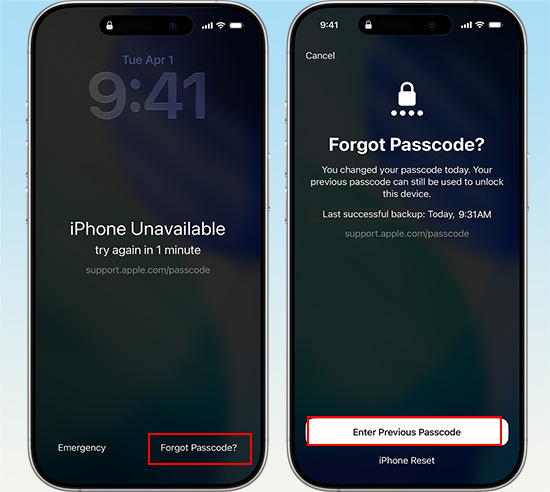
The Forgot Passcode? option requires iOS 17 or later and appears when the locked device has a cellular or Wi-Fi connection, is signed in to an Apple Account, and has Find My enabled. The previous passcode must also still be within its 72-hour validity period.
 Note
Note
Passcode Reset is different from erasing the iPhone. When the conditions are met, it can restore access without deleting your current data.
What If You Still Can't Unlock the Disabled iPhone?
If the timer has ended but you still can't access the iPhone, first check whether the Lock Screen is responding normally. If you cannot enter or use a valid passcode, you may need to move to a recovery method.
Option 1. Restart the iPhone If the Lock Screen Is Frozen
If the screen is unresponsive, the timer is not displaying correctly, or the passcode keypad does not respond, restart the iPhone once. A restart can resolve a temporary interface problem, but it does not remove the passcode or bypass the security delay. After the iPhone restarts, check whether you can enter the correct passcode normally.
- Step 1. Press and hold either the Volume button and the Side button until the power-off slider appears.
- Step 2. Drag the slider to turn off your device, then wait 30 seconds for your device to turn off.
- Step 3. Wait 30 seconds, then press and hold the Side button until you see the Apple logo to turn your device back on.

Option 2. Restore the iPhone in Recovery Mode
If you cannot use a valid passcode or Passcode Reset, you may need to reset the iPhone. You can use Apple's computer-based tools such as Finder on Mac or Apple Devices on Windows. Restoring removes the screen passcode, but it also erases the data currently stored on the device.
- Step 1. Turn off the iPhone.
- Step 2. Connect it to a Mac or Windows PC and put the iPhone into Recovery Mode.
- Step 3. Open Finder on Mac or Apple Devices on Windows.
- Step 4. Select the iPhone and choose Restore.
- Step 5. After the restore finishes, set up the iPhone again and restore an available backup.

Note
An internet connection is a requirement for this computer-based reset process.
Option 3. Erase the Disabled iPhone with Find My
If Find My was enabled before your iPhone became disabled, you can remotely erase the device through iCloud.com. This removes the screen passcode along with the current data on the iPhone, allowing you to set it up again.
- Step 1. Go to iCloud.com/find website and sign in with the Apple Account associated with your disabled iPhone.
- Step 2. Select your disabled iPhone from the device list, then choose Erase This Device and follow the onscreen instructions to confirm the erase.
- Step 3. After the erase is complete, set up your iPhone again. If you have an iCloud or computer backup, you can restore your data during setup.

Note
Erasing the iPhone does not remove Activation Lock. If Find My was enabled, you may need the Apple Account previously linked to the device to activate it again.
Option 4. Remove the Screen Lock with TunesKit iPhone Unlocker
If you cannot enter a valid passcode and prefer a guided computer-based process, TunesKit iPhone Unlocker provides another way to remove the screen lock. It supports common lockout screens, including iPhone Disabled, iPhone Unavailable, and Security Lockout, and guides you through the firmware download and screen-lock removal process.
- Step 1. Install and launch TunesKit iPhone Unlocker on a Windows PC or Mac.
- Step 2. Connect the disabled iPhone with a USB cable.
- Step 3. Choose Unlock iOS Screen.
- Step 4. Confirm your device information and download the matching firmware package.
- Step 5. Click Unlock to begin removing the screen passcode.

After the process finishes, set up the iPhone again and restore an available backup.
Note
This screen-lock removal process erases the current data on the iPhone. If Activation Lock appears afterward, the linked Apple Account may still be required during setup.
Can I Unlock a Disabled iPhone Without Losing Data If I Know the Passcode?
Yes, in some situations.
If you know the current passcode, wait until the iPhone allows another attempt and enter it carefully. This does not require erasing the device.
If you recently changed the passcode and remember only the previous passcode, Passcode Reset on iOS 17 or later may let you regain access within 72 hours without erasing the iPhone.
However, if no valid passcode can be entered and Passcode Reset is unavailable, resetting or restoring the iPhone generally erases its current data. You can restore your personal data afterward if you have an available backup.
For more ways to preserve your data, see how to unlock a disabled iPhone without losing data.
FAQs About iPhone Disabled But I Know the Passcode
-
Can I enter my passcode when my iPhone is disabled?
Yes, if the Lock Screen still provides another passcode attempt. If a timer appears, wait until it ends and then carefully enter the correct current passcode.
-
What if my iPhone says the correct passcode is wrong?
Stop making repeated attempts to avoid a longer lockout. If you are certain the passcode is correct but the iPhone does not accept it, troubleshoot the passcode issue before erasing the device.
-
Can I use my old passcode to unlock a disabled iPhone?
Yes, in a specific situation. On iOS 17 or later, Passcode Reset can let you use your previous passcode for up to 72 hours after changing it. If successful, you will be prompted to create a new passcode.
-
How long do I have to wait before entering my passcode again?
Wait until the countdown shown on your iPhone ends. The waiting time increases after repeated incorrect passcode attempts. Once another attempt becomes available, enter the correct passcode carefully to avoid a longer lockout.
Final Words
If your iPhone is disabled but you know the passcode, avoid erasing it first. Wait for another passcode attempt and enter the correct code carefully. If you recently changed the passcode, check whether Apple's 72-hour Passcode Reset option is available.
Only move to an erase or restore method when you cannot enter a valid passcode or use Passcode Reset. In that case, Finder, Apple Devices, Find My, or TunesKit iPhone Unlocker can help you regain access, but these recovery methods erase the current data on the iPhone.