


If Someone Logs Into My iCloud, What Can They See? [2026]
If someone successfully gains access to your Apple Account, they may be able to view iCloud-synced photos, iCloud Mail, contacts, notes, calendars, reminders, and files in iCloud Drive.
Other information, such as Messages or certain protected data, depends on the device they sign in to, your iCloud settings, and Apple's security protections. Signing in to iCloud.com is also different from signing your Apple Account into another iPhone, iPad, or Mac.
If someone logs into your iCloud account without permission, you may be worried about your photos, messages, emails, location, and other personal information. What they can actually see depends on what data you sync with iCloud, where they sign in, and whether the new device or browser passes Apple's security verification.
Apple now calls an Apple ID an Apple Account, although many people still use the terms Apple ID and iCloud account. Your Apple Account is used to access iCloud and other Apple services. This guide explains if someone logs into your iCloud what can they see, how to tell whether someone else is using your Apple Account, and what to do immediately if you notice an unauthorized sign-in.

- What Can Someone See If They Log Into My iCloud?
- iCloud.com vs. Another Apple Device: What Can Someone Access?
- Can Someone Log Into My iCloud Without Me Knowing?
- How to Check If Someone Is Logged Into My iCloud
- What to Do If Someone Logged Into Your Apple Account
- Bonus: What If You Need to Remove an Apple Account from Your Own iPhone?
- How to Prevent Someone From Accessing Your iCloud Again
- FAQs About Someone Logging Into Your iCloud
- Conclusion
What Can Someone See If They Log Into My iCloud?
Not everything stored on your iPhone automatically becomes visible to someone who knows your Apple Account credentials. In most cases, the important question is whether the information is synced with iCloud.
Here's a quick overview:
| Data | Can They See It? | When It May Be Accessible |
|---|---|---|
| iCloud Photos | Yes | If photos and videos are synced with iCloud |
| iCloud Mail | Yes | If you use an @icloud.com email account |
| Contacts | Yes | If Contacts sync is enabled |
| Notes | Yes | If Notes are stored in iCloud |
| Calendar & Reminders | Yes | If synced with iCloud |
| iCloud Drive files | Yes | If files are stored in iCloud Drive |
| Messages | Depends | May sync to another authorized Apple device if Messages in iCloud is enabled |
| Location / Find My | Potentially | Depends on Find My access and account security |
| Passwords / Keychain | Limited | Protected by additional device and security requirements |
| Local-only data | No | Data that was never synced to iCloud isn't available through iCloud |
1. Photos and Videos
If you use iCloud Photos, your photos and videos are stored in iCloud and kept up to date across supported devices. Someone who successfully accesses your iCloud data may therefore be able to view the photos and videos you have synced to iCloud, including through iCloud.com where access is permitted.
However, photos stored only locally on your iPhone and not uploaded to iCloud are not automatically available just because someone has your Apple Account credentials.
2. iCloud Mail
If you use an @icloud.com email address, someone with access to your iCloud account may be able to open iCloud Mail and view emails in that mailbox. This does not necessarily mean they can see every email account configured on your iPhone. For example, Gmail or Outlook accounts use their own login credentials and aren't automatically exposed simply because someone gains access to your Apple Account.
Apple allows iCloud Mail to be accessed through iCloud.com after signing in to the appropriate Apple Account.
3. Contacts
If you have enabled iCloud syncing for Contacts, your saved contacts can be synchronized across devices using the same Apple Account. Someone who successfully gets access to the corresponding iCloud data may therefore be able to see names, phone numbers, email addresses, and other information saved in your iCloud contacts.
4. Notes, Calendars, and Reminders
Notes, calendars, and reminders saved in iCloud can also be available through devices and supported iCloud web services connected to your Apple Account. This can be particularly sensitive if you use Notes to store personal, work, or financial information. Keep in mind that some Notes can have additional protection if you've locked them separately.
5. iCloud Drive Files
Documents and files saved in iCloud Drive may be accessible after a successful iCloud sign-in. This can include documents uploaded from your iPhone, iPad, Mac, or other devices if they have been saved to iCloud Drive rather than exclusively to local storage.
6. Messages
Whether someone can see your text messages is more complicated.
There is no Messages app on iCloud.com for browsing your conversations like Photos or Mail. However, if Messages in iCloud is enabled and your Apple Account is successfully signed in and verified on another supported Apple device, messages stored in iCloud can sync to that device. Apple confirms that messages stored in iCloud can become available across devices signed in to the same Apple Account.
Therefore:
- Logging into iCloud.com: Doesn't give someone a normal Messages inbox.
- Signing into another authorized Apple device: May allow iCloud-synced messages to appear, depending on security verification and settings.
7. Find My and Location Information
Because Find My is connected to your Apple Account, unauthorized account access can also create privacy concerns around your devices and location-related information. For this reason, if you suspect someone has access to your account, checking and removing unknown devices should be one of your first actions.
8. Passwords and iCloud Keychain
Knowing your Apple Account password does not automatically give someone unrestricted access to every password stored in iCloud Keychain. Apple uses additional device authentication and security protections around sensitive information. A new sign-in may also require two-factor authentication before the device or browser can become trusted. Nevertheless, unauthorized Apple Account access should always be treated seriously.
iCloud.com vs. Another Apple Device: What Can Someone Access?
This distinction is easy to overlook.
If someone signs in through iCloud.com, they can access only the iCloud apps and data Apple makes available on the web and that your account is permitted to access.
Someone who successfully signs your Apple Account into another iPhone, iPad, or Mac, however, may gain access to additional synchronized Apple services after completing the necessary verification.
| Sign-in Method | Possible Access |
|---|---|
| iCloud.com | Photos, Mail, Contacts, Notes, iCloud Drive, Calendar and other supported web data |
| Another iPhone/iPad/Mac | Potentially broader access to synced Apple services after authentication |
| Unverified sign-in attempt | Usually blocked from completing access when additional verification is required |
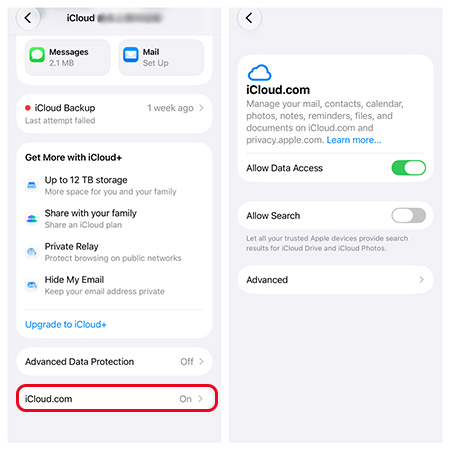
Apple also provides an option to manage whether your iCloud data can be accessed on iCloud.com. In current versions of iOS and iPadOS, this setting can be managed under Settings > [your name] > iCloud > iCloud.com.
Can Someone Log Into My iCloud Without Me Knowing?
It's possible for someone to attempt to sign in, but Apple's security features are designed to alert you to suspicious or new account activity.
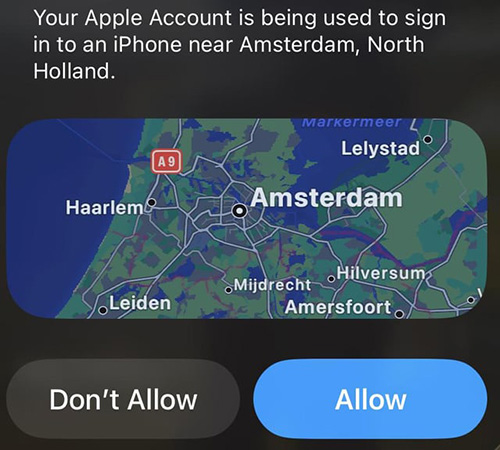
When two-factor authentication is enabled and someone tries to sign in on a new device, Apple can send a sign-in notification to your trusted devices. The alert may include an approximate location based on the device's IP address. Apple also states that it may notify you by email, text, or push notification when important account changes occur, such as a first-time sign-in on a new device or a password change.
If you receive an unexpected notification saying your Apple Account is being used to sign in, tap Don't Allow. Do not approve the request or share the verification code with anyone.
How to Check If Someone Is Logged Into My iCloud
If you think someone may be accessing your Apple Account, check the devices associated with your account.
Method 1. Check Apple Account Devices on iPhone or iPad
- Step 1. Open Settings on your iPhone or iPad.
- Step 2. Tap your name at the top.
- Step 3. Scroll down to see the devices associated with your Apple Account.
- Step 4. Tap any device you don't recognize and review its information.
- Step 5. If you're sure the device isn't yours, tap Remove from Account.
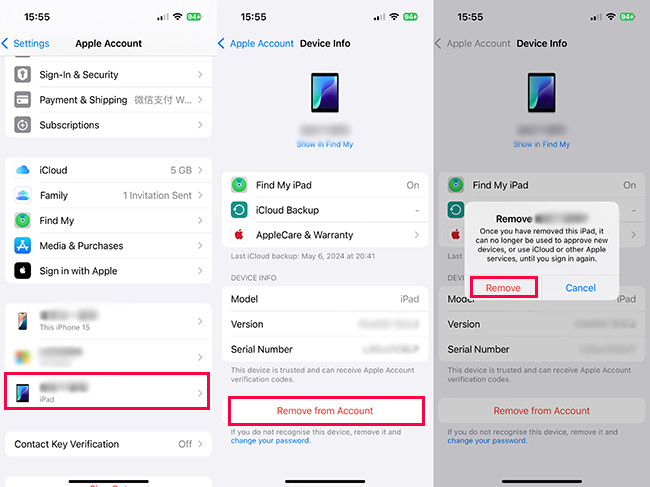
Apple confirms that this list shows devices associated with your Apple Account, including devices where you're currently signed in.
 Note
Note
This isn't a complete historical login log showing every device that has ever attempted to access your Apple Account.
Method 2. Check Devices at account.apple.com
You can also review your devices from a web browser.
- Step 1. Sign in to your Apple Account page. Open Devices.
- Step 2. Review the devices associated with your account.
- Step 3. Select an unfamiliar device.
- Step 4. Remove it from your account by clicking Remove from account.
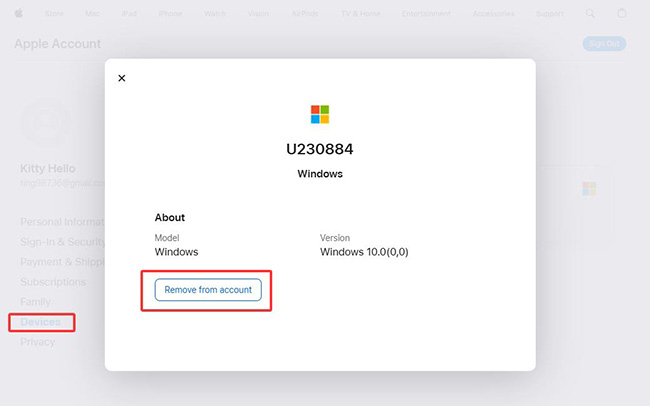
Apple specifically recommends reviewing the Devices section and removing devices you don't recognize if you believe your account has been compromised.
What to Do If Someone Logged Into Your Apple Account
If someone has already accessed your iCloud or Apple Account, act quickly instead of only removing one suspicious device.
1. Tap Don't Allow on Unknown Sign-In Requests
If a notification appears asking whether to allow a sign-in that you didn't initiate, select Don't Allow. Apple recommends blocking unrecognized sign-in attempts immediately.
2. Change Your Apple Account Password
Changing your password is one of the most important steps if you think someone else knows it.
On your iPhone or iPad:
- Step 1. Open Settings.
- Step 2. Tap your name.
- Step 3. Choose Sign-In & Security.
- Step 4. Tap Change Password and follow the instructions.
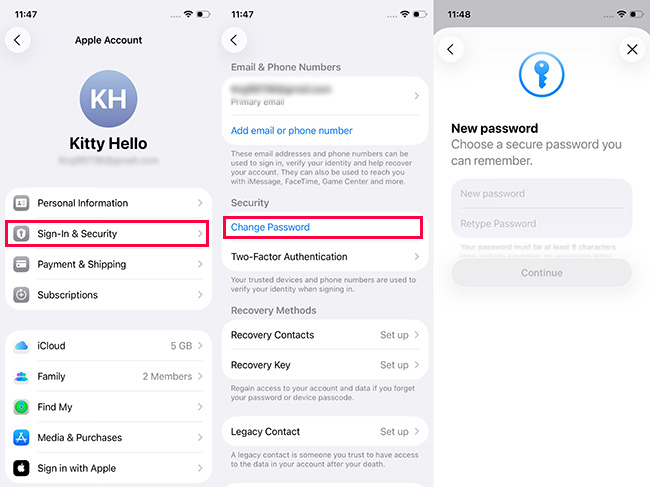
Apple recommends using a trusted Apple device when changing your Apple Account password. Use a password that you don't use for another service.
 View Also:
 3. Remove Unknown Devices
Go to Settings > [your name] or sign in to your Apple Account page and review your device list. Remove any iPhone, iPad, Mac, Apple Watch, or other device that you don't recognize. Removing a trusted device blocks that device's access to iCloud and prevents it from displaying Apple verification codes until it is authenticated again.
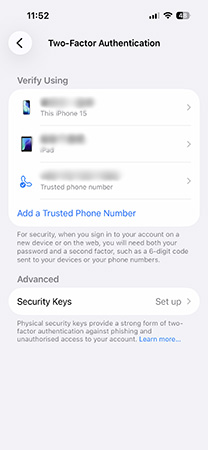
4. Check Trusted Phone Numbers
An attacker who gains control of a trusted phone number may have another way to receive verification codes. Go to Settings > [your name] > Sign-In & Security > Two-Factor Authentication. Review all trusted phone numbers and remove any that don't belong to you. Apple also allows trusted phone numbers to be managed through the offical Apple Account website.
5. Review Your Account Information
Check your Apple Account for unexpected changes to:
- Primary email address
- Phone numbers
- Trusted devices
- Security information
- Personal information
If anything has been changed without your permission, correct it immediately.
6. Turn On Two-Factor Authentication
If two-factor authentication isn't already enabled, turn it on. Go to Settings > [your name] > Sign-In & Security > Two-Factor Authentication. Then follow the onscreen instructions. Two-factor authentication adds another layer of protection so knowing your password alone normally isn't enough to complete a new sign-in.
7. Limit iCloud Web Access If Necessary
If you don't need regular browser access to your iCloud data, you can review the web access setting. On newer versions of iOS and iPadOS, go to Settings > [your name] > iCloud > iCloud.com. Then review whether you want to allow data access through iCloud.com.
Bonus: What If You Need to Remove an Apple Account from Your Own iPhone?
Removing an unknown device from your Apple Account and removing an Apple Account from the iPhone in your possession are two different situations. If someone has remotely logged into your Apple Account, use Apple's security steps above. A third-party unlocking tool isn't required to remove that person from your online account.
However, you may have a different problem: an Apple Account is currently signed in on your own iPhone or iPad, but you can't sign out because the required password is unavailable. In that situation, TunesKit iPhone Unlocker provides an Apple Account removal feature for supported activated iPhones and iPads. According to its current product specifications, support conditions vary depending on whether Find My is enabled and which iOS version the device is running.
Key Features of TunesKit iPhone Unlocker
Remove Apple Account without password effectively. Unlock iPhone, iPad and iPod in a few seconds. Friendly user interface and easy to use.
 600,000+ Downloads
- Step 1. Install and launch TunesKit iPhone Unlocker on your computer. Connect your iPhone or iPad with a USB cable.
- Step 2. Choose the Remove Apple ID feature from the main interface.
- Step 3. Check the device status and follow the onscreen instructions. The required procedure may differ depending on your Find My settings and iOS version.
- Step 4. Confirm the firmware and device information when prompted.
- Step 5. Start the removal process and keep the device connected until the program finishes.

This option is intended for removing an Apple Account from a device you are authorized to manage. It doesn't replace changing your Apple Account password, reviewing trusted devices, or securing a compromised online account.
How to Prevent Someone From Accessing Your iCloud Again
After securing the account, use these precautions to reduce the risk of another unauthorized sign-in:
- Use a strong and unique Apple Account password.
- Keep two-factor authentication enabled.
- Never give anyone your six-digit Apple verification code.
- Don't approve unexpected Apple Account sign-in requests.
- Regularly review devices connected to your Apple Account.
- Keep trusted phone numbers up to date.
- Avoid entering your Apple Account password on suspicious websites.
- Protect your iPhone with a device passcode and Face ID or Touch ID.
- Review iCloud.com web access if you rarely use iCloud in a browser.
Apple recommends that only you know your Apple Account password and emphasizes two-factor authentication as an important account security measure.
FAQs About Someone Logging Into Your iCloud
-
If someone has my Apple ID, what can they see?
Apple ID is now called Apple Account. If someone successfully signs in, they may be able to access information synced with iCloud, including photos, iCloud Mail, contacts, notes, calendars, reminders, and iCloud Drive files. What they can access depends on your settings, the sign-in method, and Apple's security verification.
-
Can I see my Apple ID login history?
Apple doesn't provide a conventional page listing every historical login attempt. You can, however, review devices currently associated with your Apple Account by going to Settings > [your name] or opening Devices on your Apple Account page.
-
Does removing an unknown device protect my Apple Account completely?
Removing the device is important, but it shouldn't be your only action if your password may have been compromised. Change the Apple Account password, review trusted phone numbers and account information, and make sure two-factor authentication is enabled.
Conclusion
So, if someone logs into your iCloud, what can they see? The answer depends mainly on the information you've synced with iCloud and how the person accesses your Apple Account. If you notice an unfamiliar sign-in, don't focus only on what the person may have seen. Reject the sign-in, change your Apple Account password, check your device list, remove unknown devices, review trusted phone numbers, and keep two-factor authentication enabled.
If your separate problem is that you need to remove an Apple Account from an iPhone or iPad you own but can't sign out normally, TunesKit iPhone Unlocker can serve as an alternative for supported devices.