


iPhone Bluetooth Not Working? 7 Easy Fixes
Is your iPhone Bluetooth not working, failing to connect, or unable to find nearby devices? Bluetooth makes it easy to connect your iPhone to wireless accessories like AirPods, speakers, and car audio systems. However, connection issues can sometimes interrupt your daily use.
If you're wondering why Bluetooth isn't working on your iPhone, don't worry. In this guide, we'll walk you through 7 simple and effective ways to fix the problem and get your Bluetooth connection working again.

- Why Is Bluetooth Not Working on iPhone
-
7 Ways to Fix iPhone Bluetooth Not Working
- Way 1. Turn Bluetooth Off and Back On
- Way 2. Forget and Reconnect Bluetooth Devices
- Way 3. Restart or Force Restart Your iPhone
- Way 4. Update iOS to Fix iPhone Bluetooth Not Working
- Way 5. Reset All Settings on Your iPhone
- Way 6. Repair iOS with TunesKit iOS System Recovery HOT
- Way 7. Contact Apple Support
- FAQs About iPhone Bluetooth Not Working
- Summary
Why Is Bluetooth Not Working on iPhone
If your iPhone Bluetooth is not working, several factors could be causing the issue. Whether Bluetooth won't turn on, can't find nearby devices, or keeps disconnecting, understanding the possible causes can help you troubleshoot the problem more effectively.
Here are some common reasons why Bluetooth may stop working on your iPhone:
- 1. Temporary Software Glitches: Minor iOS bugs or system errors can prevent Bluetooth from functioning properly.
- 2. Outdated iOS Version: An older iOS version may contain bugs that affect Bluetooth connectivity.
- 3. Bluetooth Connection Issues: Your iPhone may have trouble connecting to a device due to pairing errors or corrupted connection settings.
- 4. Distance or Interference: Bluetooth connections can become unstable when devices are too far apart or affected by interference from other wireless signals.
- 5. Device Compatibility Issues: Some Bluetooth accessories may not be compatible with your iPhone or its iOS version.
- 6. Hardware Problems: In rare cases, a damaged Bluetooth component or antenna may prevent your iPhone from connecting to Bluetooth devices.
7 Ways to Fix iPhone Bluetooth Not Working
Whether your iPhone won't connect to AirPods, can't detect Bluetooth devices, or keeps disconnecting, there are several ways to troubleshoot the issue. Let's start with simple checks and moving on to more advanced troubleshooting methods.
Way 1. Turn Bluetooth Off and Back On
Sometimes, temporary connection glitches can prevent your iPhone from connecting to Bluetooth accessories. Before trying more advanced solutions, turn Bluetooth off and back on to refresh the connection.
- Step 1. Open the Settings app on your iPhone.
- Step 2. Tap Bluetooth and turn off the Bluetooth switch.
- Step 3. Wait a few seconds, then turn Bluetooth back on.
- Step 4. Try connecting your iPhone to your Bluetooth device again.
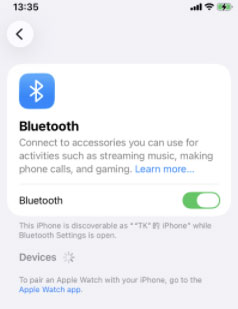
If the problem persists, make sure your Bluetooth accessory is charged, turned on, and within range. You can also restart the accessory and put it into pairing mode if necessary.
 Tip
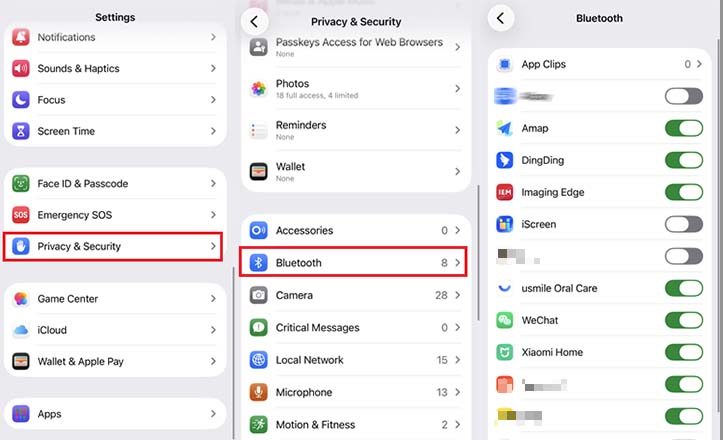
If you're having trouble connecting a Bluetooth accessory through a particular app, go to Settings > Privacy & Security > Bluetooth and check whether the app has Bluetooth permission.
Way 2. Forget and Reconnect Bluetooth Devices
If your iPhone Bluetooth is not connecting to a previously paired device, the existing pairing information may be causing the problem. Forgetting the problematic device and pairing it again can help establish a fresh connection.
Here's how to forget a Bluetooth device on your iPhone:
- Step 1. Open Settings > Bluetooth on your iPhone.
- Step 2. Under My Devices, locate the Bluetooth accessory that isn't working properly.
- Step 3. Tap the Info (i) icon next to the device.
- Step 4. Select Forget This Device and confirm your choice.
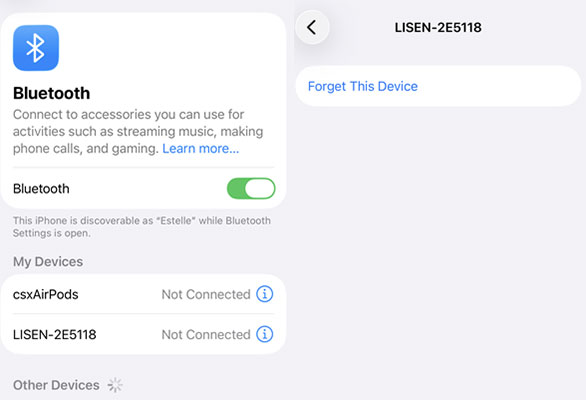
Step 5. Put your Bluetooth accessory into pairing mode, then select it from the list of available devices to reconnect.
Note
You don't need to forget every Bluetooth device on your iPhone. Remove only the accessory experiencing connection problems. If the accessory is connected to another phone or computer, disconnect it from that device before pairing it with your iPhone.
Way 3. Restart or Force Restart Your iPhone
If your iPhone Bluetooth is still not working, restarting your device may help resolve temporary software glitches affecting wireless connectivity.
You can try a normal restart first, which works across iPhone models. If your iPhone becomes unresponsive or a normal restart doesn't help, try a force restart instead.
How to Restart Your iPhone Normally
- Step 1. Open the Settings app and go to General.
- Step 2. Scroll down and tap Shut Down.
- Step 3. Drag the Slide to Power Off slider to turn off your iPhone.
- Step 4. Wait about 30 seconds for your iPhone to shut down completely.
- Step 5. Press and hold the Side button (or the Top button on older iPhone models) until the Apple logo appears.
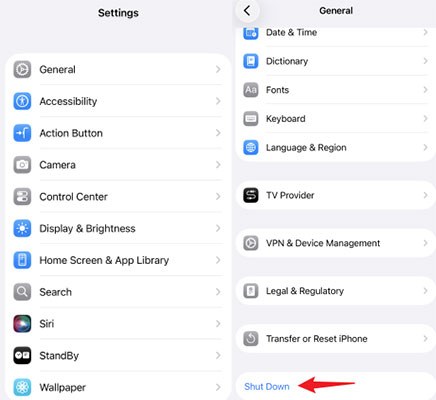
If your iPhone is frozen or won't respond to the normal restart procedure, you can try a force restart. The steps vary depending on your iPhone model.
How to Force Restart Your iPhone
- For iPhone 8 and later (including iPhone SE 2nd and 3rd generation): Quickly press and release the Volume Up button. Quickly press and release the Volume Down button. Press and hold the Side button until the Apple logo appears, then release it.
- For iPhone 7 and iPhone 7 Plus: Press and hold the Side button and Volume Down button simultaneously. Release both buttons when the Apple logo appears.
- For iPhone 6s and earlier: Press and hold the Home button and Side or Top button simultaneously. Release both buttons when you see the Apple logo.

Note
Neither a normal restart nor a force restart erases your personal data. A normal restart is recommended when your iPhone is working normally, while a force restart is mainly intended for an unresponsive screen.
Way 4. Update iOS to Fix iPhone Bluetooth Not Working
An outdated iOS version may contain software bugs that affect Bluetooth connectivity. Apple regularly releases iOS updates to improve system performance, fix known issues, and enhance device compatibility. Therefore, updating your iPhone may help resolve Bluetooth problems.
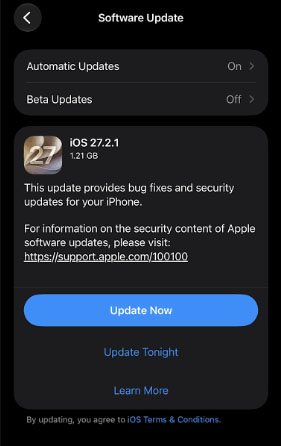
- Step 1. Open the Settings app and go to General > Software Update.
- Step 2. Wait for your iPhone to check for available updates.
- Step 3. If an update is available, tap Update Now button, depending on the options shown. Follow the onscreen instructions to complete the installation.
Note
Before updating iOS, make sure your iPhone has sufficient battery power and a stable Wi-Fi connection. It's also recommended to back up your device before installing a major iOS update.
Way 5. Reset All Settings on Your iPhone
If updating iOS doesn't fix the Bluetooth problem, incorrect system configurations may be responsible. In this case, resetting all settings can help restore your iPhone's system preferences to their default values without deleting your personal files.
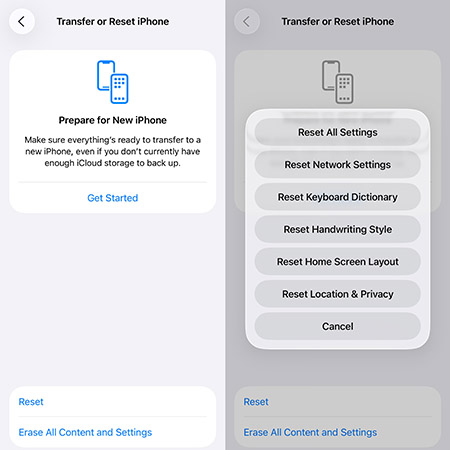
- Step 1. Open Settings and navigate to General > Transfer or Reset iPhone.
- Step 2. Tap Reset option. Select Reset All Settings from the available options.
- Step 3. Enter your iPhone passcode if prompted and confirm your selection. Wait for your iPhone to restart. Then, reconnect your Bluetooth accessory and check whether the problem has been resolved.
Important
Reset All Settings does not erase your photos, messages, apps, or documents. However, it resets system preferences and removes certain saved configurations, including Wi-Fi passwords and Bluetooth pairings. You may need to reconnect your accessories and configure some settings again.
Way 6. Repair iOS with TunesKit iOS System Recovery
If your iPhone Bluetooth is not working because of a deeper iOS software issue, a dedicated system repair tool may be worth considering after the standard troubleshooting steps have failed. TunesKit iOS System Recovery is the perfect tool for this demand. By conducting a swipe to your iPhone in a way that won't harm your personal data. It is a professional iOS repairing tool that can tackle 150+ iOS problems, including Bluetooth not working on iPhone, AirDrop not working on iPhone, and cellular data not working on iPhone, etc.
Comparing your iPhone to a car, it is able to fix all the instruments on the car without replacing a single one of them or causing some instruments to go lost. In other words, TunesKit iOS System Recovery is able to restore your iPhone, but it will not do any damage to your personal data.
Key Features of TunesKit iOS System Recovery
Fix iPhone Bluetooth issues caused by iOS system glitches with TunesKit iOS System Recovery without losing your personal data.
 600,000+ Downloads
Here's how to Fix iPhone Bluetooth Not Working with TunesKit iOS System Recovery.
Step 1. Connect iPhone to Your Computer
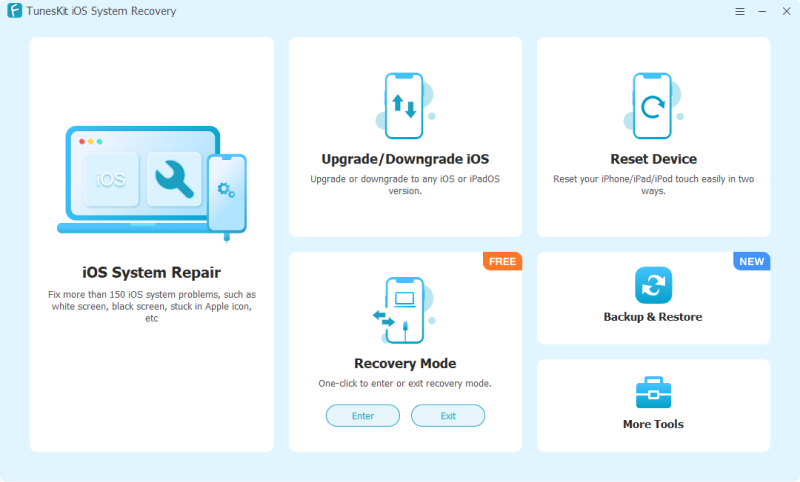
Open TunesKit iOS System Recovery and connect your iPhone to the computer with an iPhone USB cord. Then click the iOS System Repair button on the main screen, and on the next page, click the Start button.
Step 2. Select the Standard Repair
Select the Standard Repair button to resolve iPhone Bluetooth not working losslessly. Watch out not to choose the Deep Repair, because, as mentioned in its caption, it is designed for more severe issues and will erase all your personal data.

Step 3. Download Firmware Package
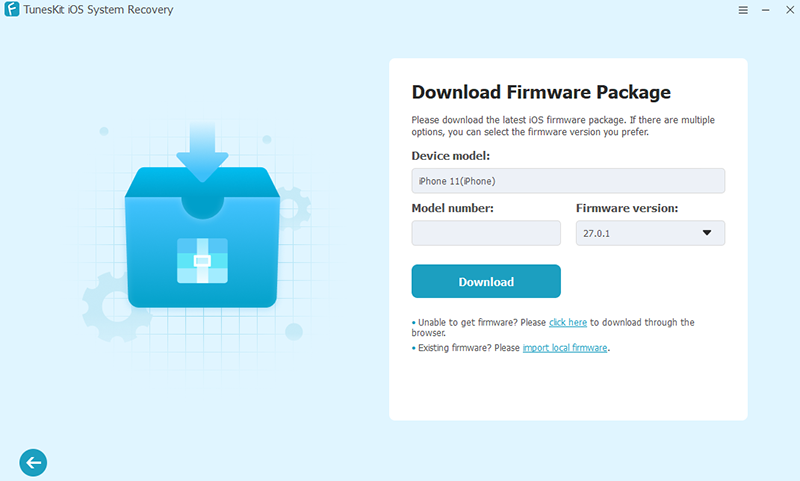
In the next window, check all the info of your device and click the Download button to download the firmware matching to your device. Then the program will download the matching firmware package according to the info shown.
Step 4. Start to Repair
Click the Start Standard Repair button to start fixing the issue. Please do not plug out the device during the process or it might brick. After a few minutes of waiting, your iPhone Bluetooth should return to normal.

Way 7. Contact Apple Support
If none of the above solutions fixes the issue, your iPhone may have a hardware problem or another issue requiring professional diagnosis.
You should consider contacting Apple Support if:
- Bluetooth is grayed out and cannot be turned on.
- Your iPhone cannot detect or connect to any Bluetooth accessories.
- Bluetooth repeatedly stops working after troubleshooting.
- The issue started after your iPhone was dropped or exposed to liquid.
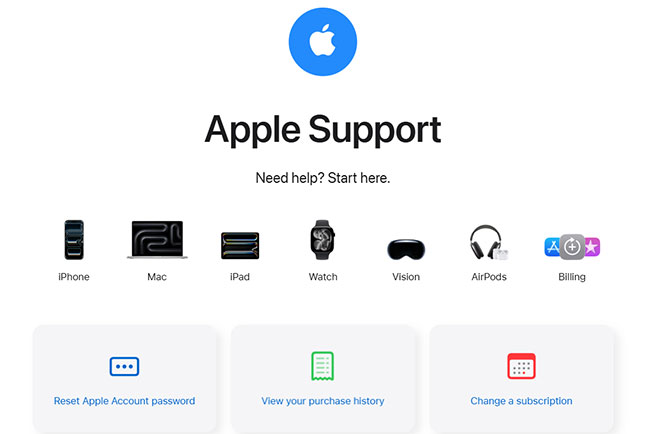
Visit the official Apple Support website to explore repair options or arrange a device inspection.
If possible, test your Bluetooth accessory with another compatible device before seeking service. This can help determine whether the issue lies with your iPhone or the accessory itself.
FAQs About iPhone Bluetooth Not Working
-
Why Is My iPhone Bluetooth Not Finding Devices?
Your iPhone may not find Bluetooth devices if they aren't in pairing mode, are out of range, or are connected to another device. Try restarting both devices, turning Bluetooth off and back on, and pairing them again.
-
Why Is My iPhone Bluetooth Grayed Out?
A grayed-out Bluetooth option may indicate an iOS software glitch or a hardware problem. Try restarting your iPhone and updating iOS. If the issue persists, contact Apple Support for further diagnosis.
-
Why Does My iPhone Bluetooth Keep Disconnecting?
Your iPhone Bluetooth may keep disconnecting because of the low battery, wireless interference, outdated software, or an unstable connection. Try charging both devices, keeping them close together, and reconnecting the Bluetooth accessory.
Summary
We hope the 7 solutions above have helped you fix the iPhone Bluetooth not working issue. If basic troubleshooting, restarting, or updating iOS doesn't solve the problem, you can consider using TunesKit iOS System Recovery to repair potential iOS software issues. It is designed to fix certain system problems without erasing personal data.