


Why Won't My iPad Charge? Get the Answers Here!
As we all know, Apple's iPad is considered to be the best tablet brand in the world with the highest configuration. At the same time, this kind of tablets are beloved by users all over the world because of its lightness and operability. However, in the process of use, we may also encounter some problems from time to time, such as iPad won't charge. So, what should we do when we encounter this kind of problem?
This article will further analyze the reasons why the iPad cannot be charged and provide you with some effective means to repair this problem.

- Why Won't My iPad Charge When Plugged In
-
9 Specific Solutions to Fix iPad Not Charging
- Method 1: Check the Power Outlet and Power Source
- Method 2: Check the iPad Power Adapter
- Method 3: Check and Replace the Charging Cable
- Method 4: Check and Clean the iPad Charging Port
- Method 5: Let the iPad Return to a Normal Temperature
- Method 6: Force Restart the iPad
- Method 7: Update iPadOS
- Method 8: Repair iPadOS with TunesKit iOS System Recovery HOT
- Method 9: Check the Battery and Get Apple Service
- Conclusion
Why Won't My iPad Charge When Plugged In
If your iPad won't charge when plugged in, the problem usually comes from the power source, charging accessories, charging port, battery condition, temperature, or iPadOS. Common causes include:
- 01 Low-power or faulty adapter: The charger may not provide enough power, or the adapter itself may be damaged.
- 02 Damaged charging cable: A worn, loose, or incompatible USB-C or Lightning cable can interrupt charging.
- 03 Dirty or damaged charging port: Dust, lint, or physical damage can prevent the cable from making a stable connection.
- 04 Weak power source: Some computer USB ports, hubs, or low-output power banks may not supply enough power to charge an iPad properly.
- 05 iPad temperature is too high or too low: iPadOS may temporarily slow or pause charging to protect the battery.
- 06 Battery or hardware problem: An aging battery, damaged charging port, or internal component failure can stop the iPad from charging.
- 07 iPadOS glitch: Temporary software issues may also prevent the iPad from recognizing the charger correctly.
9 Specific Solutions to Fix iPad Not Charging
When your iPad won't charge when plugged in, start with the power source and charging accessories before troubleshooting iPadOS or the battery. This helps you identify whether the problem comes from an external accessory, the system, or the iPad hardware itself.
Method 1: Check the Power Outlet and Power Source
Before changing any settings on your iPad, make sure it is actually receiving stable power. A faulty wall outlet, low-powered USB port, unpowered hub, or sleeping computer can prevent an iPad from charging normally.
- Step 1. Unplug the iPad charger from the current outlet.
- Step 2. Plug another device into the same outlet to confirm that the outlet is working.
- Step 3. Connect the iPad charger to another known-working wall outlet.
- Step 4. Leave the iPad connected for at least 20–30 minutes and check whether a lightning bolt appears on the battery icon or a charging symbol appears on the Lock Screen.
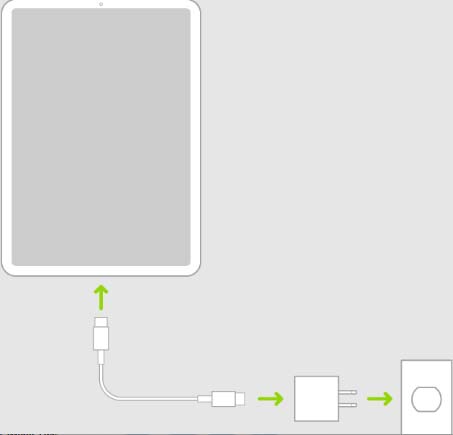
If you are charging the iPad through a computer, switch to a wall power adapter as a troubleshooting test. A computer can charge an iPad when its USB port supplies sufficient power and the computer is awake, but a wall adapter can help rule out insufficient USB power.
Method 2: Check the iPad Power Adapter
If the outlet works but your iPad is still not charging, inspect the power adapter next. A damaged or incompatible adapter may fail to provide stable power to the device.
- Step 1. Disconnect the power adapter and inspect it for cracks, burn marks, unusual discoloration, or excessive heat.
- Step 2. Make sure the adapter is compatible with your iPad and charging cable.
- Step 3. If possible, connect your existing cable to another known-good compatible USB power adapter.
- Step 4. Plug it into a working wall outlet and charge the iPad for about 30 minutes.

If the iPad begins charging with the replacement adapter, the original adapter is likely the cause.
Method 3: Check and Replace the Charging Cable
A charging cable can look normal on the outside while having damaged wires or connectors inside. This can cause intermittent charging, slow charging, or no charging at all.
- Step 1. Disconnect the cable from both the iPad and the power adapter.
- Step 2. Check both connectors and the length of the cable for fraying, bent pins, exposed wiring, or other visible damage.
- Step 3. Reconnect both ends firmly and test charging again.
- Step 4. If the iPad still does not charge, try another compatible Apple or certified USB-C or Lightning cable.
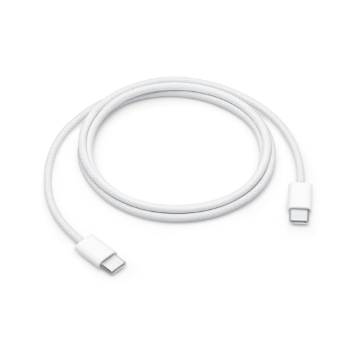
If another cable works normally, replace the original cable.
Method 4: Check and Clean the iPad Charging Port
Dust, lint, and debris can accumulate inside the USB-C or Lightning port and prevent the connector from making full contact. A loose connection is especially likely if the charging cable does not sit firmly inside the port.
- Step 1. Turn off the iPad and disconnect all cables.
- Step 2. Use a light to inspect the charging port for visible lint, dirt, or damage.
- Step 3. If loose debris is visible around the opening, remove it carefully without forcing anything deep into the connector.
- Step 4. Avoid inserting metal objects, applying liquids, or aggressively scraping the contacts inside the port.
- Step 5. Reconnect a known-good cable and adapter and test charging again.

If the port appears bent, corroded, or unusually loose, skip further cleaning and have the iPad inspected professionally.
Method 5: Let the iPad Return to a Normal Temperature
An iPad can temporarily stop charging when its temperature becomes too high or too low. You may also see a Charging On Hold message on the Lock Screen or under Settings > Battery.
- Step 1. Disconnect the charger if the iPad feels unusually hot or cold.
- Step 2. Move the device away from direct sunlight, heaters, hot cars, or very cold environments.
- Step 3. If the iPad is hot, stop gaming, streaming, video editing, or other demanding activities and lock the screen.
- Step 4. Remove the case temporarily if it is trapping heat.
- Step 5. Wait until the device returns to a normal temperature, then reconnect the charger.

Charging should resume automatically once the iPad returns to an acceptable temperature.
Method 6: Force Restart the iPad
If the charger and hardware connection appear normal, a temporary iPadOS process may be preventing the system from recognizing that the device is connected to power. A force restart reloads the operating system without erasing your personal data.
For an iPad Without a Home Button
- Step 1. Press and quickly release the volume button closest to the top button.
- Step 2. Press and quickly release the other volume button.
- Step 3. Press and hold the top button until the iPad restarts and the Apple logo appears.

For an iPad With a Home Button
- Step 1. Press and hold the Home button and top button at the same time.
- Step 2. Keep holding both buttons until the Apple logo appears.
- Step 3. Release the buttons and wait for the iPad to restart.

Afterward, connect the charger again and see whether the charging icon appears.
Method 7: Update iPadOS
If your iPad won't charge consistently even though the charger, cable, port, and temperature are normal, check for an available iPadOS update. Updating the system can resolve software bugs and accessory compatibility issues.
- Step 1. Open Settings > General > Software Update.
- Step 2. Wait while the iPad checks for an available update.
- Step 3. If an update is available, tap the Update Now button.
- Step 4. Follow the onscreen instructions and allow the iPad to restart.
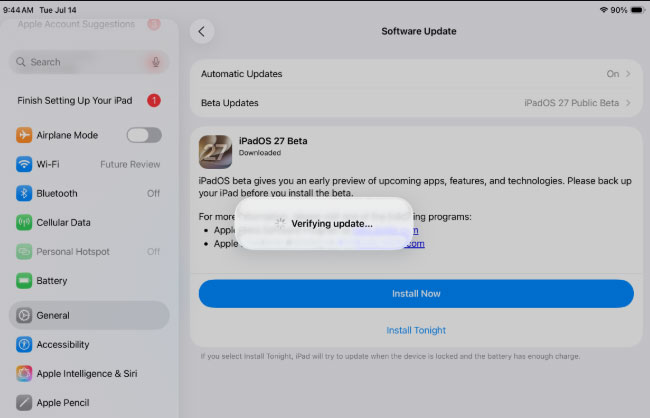
After updating, reconnect the charger and check whether the charging problem has been resolved.
Method 8: Repair iPadOS with TunesKit iOS System Recovery
If all charging accessories work normally but the iPad still fails to recognize a charger, the issue may be related to iPadOS. For example, the charging problem may have appeared after an interrupted update or other software malfunction.
In this situation, you can try TunesKit iOS System Recovery. It is designed to repair software-related iPhone and iPad problems. Its Standard Repair mode repairs common iOS/iPadOS issues without erasing user data. For instance, it can fix iPad stuck on update requested, iPad stuck on Apple Logo, and iPhone split screen not working, and etc.
Fix iPad Won't Charge with TunesKit
Repair iPadOS-related charging issues with TunesKit iOS System Recovery while keeping your data intact.
 600,000+ Downloads
Step 1. Connect the iPad to TunesKit
Install and launch TunesKit iOS System Recovery on your Windows PC or Mac. Connect the iPad to the computer using a working USB cable. On the main interface, choose iOS System Repair and click Start.
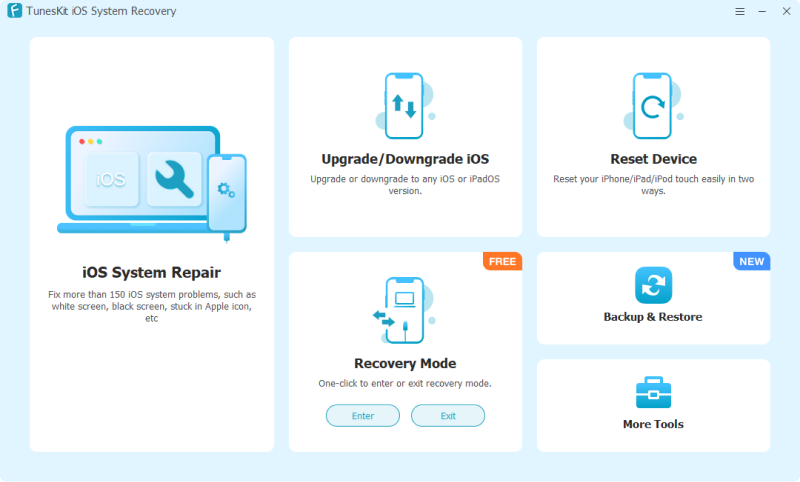
Step 2. Select Standard Repair
Choose Standard Repair first because this mode is designed to fix common system problems while retaining existing data. Follow the onscreen instructions to put the iPad into Recovery Mode or DFU Mode if required.

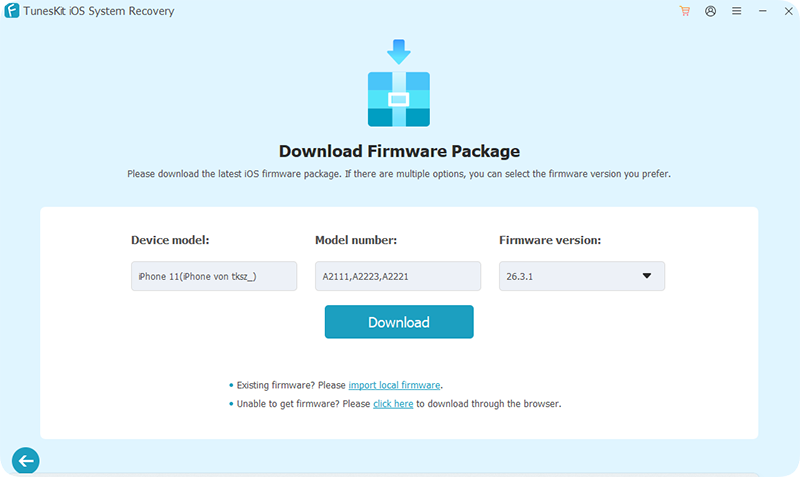
Step 3. Download the Firmware Package
Check the detected iPad model and firmware information. Click Download to download and verify the firmware package that matches your device.
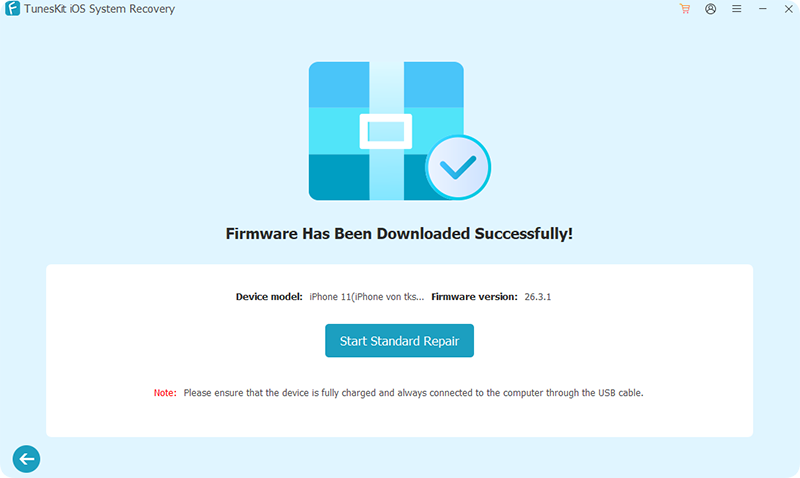
Step 4. Repair the iPad System
When the firmware package is ready, click Start Standard Repair button. Keep the iPad connected to the computer throughout the repair process. Once the repair finishes and the iPad restarts, reconnect it to a charger and check whether it can charge normally.
Method 9: Check the Battery and Get Apple Service
If your iPad still does not charge after you have tested multiple known-good adapters and cables and ruled out software problems, the battery or another internal charging component may require service.
On supported iPad models, you can check battery information under:
Settings > Battery > Battery Health

Review the available battery health and capacity information. Battery Health is only available on supported iPad models, so you may not see this menu on an older device.
If your iPad shows symptoms such as rapid battery drain, unexpected shutdowns, an excessively loose charging port, or no response with multiple known-good chargers, contact Apple Support or an Apple Authorized Service Provider for inspection.

Avoid replacing the iPad battery yourself solely because the device will not charge. Testing the charger, cable, port, temperature, and software first can help determine whether battery service is actually necessary.
Conclusion
To fix iPad won't charge issues, start by checking the power source, adapter, charging cable, port, temperature, and battery condition. When all charging accessories and hardware appear normal, the problem may be related to iPadOS. TunesKit iOS System Recovery can help repair software-related iPad issues while keeping your data intact. For battery or charging-port damage, contact Apple Support for professional service.