


iPad Black Screen? 6 Proven Fixes
Is your iPad screen suddenly black and not responding? Whether you're watching a video, browsing, or doing nothing at all, the iPad black screen issue can happen without warning — sometimes even while the device is still on. The good news? In most cases, this problem is caused by a temporary system glitch and can be fixed in minutes without data loss.
In this guide, you'll learn why your iPad screen goes black randomly, what to do if your iPad screen is black but still has sound, and 7 proven ways to fix it quickly. Let's get your iPad back to normal.

Why Is My iPad Screen Black?
Your iPad screen may go black for several reasons — most of them are software-related and easy to fix. Here are the most common causes:
- 01 Battery Completely Drained: If your iPad runs out of power, the screen will go black until it's charged.
- 02 iPadOS System Crash (Most Common): A temporary system crash can cause the screen to turn black, even though the device is still running in the background.
- 03 Failed or Interrupted Update: If your iPad screen goes black after an update, it may be due to a corrupted or incomplete iPadOS installation.
- 04 Software Bugs or App Conflicts: Some apps or background processes can freeze the system and cause display issues.
- 05 Hardware Issues: If your iPad was dropped or exposed to damage, the black screen may be caused by a faulty display.
6 Ways to Fix iPad Black Screen
In most cases, iPad black screen issue is caused by a software glitch or a depleted battery rather than a permanent hardware failure. Before assuming the worst, you can try these troubleshooting steps to revive your device.
Fix 1. Force Restart Your iPad
If your battery is charged but the screen remains dark, the operating system might be frozen. A force restart cuts the power to the software, forcing the iPad to reboot without erasing your personal data. This is the most effective way to clear a temporary system crash that is causing the black screen of death on iPad.
The method for a force restart depends on your specific iPad model:
If your iPad does not have a Home button:
- Step 1. Press and quickly release the Volume Up button.
- Step 2. Press and quickly release the Volume Down button.
- Step 3. Press and hold the top power button until the Apple logo appears on the screen, then release it.

If your iPad has a Home button:
- Step 1. Press and hold both the Home button and the top (or side) power button at the same time.
- Step 2. Keep holding both buttons until you see the Apple logo appear, then let go.

Fix 2. Charge Your iPad
You can first charge your iPad for a while and see if your iPad can turn on. Sometimes a faulty iPad battery will cause the iPad black screen problem. Your iPad may run out of battery of a sudden, and then the screen goes black. Charging your iPad can fix this problem temporarily. Here's how:
- Step 1. Plug your iPad into a power adapter that you know is working (try a different wall outlet to be sure).
- Step 2. Leave it charging for at least 30 to 60 minutes. Do not try to turn it on during this time.
- Step 3. Check your charging cable and power brick for any signs of physical damage, like fraying or bent pins. If possible, try using a different Lightning or USB-C cable to rule out a faulty accessory.

Fix 3. Adjust the Display Brightness
Sometimes the screen backlight is simply set to the lowest level, creating the illusion of an iPad black screen. Before assuming your device is suffering from a major failure, try adjusting the brightness to see if the display responds.
- Step 1. Swipe down from the top-right corner of the screen to open the Control Center.
- Step 2. Locate the vertical brightness slider (indicated by a sun icon) and drag it upward.

Fix 4. Get iPad Out of Black Screen With No Data Loss
If the above two methods don't work, you may need a more robust solution to address deep system corruption. TunesKit iOS System Recovery is a professional tool you will need under this circumstance. It is a multifunctional iOS fixing program that can help users fix more than 150 iOS issues without causing any data loss.
Besides fixing iOS problems, TunesKit iOS System Recovery can also enter/exit Recovery mode on iPhone for free, upgrade/downgrade the iOS system on iPhone, and factory reset iPhone without passcode. No matter what iOS problems you encounter, TunesKit iOS System Recovery can fix them with several simple clicks.
Fix iPad Black Screen Without Data Loss
Quickly fix any iPad black screen issue at home using TunesKit — safe, simple, and 100% data intact.
 600,000+ Downloads
Following will be the tutorial on how to use TunesKit iOS System Recovery to recover your black screen iPad.
Step 1Connect iPad to the Computer
Download and install the TunesKit iOS System Recovery software on your Windows or Mac computer. Launch the program and connect your iPad using a reliable USB cable, then click the "iOS System Repair" button to begin the repair process. Then choose the Start button to move on.

Step 2Choose Standard Repair to Fix
Select the "Standard Repair" option from the interface. This is the recommended first step because it repairs your system to fix the iPad black screen while preserving your data. Avoid choosing "Deep Repair" unless the Standard Repair fails, as that option will erase all data on the device.

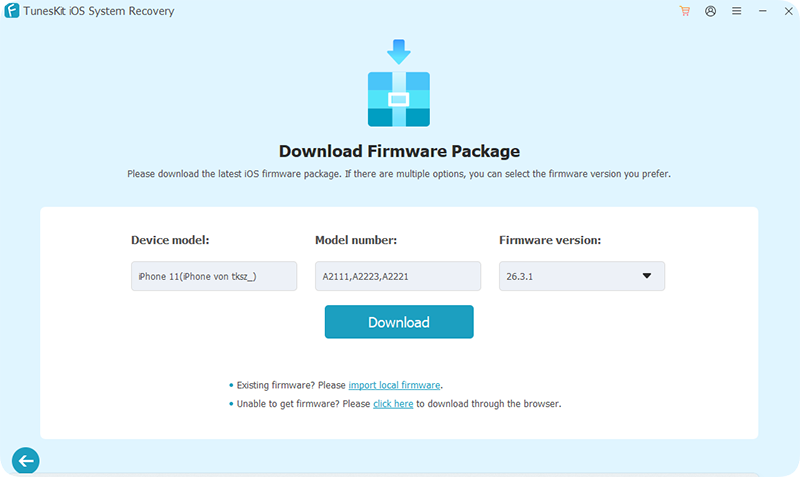
Step 3Download Firmware Package
Once the device is detected, verify that the displayed information matches your iPad model and firmware version. Click "Download" to let the software acquire the correct firmware package for your specific tablet.
Step 4Start to Repair
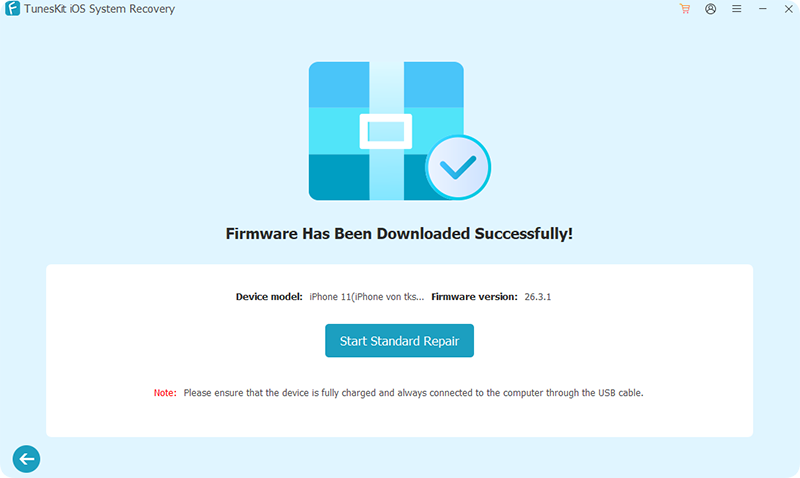
After the download is complete, click "Start Standard Repair" to start the process. Keep your iPad connected to the computer throughout this entire operation. Once the progress bar reaches completion, your device will reboot, and if the software fix was successful, the iPad screen is black issue should be fully resolved.
Fix 5. Restore Your iPad via iTunes or Finder
When standard restarts do not resolve the issue, your operating system may have deep-seated file corruption. Performing a factory restore via iTunes (for Windows) or Finder (for macOS) acts as a comprehensive software reset. This process completely erases your current data and reinstalls a fresh version of iPadOS, which is often the final software-based solution to clear persistent system errors that result in an iPad black screen.
 Note
Note
Please be aware that this process will erase all data currently on your device. Only proceed if you have an existing backup or if restoring the device's functionality is your highest priority.
- Step 1. Launch iTunes on your PC, or open Finder if you are using a Mac (macOS Catalina or later). Ensure your software is updated to the latest version to guarantee compatibility with your device.
- Step 2. Connect your iPad to the computer using a reliable USB cable. Because your iPad screen is black, your computer will likely not recognize the device immediately in normal mode. You must manually force the device into Recovery Mode so the computer can detect it.
- Step 3. While the device is connected, perform the following sequence to enter Recovery Mode:
- Quickly press and release the Volume Up button, quickly press and release the Volume Down button, and then hold the Top (Power) button.
- Keep holding the Top button even after the Apple logo appears; do not let go until you see the "Connect to computer" recovery icon on your screen.
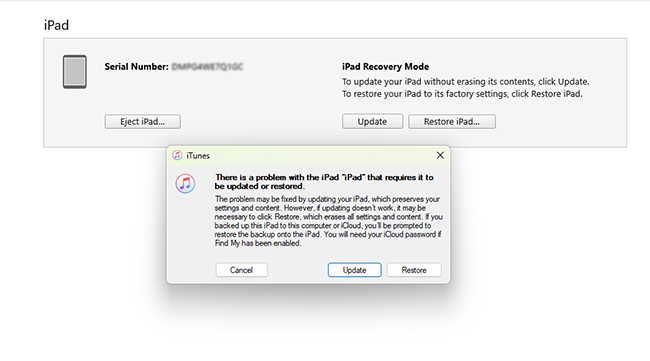
- Step 4. Once the device is detected in Recovery Mode, a pop-up window will appear on your computer screen. Choose "Restore." Your computer will then download the necessary firmware and reinstall the operating system, which is a highly effective way to eliminate the software bugs causing your iPad black screen.
- Step 5. Allow the process to finish without disconnecting the cable. Once the restoration is complete, your iPad will restart. If the software was the root cause, your device should power on normally, effectively resolving this issue.
Fix 6. Contact Apple Support
If you have exhausted all software troubleshooting methods and your iPad black screen persists, it is time to seek professional help. The issue is likely hardware-related, such as a damaged display connector or a failed component, which requires specialized repair.
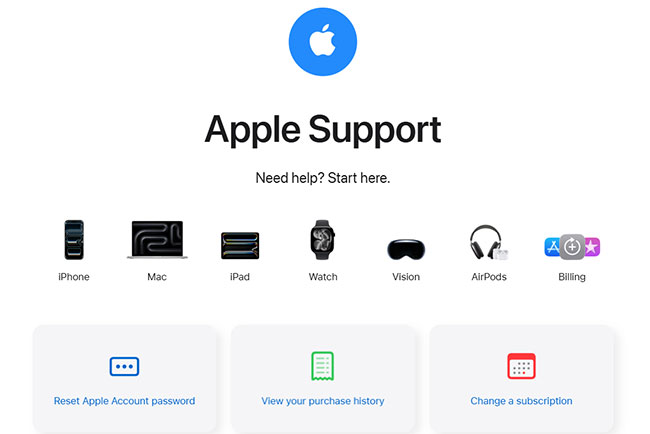
- Step 1. Schedule an appointment via the Apple Support website or the "Apple Support" app to visit a Genius Bar or an Apple Authorized Service Provider. This ensures you receive priority service without waiting in line.
- Step 2. Prepare your device for the appointment by removing cases, screen protectors, or external accessories. If possible, bring your original proof of purchase to expedite the warranty verification process.
- Step 3. Explain your previous attempts to the technician. Clearly state that you have already performed forced restarts and system restores; this helps them bypass basic troubleshooting and confirms the iPad black screen is likely a hardware defect that needs professional repair.
Watch: Fix iPad Black Screen in Minutes (Easy Step-by-Step Guide)
Still not sure what to do? Watch this quick video to see exactly how to fix an iPad black screen — even if your device is unresponsive or stuck. Most users can solve the problem in just a few minutes by following these steps.
FAQs About iPad Black Screen Issues
-
Does the black screen of death on iPad mean my data is gone?
No, a black screen typically indicates a system-level issue, not a data loss event. In many cases, the data is still intact on the storage chip. Even if you have to perform a "Restore" via a computer, you can recover your personal information later if you have a recent backup in iCloud or on your computer.
-
Can water damage cause the iPad screen to be black?
Yes. If your iPad has been exposed to liquid, the iPad screen is black because internal components (like the display flex cable or the backlight driver) have short-circuited. If you suspect liquid damage, do not attempt to charge or force-restart the device, as this can cause permanent electrical damage. Seek professional repair services immediately.
-
How can I prevent the iPad black screen from recurring?
While some hardware issues are unavoidable, you can minimize software-related system crashes by:
Updating iPadOS: Always install the latest updates, as they often contain critical bug fixes that prevent the iPad black screen issue.
Managing Storage: Avoid running out of storage space completely, as this can cause the system to freeze or fail to boot.
Monitoring Battery Health: Excessive heat and extreme charging cycles can degrade your battery, making it prone to sudden shutdowns.
The Bottom Line
After the repair is completed, your iPad will back to normal and you can use it as before. Now that you can feel the power and efficiency TunesKit iOS System Recovery has, just download it and let it be the guardian of your iPad. If you are still having other iOS problems, please feel free to leave us a comment below.


