


How to Downgrade to Unsigned iOS in 2026 | IPSW & SHSH Guide

Updating your iPhone should bring exciting new features, but sometimes it introduces severe battery drain, disruptive bugs, or app incompatibility. When this happens, your first instinct is to revert to the previous software version. However, if Apple has already closed the signing window for that specific firmware, you will quickly discover that the official avenues are completely blocked. But don't worry, you can read this guide to learn how to downgrade to unsigned iOS.

- Can I Downgrade to an Unsigned iOS?
- Why Going Back to an Older Unsigned iOS Is So Hard?
- How to Downgrade to Unsigned iOS Using SHSH Blobs HOT
- How to Downgrade to Signed iOS
- 1. Use TunesKit iOS System Recovery [Easy & 100% Working]
- 2. Downgrade Your iPhone via iTunes
- Hot FAQs About Downgrading to Unsigned iOS
- Conclusion
Can I Downgrade to an Unsigned iOS?
Yes, but not in an official way.
Every latest iOS version comes with a signature. A signature that comes with an Apple update is nothing but a piece of code. You can add a signature to your iOS version by installing a new iOS version via iTunes. The sign from an Apple update will be deleted after two weeks. It means you can downgrade or upgrade to any iOS version until the iOS version carries a signature. You won't be able to downgrade or upgrade to any iOS update if the signature gets deleted after two weeks or so.
However, you can still downgrade to an unsigned iOS using an unofficial method. People want to downgrade to the unsigned one for a stable iOS system, so they don't have to install a new iOS update whenever it comes.
Will It Be Risky?
Yes. One obvious downside is that Apple does not support unsigned versions, leaving your device vulnerable to security threats such as viruses, malware, and hacking.
Additionally, reverting to an older iOS version will prevent you from utilizing the new features, improvements, and enhancements introduced in the latest updates. This loss of functionality can be a major drawback for users who have accustomed to the advanced features in the latest iOS versions. So think twice before confirming an iOS downgrade.
 View Also: How to Restore IPSW on iPhone/iPad
Why Going Back to an Older Unsigned iOS Is So Hard?
The internet is filled with tutorials promising a one-click downgrade for unsigned firmware, but the technical reality is much more complex. You cannot simply download an older file and force it onto your phone without careful preparation.
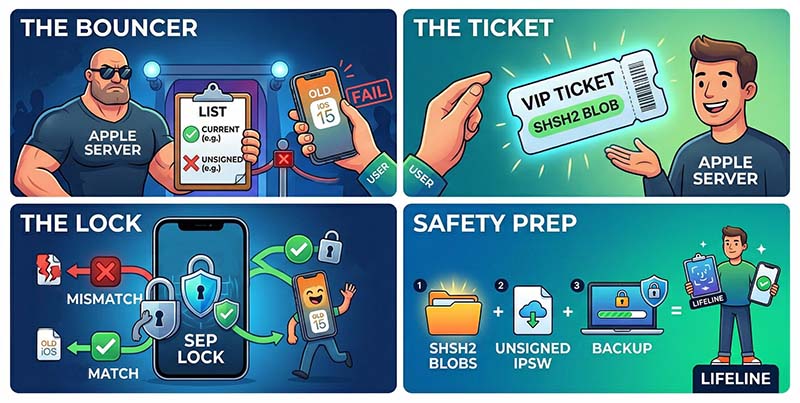
To understand the challenge of downgrading your iPhone, imagine Apple's servers as a very strict bouncer at an exclusive nightclub. Whenever you try to install a piece of software, your phone has to ask this bouncer for permission. If Apple decides they no longer support an older iOS version, they cross it off the approved guest list. This means the bouncer will immediately reject your attempt to install it, and the process fails right at the door.
The Magic of "Permission Slips" (SHSH2 Blobs)
So, how do people ever bypass this strict bouncer? They use something called an SHSH2 blob, which you can think of as a highly personalized VIP ticket. These digital tickets are created specifically for your exact device and one specific iOS version. If you were proactive enough to save this ticket back when the software was still on the approved guest list, you can use it to trick the server into letting you install the older system today.
The Security Lock Problem (SEP)
Even if you have a VIP ticket, you still have to deal with your phone's internal security guard, known as the Secure Enclave. This part of your phone acts as a high-tech lockbox that manages sensitive features like Face ID, Touch ID, and passwords. The older iOS software you want to install must perfectly fit the modern security locks currently running on your device. If the old software and the new security lock do not match, the installation will crash, or your biometric features will break.
Essential Safety Prep Before You Begin
Trying to bypass Apple's strict rules is incredibly risky and can result in a completely broken, unusable phone. Before you even think about starting this process, you must gather your safety nets to protect your personal information.
- 1. Locate your uniquely saved digital VIP tickets (SHSH2 blobs) for the exact older software you want to install.
- 2. Download the correct software installation file (known as an unsigned IPSW) that perfectly matches your iPhone model.
- 3. Make a fully encrypted backup of your phone to your computer using Finder or iTunes so your data is completely secure.
Having these three elements ready is your only lifeline. If you skip any of these preparations, you might be forced to erase everything and install the newest iOS, which completely defeats the purpose of trying to downgrade in the first place.
How to Downgrade to Unsigned iOS (Using FutureRestore)
For advanced users who properly saved their SHSH2 blobs in advance, FutureRestore is the most reliable method for installing an unsigned IPSW. This is an open-source command-line utility that circumvents standard iTunes or Finder restrictions. Because this process involves terminal commands and strict prerequisites, it requires patience and precision.
Step 1 Verify Your Pre-saved SHSH2 Blobs
You cannot download blobs for an unsigned iOS today. You must locate the specific SHSH2 blob files that you previously saved (using tools like TSS Saver or blobsaver) when that older iOS version was still officially signed by Apple.
Step 2 Prepare Your Device's Generator Nonce
You must set your iPhone's internal nonce to match the specific string found inside your saved SHSH2 blob. Use a modern nonce-setting tool compatible with your current iOS version, such as TrollNonce (if utilizing TrollStore) or the built-in nonce setter within modern jailbreaks like Dopamine or unc0ver.
Step 3 Organize Your FutureRestore Files
Create a dedicated folder on your computer's C: drive. Place the FutureRestore executable, your saved .shsh2 blob file, and the target unsigned .ipsw firmware file directly into this folder to streamline your command prompt entries.
Step 4 Execute the FutureRestore Command
Connect your unlocked iPhone to the computer and open your Command Prompt or Terminal as an administrator. You must execute a command that links your blob, the unsigned firmware, and the necessary SEP/Baseband parameters.
A standard modern command typically looks like this: futurerestore -t yourblob.shsh2 --latest-sep --latest-baseband targetfirmware.ipsw. Hit enter and allow the script to automatically place your device into recovery mode and complete the downgrade. Done!

How to Downgrade to Signed iOS
If you are experiencing severe bugs on the latest iOS and want a stable device, forcing an unsigned downgrade isn't always your only option. Here are two different ways to help you downgrade to the signed iOS.
1. Use TunesKit iOS System Recovery
TunesKit iOS System Recovery is a premium utility designed to effortlessly fix software glitches and facilitate downgrades to any currently signed iOS version. While it cannot magically bypass Apple's server checks for unsigned firmware without prior preparation, it is the safest way to eliminate operating system errors without losing your data.
This advanced program can help you downgrade or upgrade iOS with simple and easy steps. With this tool, you can not only test the new features of the latest iOS beta version, but also downgrade to older signed version to avoid system errors. More importantly, TunesKit iOS System Recovery allows you to downgrade iOS without iTunes by yourself.
Key Benefits of Using TunesKit iOS System Repair
Effortlessly upgrade or downgrade between actively signed iOS versions with a graphical interface. Safely repair over 150 different iOS system errors (like boot loops or white Apple logos) without data loss.
 600,000+ Downloads
- Step 1. Download and install the latest version of TunesKit iOS System Recovery on your computer.
- Step 2. Connect your iPhone to the PC using a verified cable and select Upgrade/Downgrade iOS option on the interface.
- Step 3. Choose the iOS downgrade mode, allow the software to download the correct firmware package, and click Start Downgrade to downgrade your system.

2. The Official Route via iTunes (Signed Only)
If you prefer using official Apple software, iTunes (or Finder on newer Macs) remains a dependable way to manage your device's firmware. Similar to TunesKit, this method will only work if the IPSW file you downloaded is still actively signed by Apple's servers. Always remember to create a fully encrypted backup of your important data before initiating this process to prevent accidental loss.
- Step 1. Download the correct signed IPSW file for your specific iPhone model from a trusted repository.
- Step 2. Disable Find My iPhone by going to Settings > [Your Name] > Find My > Find My iPhone. Then connect your device to your computer.
- Step 3. Open iTunes, hold down the Shift key (Windows) or Option key (Mac), click Restore iPhone, and select your downloaded firmware file.

Hot FAQs About Downgrading to Unsigned iOS
-
Can you downgrade to an unsigned iOS without SHSH blobs?
For modern iPhones, the answer is definitively no. While there are some legacy exploits for very old hardware (like the iPhone 4 or 5), any modern device requires properly saved SHSH2 blobs to authenticate an unsigned firmware installation.
-
Can I downgrade iOS without a computer?
No, it is strictly impossible to downgrade your firmware without external hardware. All reliable methods, whether using official Apple software or advanced terminal commands, require a stable connection to a Mac or Windows PC to facilitate the installation.
-
How can I check if an iOS version is still being signed by Apple?
You can easily verify the current signing status of any firmware by visiting dedicated tracking websites like IPSW.me. These databases monitor Apple's servers in real-time and will show you exactly which versions are approved for your specific device model.
-
Can downgrading to an unsigned iOS version cause data loss?
Yes, downgrading to an unsigned iOS version can potentially result in data loss. It's essential to back up your device before attempting to downgrade, ensuring that you can restore your data if anything goes wrong during the process.
-
Why does Apple stop signing older iOS versions?
Apple stops signing older iOS versions to ensure devices are running the most secure and optimized version of iOS. This also reduces fragmentation and ensures users benefit from the latest bug fixes and features.
Conclusion
Downgrading to an unsigned iOS version isn't easy as you haven't got any official method to serve your purpose. Moreover, you may lose your important data in the process. While advanced users with saved SHSH blobs can utilize complex terminal tools, the average user is generally locked out of older, unsupported firmware.
If your primary goal is to escape a buggy update, relying on a robust repair utility like TunesKit iOS System Recovery is the smartest approach. It allows you to safely eliminate frustrating software issues and manage your signed firmware installations without navigating dangerous command-line interfaces.


