


[Top 10] Fix iPhone Stuck in Boot Loop After iOS 27 Update

If your iPhone is stuck in a boot loop after the iOS 27 update, force restart it first. If it keeps restarting, connect it to Finder, Apple Devices, or iTunes and choose Update, not Restore, to avoid data loss.
Updating to iOS 27 can bring new features, but it may also cause problems if the update fails or is interrupted. Some users may find their iPhone stuck in a boot loop after the iOS 27 update, with the Apple logo appearing repeatedly or the device restarting without reaching the Home Screen.
In this guide, we will explain why this happens and show you 10 practical ways to fix iPhone boot loop after iOS 27 update, starting with no-data-loss methods first.

- Why Is Your iPhone Stuck in Boot Loop After iOS 27 Update?
- How to Fix iPhone Reboot Loop After iOS 27 Update [Top 10 Methods]
- Method 1. Force Restart Your iPhone
- Method 2. Charge iPhone and Check Cable / Battery
- Method 3. Update iPhone via Recovery Mode
- Method 4. Free Up Storage If You Can Access Settings
- Method 5. Reset All Settings If iPhone Can Stay On
- Method 6. Install the Latest iOS 27 Patch If Possible
- Method 7. Fix iOS 27 Boot Loop with TunesKit iOS System Recovery [No Data Loss]
- Method 8. Restore iPhone via Finder, Apple Devices, or iTunes
- Method 9. Restore iPhone in DFU Mode
- Method 10. Head to Apple's Support Center
- FAQs About iPhone Boot Loop After iOS 27 Update
- The Bottom Line
Why Is Your iPhone Stuck in Boot Loop After iOS 27 Update?
An iPhone boot loop after the iOS 27 update is usually caused by a failed or interrupted update process. In most cases, it is a software-related issue, but hardware problems can also be involved. Here are the common reasons:
- Interrupted iOS 27 update: The update may fail if your iPhone shuts down, loses connection, or gets stuck during installation.
- Low storage space: If your iPhone storage is almost full, iOS may not have enough space to install or restart properly.
- Low battery or unstable power: A weak battery or sudden power loss during the update can cause the system to fail.
- Weak Wi-Fi or computer connection: An unstable network or USB connection may interrupt the iOS 27 update.
- Corrupted update file: The downloaded iOS 27 file may be incomplete or damaged.
- iOS 27 beta bugs: If you installed an iOS 27 beta, system bugs may cause boot loop, freezing, or update failure.
- Jailbreak or modified iOS: Jailbroken devices are more likely to face system conflicts after a major update.
- Hardware damage: If your iPhone was dropped, exposed to water, or has a weak battery, the boot loop may be hardware-related.
Try TunesKit iOS System Recovery
If you want to fix an iPhone boot loop after iOS 27 update without erasing data, try TunesKit iOS System Recovery in Standard Repair mode.
 600,000+ Downloads
Top 10 Methods to Fix iPhone Reboot Loop After iOS 27 Update
Now that we understand the causes of your iPhone issue, here are 10 effective methods to fix an iPhone stuck in a boot loop. First, let's watch a short video.
Start with no-data-loss methods first. Use Restore or DFU Mode only if safer fixes fail.| Method | Best For | Difficulty | Data Loss Risk |
|---|---|---|---|
| Force Restart iPhone | iPhone keeps restarting after iOS 27 update due to a temporary system glitch | Easy | No |
| Charge iPhone | iPhone restarts during or after the iOS 27 update because of low battery or unstable power | Easy | No |
| Update iPhone via Recovery Mode | iPhone is stuck on the Apple logo or boot loop after iOS 27 installation | Medium | Usually no, if you choose Update instead of Restore |
| Free Up Storage | iPhone can still turn on, but storage is almost full after or before the iOS 27 update | Easy | No |
| Reset All Settings | iPhone restarts after iOS 27 because of wrong settings or minor system conflicts | Easy | No personal data loss, but settings are reset |
| Install the Latest iOS 27 | iPhone can open Settings and a newer iOS 27 patch is available | Easy | No |
| Use TunesKit iOS System Recovery | iOS 27 update failure, recovery mode loop, or repeated boot loop after basic fixes | Easy | No, in Standard Repair mode |
| Restore iPhone | iOS 27 cannot be reinstalled with Recovery Mode Update | Medium | Yes, it erases iPhone data |
| DFU Restore | Severe iOS 27 update failure or failed Recovery Mode restore | Hard | Yes, it erases iPhone data |
| Contact Apple Support | Boot loop may be caused by battery, water, drop, or hardware damage | Medium | Depends on repair type |
Method 1. Force Restart Your iPhone
TA force restart is the first method you should try when your iPhone is stuck in a boot loop after the iOS 27 update. It can help fix temporary system glitches without erasing your data. Follow the steps below based on your iPhone model:
- For iPhone 8 and later: Quickly press and release the Volume Up button, then quickly press and release the Volume Down button. Press and hold the Side button until the Apple logo appears.
- For iPhone 7/7 Plus: Press and hold the Side button and the Volume Down button at the same time. Release both buttons when the Apple logo appears.
- For iPhone 6/6S or earlier: Press and hold the Home button and the Side/Top button at the same time. Release both buttons when the Apple logo appears.

Method 2. Charge iPhone and Check Cable / Battery
A low battery, unstable power supply, or faulty charging cable may cause your iPhone to restart repeatedly. This is more common on older iPhones or devices with poor battery health.
Connect your iPhone to a reliable power source and charge it for at least 30 minutes. Use an Apple-certified cable and adapter if possible. If your iPhone stops restarting while charging, the problem may be related to the battery or power connection.

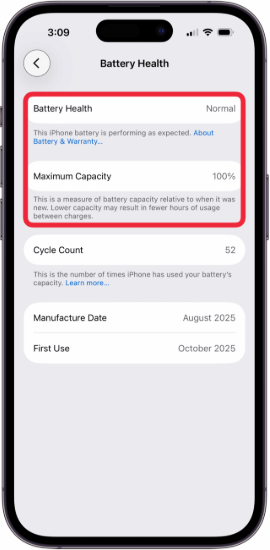
You can also check Settings > Battery > Battery Health if your iPhone can still turn on. If you see a service warning or the maximum capacity is very low, consider replacing the battery or contacting Apple Support.
Method 3. Update iPhone via Recovery Mode
To fix iPhone reboot loop, you can put your iPhone into Recovery Mode and update it with a computer. This method can reinstall iOS without erasing your data if you choose Update instead of Restore.
Step 1: Connect your device to the computer and Open Finder on Mac, Apple Devices on Windows, or iTunes on older computers.
Step 2: For iPhone 8 or later, quickly press and release the Volume Up button, quickly press and release the Volume Down button, then press and hold the Side button until the recovery mode screen appears.
 Note:
Note:For iPhone 7 and 7 Plus, you should hold both the Power and Volume Down buttons at the same time until you see the Connect to iTunes on the screen; for iPhone 6s and former, the two buttons are the Power and Home.
Step 3: Click the Update button in Finder, Apple Devices, or iTunes. It will reinstall iOS without erasing data. Wait until the process comes to end.

Method 4. Free Up Storage If You Can Access Settings
If your iPhone can still turn on for a short time, check whether the storage is almost full. Low storage can make iOS unstable and may cause repeated restarts.
Go to Settings > General > iPhone Storage. Delete unused apps, large videos, offline downloads, or old files to free up space. After that, restart your iPhone and check whether the boot loop stops.

Method 5. Reset All Settings If iPhone Can Stay On
Resetting all settings on your iPhone may also solve the issue. This method is simple to operate. It will not erase your personal data, but it will reset Wi-Fi, VPN, keyboard, location, and other system settings. Follow the quick steps below.
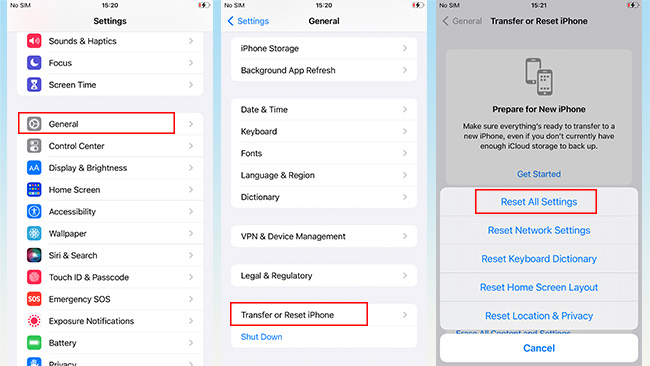
- Step 1. Open your iPhone and go to the Settings > General.
- Step 2. Tab the Transfer or Reset iPhone > Reset >Reset All Settings to complete the process.
Method 6. Install the Latest iOS 27 Patch If Possible
If your iPhone can still turn on and open Settings, check whether a newer iOS 27 patch is available. Apple may release small updates to fix bugs found after a major iOS update.
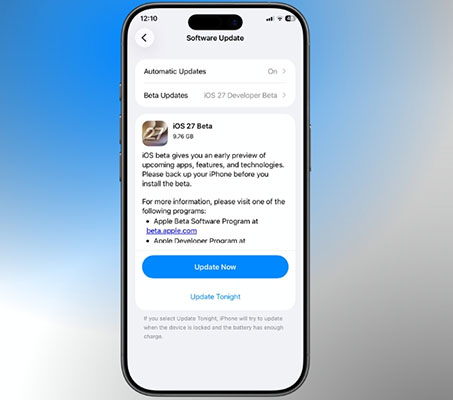
Go to Settings > General > Software Update. If an update such as iOS 27.0.1 or iOS 27.1 is available, tap Update Now to install it. Make sure your iPhone has enough battery, stable Wi-Fi, and enough storage before starting.
This method is only useful if your iPhone can stay on long enough to access Settings. If it keeps restarting before you can open Settings, try Recovery Mode Update instead.
Method 7. Fix iOS 27 Boot Loop with TunesKit iOS System Recovery [No Data Loss]
If your iPhone is still stuck in a boot loop after the iOS 27 update, the problem may be caused by a deeper system error. This can happen when the update fails, the iPhone gets stuck on the Apple logo, or the device enters a recovery mode loop.
In this case, you can try TunesKit iOS System Recovery before restoring your iPhone. Its Standard Repair mode is designed to fix common iOS issues, including iOS 27 update failure, iPhone boot loop, Apple logo stuck, and recovery mode loop, without erasing your data.
For more serious system problems, TunesKit also offers Deep Repair mode. However, Deep Repair may erase your iPhone data, so use Standard Repair first and make sure you have a backup before trying advanced repair.
Key Features of TunesKit iOS System Recovery
Repair iPhone boot loop after iOS 27 update with Standard Repair mode, without erasing data.
600,000+ Downloads
Next, I'll show you how to get rid of iPhone boot loop via TunesKit iOS System Recovery step by step.
Step 1Select Repair Mode
After downloading and installing TunesKit iOS System Recovery on your computer correctly, open it and then connect your iPhone to the computer. Select the iOS System Repair option and press the Start button once the device is detected, after that set the repair mode as Standard Repair mode from the 2 options offered. Click the Next to continue.

Step 2Download iOS Firmware Package
Firstly make sure that the device info displaying on the window is right, correct it if any data is wrong. Then you may need to tap the Download button to download the latest firmware package and verify it quickly.

Step 3Fix iPhone Restart Loop Without Data Loss
When the program completes downloading, you will see the Repair button, just click on it to start fixing the iPhone boot loop. There's one thing you need to keep in mind, which is to remain your device connecting to the computer during the repairing process in case that some unexpected issues may occur.

Method 8. Restore iPhone via Finder, Apple Devices, or iTunes
There's another way to break the iPhone boot loop status which is to rely on Finder on Mac, Apple Devices on Windows, or iTunes on older computers to restore your iPhone. By doing so, you'll erase all data from the device. Please make sure that you've backed up all important data on your iPhone before taking this method. Now let's take a look at how to use iTunes/Apple Devices to get your device out of boot loop status.
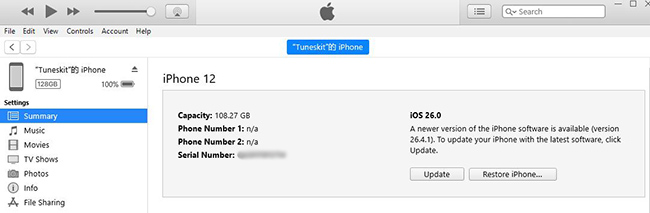
- Step 1. Connect your iPhone to your Windows computer via a USB and launch iTunes or Apple Devices. Ensure that the app installed on your computer is the latest version.
- Step 2. Click on the device icon from the top of the interface.
- Step 3. Find the Summary tab and then press the Restore iPhone button. Wait for iTunes to download the latest iOS if your iPhone is running an older version.
For Mac users on macOS Catalina and higher, the Finder replaces iTunes, so let's see how you can use the Finder to restore your iPhone.
- Step 1. Connect your iPhone to your Mac using a USB data cable.
- Step 2. In the Finder, select your device from the sidebar.
- Step 3. In the button bar, click on General.
- Step 4. On the main screen, click the Restore iPhone button.

Method 9. Restore iPhone in DFU Mode
If Recovery Mode does not fix the iPhone boot loop, you can try DFU Mode Restore. DFU mode is a deeper restore mode that can help repair serious iOS system problems. However, this method will erase all data on your iPhone, so only use it as a last resort. Make sure you have a recent backup before continuing.
Connect your iPhone to a computer with a USB cable. Then open Finder on Mac, Apple Devices on Windows, or iTunes on older computers. Put your iPhone into DFU mode according to your iPhone model. When your computer detects the device, choose Restore to reinstall iOS.

Method 10. Head to Apple's Support Center
If this issue still exists after trying all the 9 methods given above, then your device may have a hardware problem. If your iPhone was dropped, exposed to water, has poor battery health, or still boot loops after software fixes, contact Apple Support or visit an authorized repair center. As is known to us all, any incorrect hardware changes may lead to the malfunction of your device. Once repaired, your iPhone will be able to reboot and run in a normal state.

FAQs About iPhone Boot Loop After iOS 27 Update
-
Why is my iPhone stuck in a boot loop after the iOS 27 update?
The most common reason is a failed or interrupted iOS 27 update. Low storage, low battery, or an unstable connection can also stop your iPhone from restarting properly.
-
Can I fix iOS 27 boot loop without losing data?
Yes. Try force restart first. Then use Recovery Mode and choose Update, not Restore. You can also try Standard Repair mode in an iOS system repair tool like TunesKit iOS System Recovery.
-
How long should I wait if my iPhone keeps restarting after the iOS 27 update?
Wait about 10 to 15 minutes. If it still restarts or stays on the Apple logo, try force restart or Recovery Mode Update.
-
Is iOS 27 beta more likely to cause boot loop?
Yes. iOS 27 beta may have bugs or app conflicts that cause boot loop, freezing, or update failure.
The Bottom Line
Most iPhone boot loop issues after an iOS 27 update are caused by failed installation, low storage, unstable power, or system errors. Try no-data-loss methods first, including force restart, Recovery Mode Update, and TunesKit iOS System Recovery Standard Repair. Use Restore, DFU Mode, or Apple Support only when safer methods fail.


