


Top 10 Ways to Fix iPhone Screen Too Sensitive

The iPhone is well known for its highly responsive and precise touchscreen, designed to react effortlessly to even the lightest touch. However, this sensitivity can sometimes become a drawback. Many users report that their screen is overly responsive—where accidental touches, slight movements, or even dust can trigger unwanted actions.
If you're experiencing this issue, you're not alone. An overly sensitive screen can seriously affect your daily usage and lead to frustration. In this guide, we'll show you how to fix iPhone screen too sensitive with 10 proven methods, helping you regain full control of your device.

- Why Is My iPhone Screen So Sensitive?
- Top 10 Solutions to Fix iPhone Screen Sensitivity Problem
- Video Tutorial: How to Fix iPhone Screen Very Sensitive
- Solution 1. Clear Out Easy-to-ignore Obstructions
- Solution 2. Restart Your iPhone
- Solution 3. Hard Restart iPhone
- Solution 4. Adjust Haptic Touch Duration
- Solution 5. Turn On Touch Accommodations
- Solution 6. Lock the Screen Orientation
- Solution 7. Use the iOS System Recovery Tool HOT
- Solution 8. Check for Software Update
- Solution 9. Factory Reset Your iPhone
- Solution 10. Ask Apple Support
- Final Words
Why Is My iPhone Screen So Sensitive?
There are several possible reasons why your iPhone screen may become overly sensitive. Understanding these causes can help you better fix iPhone screen too sensitive issues:
- 01 Screen protector - You can try to remove the iPhone screen protector to see if the screen sensitivity issue still exists. Sometimes, an inferior protector will even damage your screen.
- 02 Clean screen - It is important to keep the iPhone screen dry and clean. A wet screen will become extremely sensitive. If you want to clean the screen, please use alcohol-free fluid and a lint-free cloth.
- 03 iPhone is charging - If you find that your iPhone screen becomes sensitive only when it is charging, you can try to unplug it to get rid of the issue.
- 04 System glitches - When there are some system glitches on your iPhone, the screen will become sensitive.
Top 10 Solutions to Fix iPhone Screen Sensitivity Problem
Before diving into the troubleshooting methods, let's watch a video guide to fix iPhone screen sensitivity too high issue.
Video Tutorial: How to Fix iPhone Screen Very Sensitive
Solution 1. Clear Out Easy-to-ignore Obstructions
There are some obstructions that can be ignored easily but still impede the screen from reacting to finger touches normally, for example, small dust, a screen protector. To eliminate these causes, you should:
- Step 1. Clean the screen with a cloth. To clean the screen to the finest condition, wipe the screen cloth soaked with ethyl alcohol (not wine, spirit or beer!) and then dry cloth.
- Step 2. Remove the screen protector and see whether the screen functions normally without it. If you have to use a screen protector to ensure the safety of the screen, use a well-established brand that will not block normal screen usage.

Solution 2. Restart Your iPhone
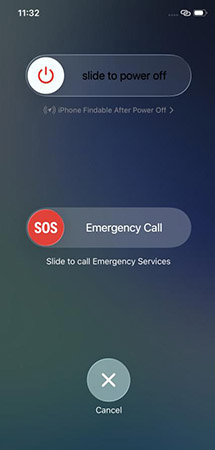
In some cases, restarting your iPhone can help you fix iPhone screen too sensitive. Sometimes iOS misinterprets touch input due to minor system errors. A restart refreshes everything, and the system reloads how it processes touch input, which can correct hypersensitivity. To turn off your iPhone:
- Step 1. You can long press the Power button as well as Volume Up/Down button.
- Step 2. Then, you will see the slide to power off prompt on your screen. Drag the slider to the right place, and your iPhone will be shut down.
- Step 3. Next, power on your iPhone again by pressing the Side button until the Apple logo is seen.
Solution 3. Hard Restart iPhone
Easy as it seems, a hard restart can also solve a large number of problems, like iPhone touch sensitivity issues. It is different from the normal reboot in that it is more complete.
- iPhone 6s Plus and earlier models: Press and hold the Power button and the Home button at the same time until the Apple logo appears as illustrated.
- iPhone 7 and derivative models: Simultaneously press and hold the Volume Down and the Power button until the Apple logo appears on your screen.
- iPhone 8 and other latest models:Press and release the Volume Up button and then do the same to the Volume Down button, and finally hold the Home button till the Apple logo appears on the screen.

 Note
Note
Before using this method always make sure that your iPhone is not running out of power.
Solution 4. Adjust Haptic Touch Duration
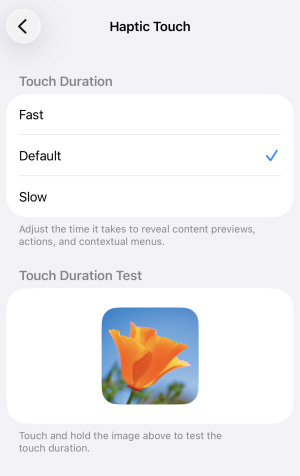
Sometimes the issue isn't basic tapping, but rather that sub-menus and previews pop up too aggressively when you rest your finger on an app. Changing the Haptic Touch speed will not fix basic scrolling sensitivity, but it will stop those frustrating long-press menus from triggering prematurely. Slowing this down gives you leeway when navigating your phone.
- Step 1. Go to Settings > Accessibility > Touch.
- Step 2. Tap on Haptic Touch.
- Step 3. Change the Touch Duration setting from Default or Fast to Slow.
Solution 5. Turn On Touch Accommodations
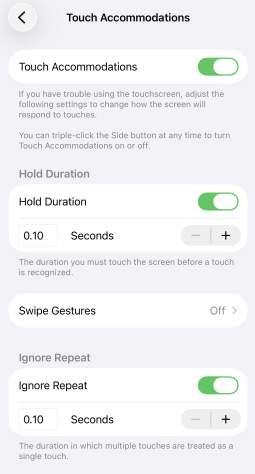
This is the core iOS feature designed to change how your screen reacts to basic taps and swipes. If you find that the screen reacts to the slightest brush of your finger, or if shaky hands are causing accidental double-taps, this feature is your best tool. You can set the phone to ignore repeated touches or require a slightly longer tap before registering the input.
- Step 1. Open the Settings app on your iPhone, scroll down, and select Accessibility.
- Step 2. Under the Physical and Motor section, tap on Touch.
- Step 3. Select Touch Accommodations, toggle it on, and adjust the Hold Duration or Ignore Repeat settings.
Solution 6. Lock the Screen Orientation
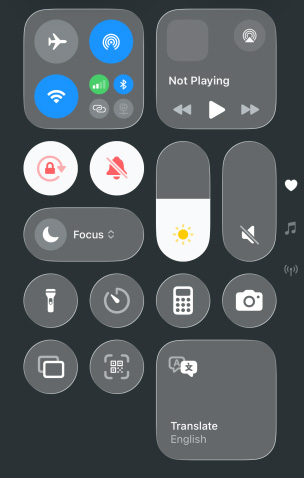
The orientation lock feature can indeed affect the touch sensitivity of an iPhone. It may cause the screen to be unresponsive or overly sensitive in certain orientations. To address this:
- Step 1. You can go to Control Center and look for the button with a symbol of a rotating arrow.
- Step 2. You can turn it on and off to check if the screen sensitivity improves.
Solution 7. Use the iOS System Recovery Tool
If you find your iPhone touch screen too sensitive only occasionally, it may be caused by the iOS system bugs. However, to identify and tackle the bugs is never easy. Finding out what the specific problem costs time energy, while an iTunes restore will have the data erased. But don't worry, we have prepared an effective and safe tool to help you.
TunesKit iOS System Recovery is a multifunctional iOS recovery tool that covers more than 150 issues, such as iPhone ghost touch, iPhone white screen, iPhone reboot loop, etc. It can eradicate the glitches that cause iPhone screen sensitivity to become too high without any data loss, which is its most significant feature. All in all, convenience and safety are the reasons why we choose it. The other main features and the download links of this software are listed below.
iPhone Screen Too Sensitive? Fix It Instantly
Repair touch sensitivity issues in minutes with TunesKit iOS System Recovery—no data loss, no hassle.
 600,000+ Downloads
Here is a brief guide of using TunesKit iOS System Recovery to fix iPhone screen too sensitive issue:
Step 1Connect your iPhone to the computer
Connect your phone with the computer using an intact USB data cable. Wait until TunesKit iOS System Recovery has detected your iPhone, you can see an image of your device displayed on the left side of the window. Now press the iOS System Repair button under this image. Then on the next page, a lot of device problems are listed. Select your problem and hit the Start button to move on.

Step 2Choose the Standard Repair
In the next window, displayed on the screen are two modes to choose, which are the Standard Repair and Deep Repair. Choose the former which can solve common troubles like abnormally high iPhone screen sensitivity without data loss, while the Deep Repair is designed to cope with extremely severe issues at the expense of your data.

Step 3Download firmware package
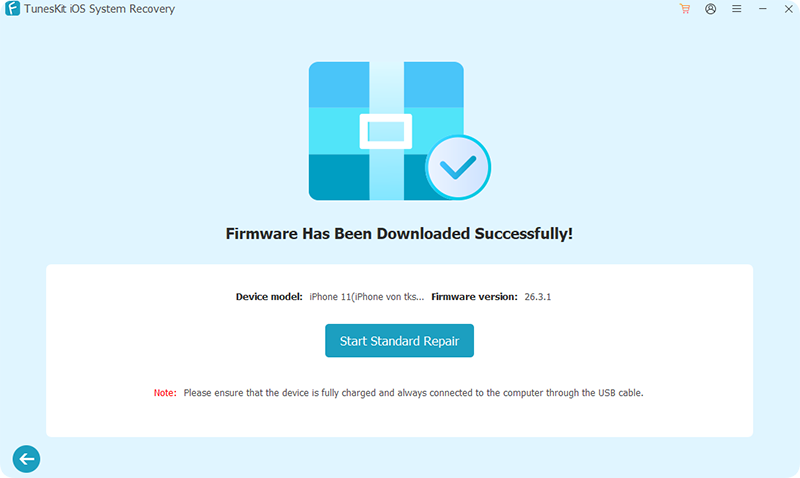
In the window as shown below, TunesKit iOS System Recovery will automatically collect the info of your iPhone, and you need to make sure it is correct so that the iOS Recovery tool can download corresponding firmware. Then download the firmware matching your iPhone and tap the Start Standard Repair button to start repairing. Wait a few minutes, your iPhone should be back to normal.
Tip
If standard repair doesn't resolve the issue, you can try Deep Repair, but note that it may erase your data.
Solution 8. Check for Software Update
In some cases, performing a software update on your iPhone can help fix the problem of the screen being too sensitive. Here's how to do that.
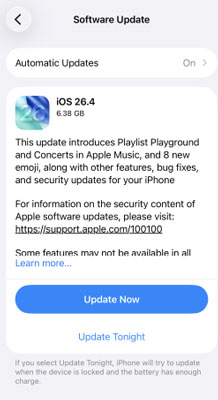
- Step 1. Navigate to Settings > General > Software Update to check for the update.
- Step 2. If there is a new iOS version, just tap the Update Now button to update your iOS to the latest one.
- Step 3. Ensure that you have a stable network connection before initiating the update, as it may take time to complete.
Solution 9. Factory Reset Your iPhone
To fix iPhone screen too sensitive, factory resetting your iPhone is also an alternative for you. But you should notice that you will lose all the data on your iPhone after this reset. To factory reset your iPhone:
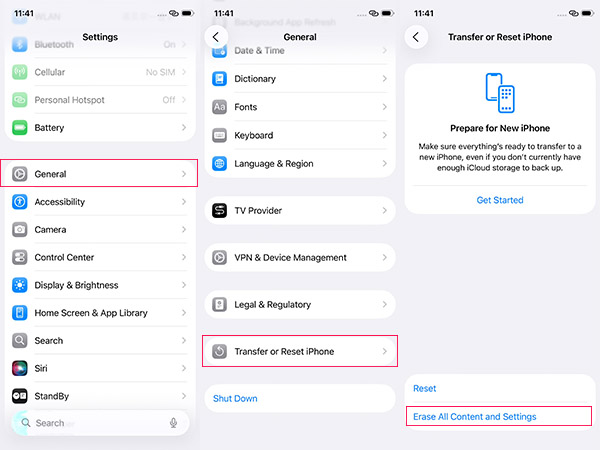
- Step 1. You need to go to Settings > General, and then scroll down the screen to choose Transfer or Reset iPhone.
- Step 2. After that, select Erase All Content and Settings. Then, after you restart your iPhone, it will be reset as a new one.
Solution 10. Ask Apple Support
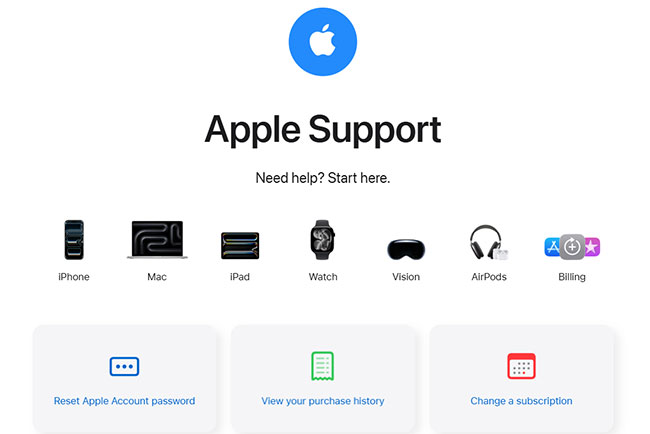
iPhone touch sensitivity problem might result from the damaged screen or other software, reliable replacement of which you can only get from Apple Support. In addition, in most cases, Apple Support is the last place where customers get support from, because the professional staff there will help you find the best and the safest solution to whatever the problem you are facing. Thus, if the previous 9 solutions fail to resolve the problem, you should go to nearby Apple Support center.
Final Words
To make your iPhone screen sensitivity change to the most comfortable degree, we suggest that you follow the steps above in the order they are listed in the passage. It is also worth mentioning that you can go to Apple Support at any point, but to save your precious time and energy, it would be better to try to use TunesKit iOS System Recovery to fix your iPhone first.


