How to Fix iPhone Force Restart Not Working
Is your iPhone force restart not working, even after you've tried pressing the right buttons? Whether your iPhone is frozen, stuck on the Apple logo, or simply not responding, it can be frustrating when a force restart doesn't work as expected.
This issue can occur for several reasons, including incorrect button combinations, software glitches, or hardware problems. In this guide, we'll explain why your iPhone won't force restart and walk you through practical solutions to get it working again.
Why Is My iPhone Force Restart Not Working?
If your iPhone won't force restart, several factors could be causing the problem. Here are some possible reasons:
- 01 Incorrect button combinations: Different iPhone models require different button combinations for a force restart. Pressing the wrong buttons or releasing them too early may prevent the process from working.
- 02 Software glitches: iOS bugs or temporary system errors can cause your iPhone to freeze or become unresponsive.
- 03 Low battery: If your iPhone's battery is drained, it may not have enough power to turn on or complete a restart.
- 04 Hardware issues: Damaged or unresponsive volume and side buttons may prevent you from performing a force restart.
Before trying more advanced fixes, make sure you're using the correct button combination for your iPhone model.
How to Force Restart Your iPhone Correctly
The steps to force restart an iPhone vary depending on the model. Follow the instructions below to restart your device.
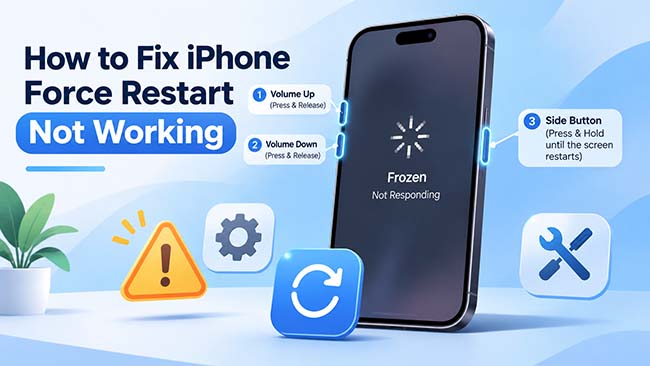
- For iPhone 8 and later (including iPhone SE 2nd and 3rd generation): Quickly press and release the Volume Up button. Quickly press and release the Volume Down button. Press and hold the Side button until the Apple logo appears, then release it.
- For iPhone 7 and iPhone 7 Plus: Press and hold the Volume Down and Side buttons simultaneously. Keep holding both buttons until the Apple logo appears. Release the buttons when you see the Apple logo.
- For iPhone 6s, iPhone SE (1st generation), and earlier: Press and hold the Home button and the Side or Top button simultaneously. Keep holding both buttons until the Apple logo appears. Release the buttons to let your iPhone restart.

 Note
It may take more than 10 seconds for the Apple logo to appear. If your iPhone still doesn't respond, charge it for about an hour and try again. If the problem persists, you may need further troubleshooting or professional assistance.
6 Ways to Fix iPhone Force Restart Not Working
If your iPhone force restart is not working, don't worry. Whether your device is frozen, stuck on the Apple logo, or refusing to turn on, there are several troubleshooting methods you can try. Start with the basic fixes below before moving on to more advanced solutions.
Fix 1. Charge Your iPhone and Check the Buttons
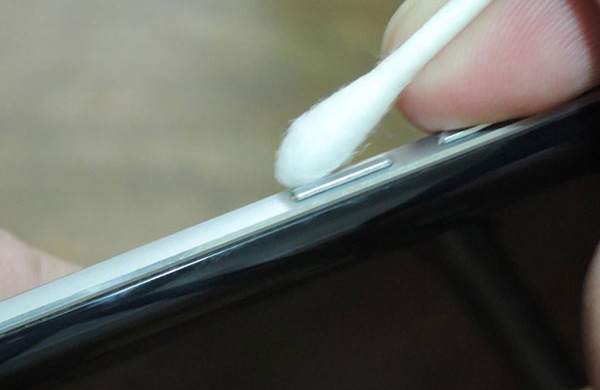
If your iPhone won't force restart, the first thing to check is its battery and physical buttons. A drained battery can prevent your iPhone from turning on, while a damaged or stuck button may stop the force restart command from working.
- Step 1. Connect your iPhone to a working charger and leave it charging for about an hour if it won't turn on.
- Step 2. Simply remove the phone case and check whether the Volume Up, Volume Down, and Side buttons can be pressed normally.
- Step 3. Follow the correct force restart button sequence for your iPhone model.
Fix 2. Update iOS to the Latest Compatible Version
Outdated iOS software or temporary system glitches may contribute to freezing and other performance issues. Updating your iPhone can help resolve known software bugs and improve system stability.
If your iPhone is still responsive enough to open Settings, follow these steps:
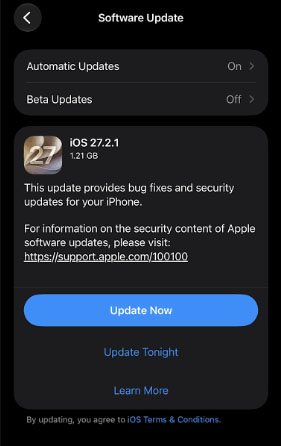
- Step 1. Open the Settings app on your iPhone and tap General.
- Step 2. Select Software Update to check for available updates.
- Step 3. If an update is available, tap Update Now button, depending on the options displayed.
- Step 4. Follow the on-screen instructions to complete the update.
Note
If your iPhone is completely frozen or won't turn on, you won't be able to update iOS through Settings. In that case, try updating your device using a computer.
Fix 3. Update Your iPhone Using Recovery Mode
If your iPhone is stuck on the Apple logo, won't start properly, or remains unresponsive after a force restart, Recovery Mode may help you reinstall iOS. You can use Finder on a Mac or the Apple Devices app on a Windows PC. iTunes may still be used on older supported systems.
- Step 1. Connect your iPhone to your computer using a compatible USB cable.
- Step 2. Open Finder on your Mac or the Apple Devices/iTunes app on your Windows computer.
- Step 3. Put your iPhone into Recovery Mode using the appropriate button combination for your model. Keep holding the required buttons until the Connect to Computer screen appears.
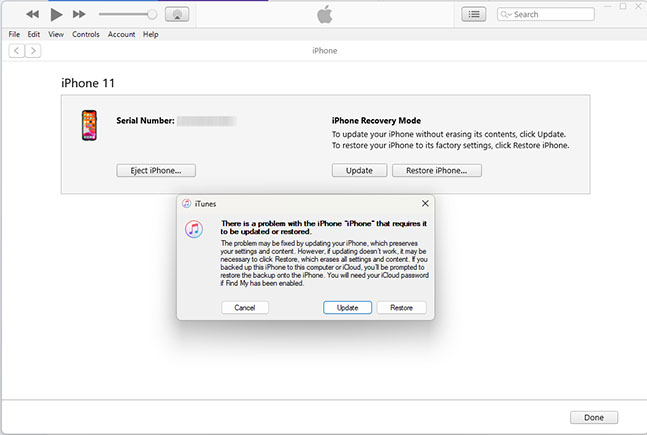
- Step 4. When your computer detects the iPhone in Recovery Mode, select Update option. Wait for the computer to download and reinstall iOS. Keep your iPhone connected throughout the process.
Important
Choose Update before Restore when possible. Updating is intended to preserve your personal data, while restoring your iPhone erases its contents.
Fix 4. Repair iPhone System Issues with TunesKit iOS System Recovery
You can look for a third-party tool TunesKit iOS System Recovery, to fix the issue you're facing currently. The software can fix 150+ iPhone issues, such as iPhone keeps restarting, iPod stuck in boot loop, iPhone stuck in Apple logo, etc. without causing any data loss. Moreover, it offers a pretty manageable interface, and you'll need to follow a few steps to repair your device using TunesKit iOS System Recovery.
Here's the step-by-step guide to repairing your device with no data loss.
Key Features of TunesKit iOS System Recovery
Supports repairs for a wide range of iOS system problems, including frozen screens and restart loops, and it works on Windows and Mac computers.
 600,000+ Downloads
Here's how to use TunesKit iOS System Recovery to fix force restart not working on iPhone.
Step 1. Connect Your iPhone to TunesKit
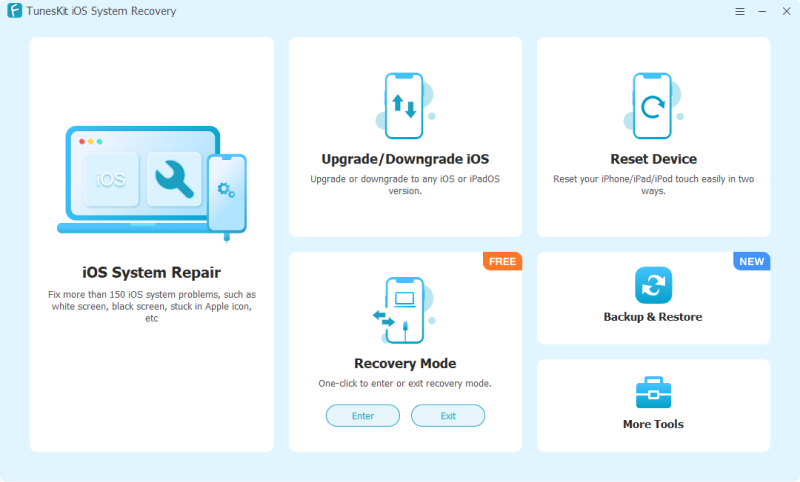
Download and install TunesKit iOS System Recovery on your Windows PC or Mac. Launch the program and connect your iPhone using a USB cable. From the main interface, select the iOS System Repair feature and click the Start button.
Step 2. Select Standard Repair
Choose Standard Repair to address common iOS software problems while aiming to preserve your data. If your iPhone cannot be detected normally, follow the program's instructions for entering Recovery Mode.

Step 3. Download the Firmware Package
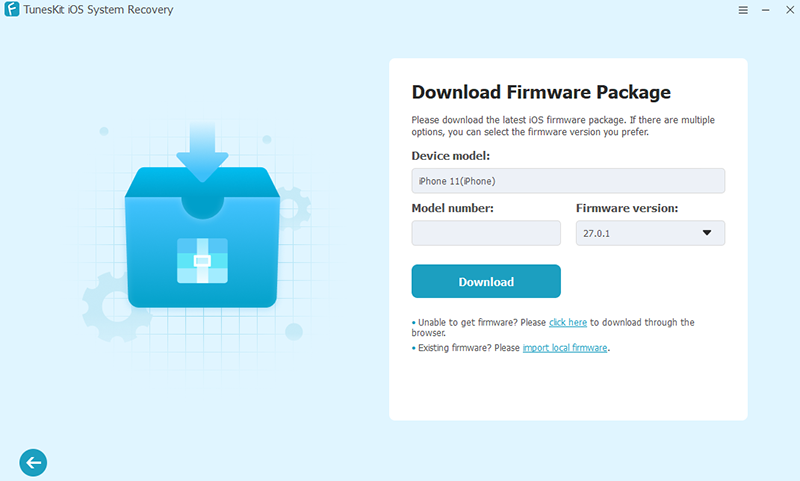
Confirm that the displayed device model and firmware information are correct. Click Download button to get the appropriate firmware package. Wait for the download and verification to finish.
Step 4. Repair the iOS System
Click Start Standard Repair button to begin the process. Keep your iPhone connected to the computer until the repair is complete. Once the process finishes, check whether your iPhone can restart normally.

Fix 5. Factory Reset Your iPhone
If your iPhone can still access Settings but continues experiencing serious software problems, a factory reset may help resolve issues that other methods haven't fixed. However, this option should be considered a last resort because it removes the data and settings stored on your device.
Before proceeding, back up your important files to iCloud or a computer.
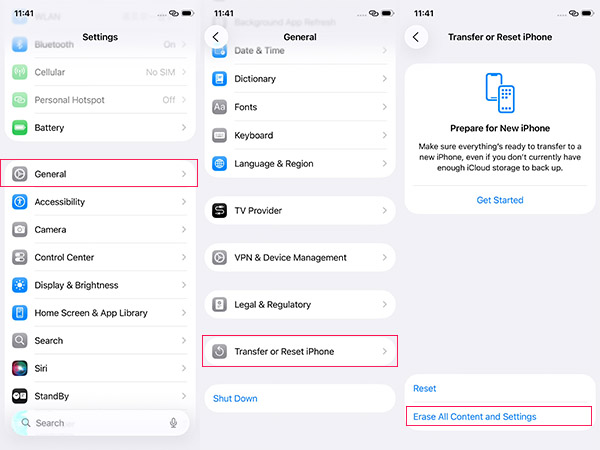
- Step 1. Open Settings and navigate to General.
- Step 2. Tap Transfer or Reset iPhone.
- Step 3. Select Erase All Content and Settings.
- Step 4. Tap Continue and follow the on-screen instructions to confirm the reset.
- Step 5. Once the process is complete, set up your iPhone and check whether the original problem has been resolved.
 Warning: A factory reset erases personal data, installed apps, and settings. If your iPhone is completely unresponsive, you cannot perform this reset through Settings. You may need to use a computer instead. A factory reset will not fix damaged physical buttons.
Fix 6. Contact Apple Support
If none of the previous methods works, your iPhone may have a hardware problem that requires professional diagnosis. For example, a malfunctioning Side button, damaged volume buttons, or an internal hardware fault may prevent the device from responding to a force restart.
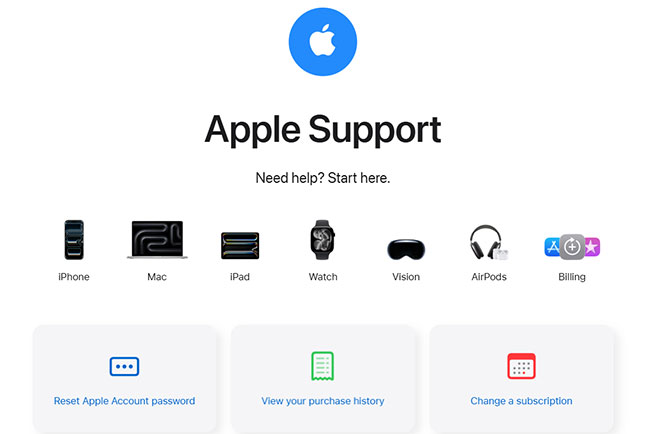
Visit the Apple Support website to explore repair options or contact an Apple Support representative. You can also arrange an inspection at an Apple Store or an Apple Authorized Service Provider. If possible, back up your data before sending your iPhone in for service.
Conclusion
Getting rid of the iPhone force restart not working issue is pretty easy as we've mentioned the most reliable ways to get your thing sorted. All the methods you'll get to read here are nothing less than spectacular. However, TunesKit iOS System Recovery is by far the most popular and reliable method to begin with. It offers outstanding features that help you get what you aim for.