


Unable to Check for Update on iPhone? 8 Fixes for iOS 27
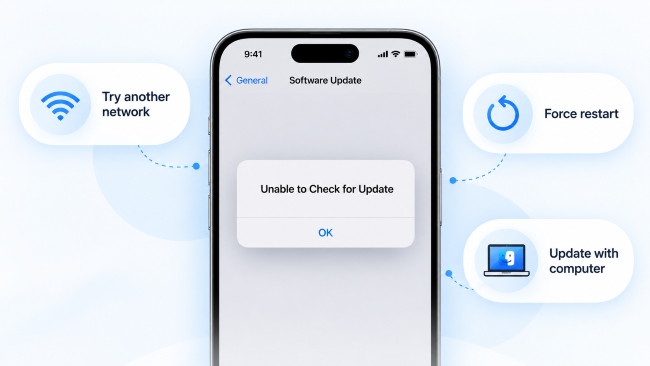
If your iPhone says Unable to Check for Update, retry on the same network first. If the alert returns, try another network and force restart the iPhone. If it still fails, update with Finder or Apple Devices.
Seeing Unable to Check for Update means your iPhone tried to check for an available iOS update, but the request failed. This guide explains what the alert means, how to tell whether the problem is related to your network, Apple services, or the iPhone itself, and what to try next. If your iPhone is stuck at another update stage, see our iOS 27 update guide for the right troubleshooting path.
- What Does "Unable to Check for Update" Mean?
- Checking for Update vs Unable to Check for Update
- Quick Diagnosis: Is It Your iPhone, Network, or Apple?
- Why Does My iPhone Say Unable to Check for Update?
- How to Fix iPhone Unable to Check for Update
- Method 1: Tap Try Again and Refresh the Settings App
- Method 2: Try Another Network
- Method 3: Check Apple Services and Try Again Later
- Method 4: Force Restart Your iPhone
- Method 5: Check Beta Updates If the Error Started After Using a Beta
- Method 6: Delete an Existing iOS Update File
- Method 7: Update with Finder or Apple Devices
- Method 8: Repair Deeper iOS Issues with TunesKit HOT
- FAQs About Unable to Check for Update on iPhone
- Conclusion
What Does "Unable to Check for Update" Mean?
The Unable to Check for Update alert appears when your iPhone cannot complete a request for an available iOS update. You may see messages such as:
- Unable to Check for Update. An error occurred while checking for a software update.
- Unable to Check for Update. Checking for a software update failed because you are not connected to the internet.
The first is a general update-check error. The second points more directly to a connection problem.
Checking for Update vs Unable to Check for Update
These two situations look similar but mean different things.
| What You See | What It Means |
|---|---|
| Checking for Update keeps spinning | The update check is still in progress |
| Unable to Check for Update alert | The update check has failed |
If the screen keeps spinning without showing an error, see our iPhone stuck on Checking for Update guide instead.
Quick Diagnosis: Is It Your iPhone, Network, or Apple?
Use these signs to narrow down the problem before changing more settings.
| What Happens | What It May Suggest | What to Try |
|---|---|---|
| The error happens only on one Wi-Fi network | The local network, VPN, proxy, or routing may be involved | Try another network (Method 2) |
| Several devices on the same network show the error | The shared network or Apple services may be involved | Test another network (Method 2) and check service status (Method 3) |
| Several devices on different networks show the error | A temporary Apple-side issue becomes more likely | Check service status and retry later (Method 3) |
| The error appears only on one iPhone | A temporary iOS or network-setting issue may be involveds | Restart and retry (Method 4) |
| The error started after changing an iOS beta channel | The Beta Updates setting may be involved | Check Beta Updates (Method 5) |
| The error continues across different networks | The problem is probably not limited to one Wi-Fi network | Try updating with a computer (Method 7) |
Why Does My iPhone Say Unable to Check for Update?
Several issues can prevent the update check from completing:
- Network or routing problem: Wi-Fi may work for normal browsing while VPN, proxy, DNS, or other network conditions prevent the iPhone from reaching Apple's update services correctly.
- Temporary Apple service issue: Apple's update services may be busy or temporarily unavailable, especially around a major iOS release.
- Temporary iOS or Software Update issue: A short-term system or Settings problem may prevent the update request from completing.
- Existing update state or very low storage: An existing update file or critically low free space can interfere with the overall update process, although storage is usually more important later during downloading and installation.
 Note:
Note:
If you're unsure whether your device supports iOS 27, check Apple's current compatibility list first.
How to Fix Unable to Check for Update on iPhone
Start with the least disruptive options first. If the alert continues, move to another network and then to a computer-based update.
Method 1: Tap Try Again and Refresh the Settings App
The error is often caused by a brief connection timeout, so start by forcing a fresh request on the same network.
- Step 1. Tap Try Again (if the option appears) on the pop-up alert to see if the check goes through.

- Step 2. If the alert returns, tap Cancel, swipe up from the bottom of the screen to open the App Switcher, and swipe the Settings app off the screen to close it completely.
- Step 3. Reopen Settings > General > Software Update to trigger a clean check.
Method 2: Try Another Network
If the update check keeps failing, connect to another reliable Wi-Fi network and try again. If you use a VPN or proxy, temporarily disable it before checking for the update. If the error disappears on another network, the original connection is more likely to be involved.

If the error continues and you suspect a network-setting problem, go to Settings > General > Transfer or Reset iPhone > Reset > Reset Network Settings. This removes saved Wi-Fi networks and related network settings, so you will need to reconnect afterward.
Method 3: Check Apple Services and Try Again Later
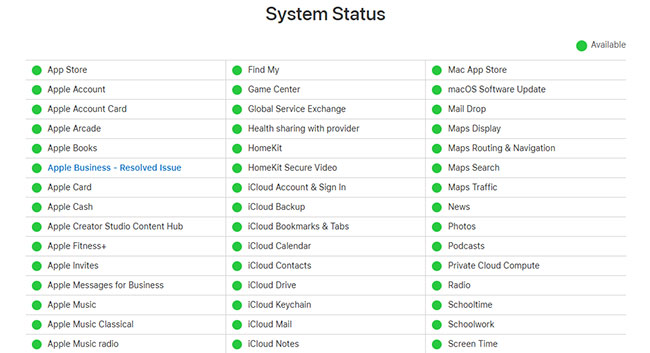
If several devices are showing the same error, or the problem continues even though your internet connection works normally, check Apple's System Status page for reported service disruptions. If multiple devices on different networks are affected, waiting and trying again later may be more useful than changing more settings.
Method 4: Force Restart Your iPhone
A force restart can clear a temporary iOS or Settings glitch that may be causing the update check to fail. It does not normally erase personal data. For most modern iPhones:
- Step 1. Quickly press and release Volume Up.
- Step 2. Quickly press and release Volume Down.
- Step 3. Press and hold the Side button until the Apple logo appears.

After the iPhone restarts, go to Settings > General > Software Update and try again.
Method 5: Check Beta Updates If the Error Started After Using a Beta
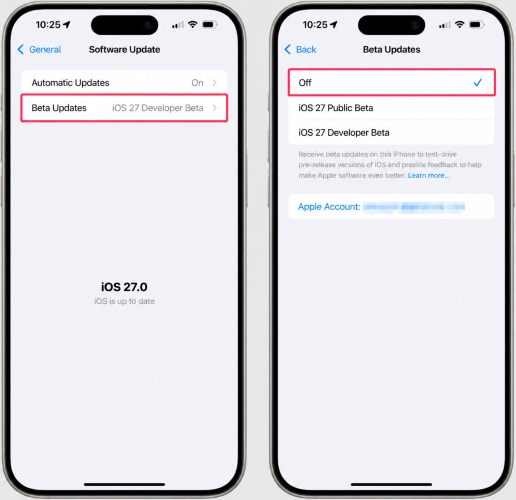
If the alert began after you joined, left, or switched an iOS beta channel, check Settings > General > Software Update > Beta Updates. If you previously used a beta but now want the public release of iOS 27, set Beta Updates to Off and check Software Update again. If you are intentionally installing a beta, make sure the correct beta channel is selected.
Note:
Turning Beta Updates off stops future beta updates. It does not downgrade an iPhone that is already running a newer beta version.
Method 6: Delete an Existing iOS Update File
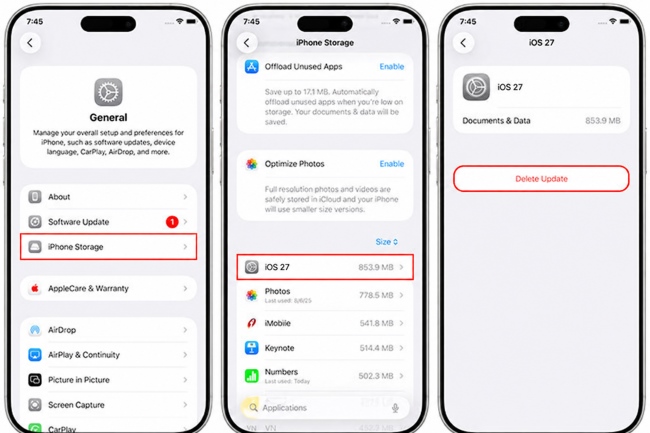
If the error continues across different networks, check whether an existing update package is already stored on the iPhone. Go to Settings > General > iPhone Storage. If an iOS update appears in the list:
- Tap the update.
- Choose Delete Update.
- Return to Settings > General > Software Update and try again.
Method 7: Update with Finder or Apple Devices
If Unable to Check for Update continues across different networks, try updating with a computer. This computer-based update uses a different path and may work when the on-device update check keeps failing. There is no need to restore the iPhone just because this alert appears. Try a normal update first.
- Step 1. Connect the iPhone to the computer with a USB cable.
- Step 2. Open Finder on Mac or Apple Devices on Windows. Use iTunes on an older system if needed.
- Step 3. Select the iPhone and click Check for Update.
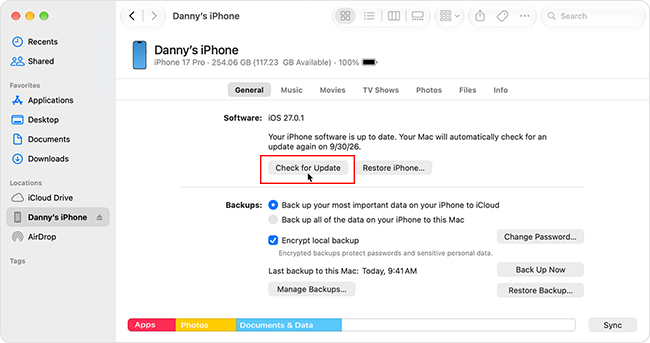
- Step 4. Choose Download and Update if an update is available.
Method 8: Repair Deeper iOS Issues with TunesKit
If the Unable to Check for Update error continues after standard troubleshooting, a deeper iOS system glitch may be the cause. TunesKit iOS System Recovery is a desktop utility designed to resolve common iOS and update errors. Its Standard Repair mode is designed to fix underlying system issues without erasing your existing data.
Key Features of TunesKit iOS System Recovery
TunesKit iOS System Recovery resolves the Unable to Check for Update iPhone error by repairing iOS system issues without data loss.
 600,000+ Downloads
Now let's follow these simple steps to fix unable to check for update on iPhone issue using this powerful repair tool.
Step 1 Launch TunesKit iOS System Recovery
Download and install TunesKit iOS System Recovery to your computer. Launch the program, and connect your iPhone to the computer via a USB cable. Select the iOS System Repair option on the main screen. Then click the Start button.

Step 2 Select Standard Repair
We recommend you choose Standard Repair in case of unknown system bugs on your phone. This mode can fix your iOS System bugs without data loss.

Step 3 Download Firmware Package
Confirm your device info and select the software verison from the list, then click the Download button.
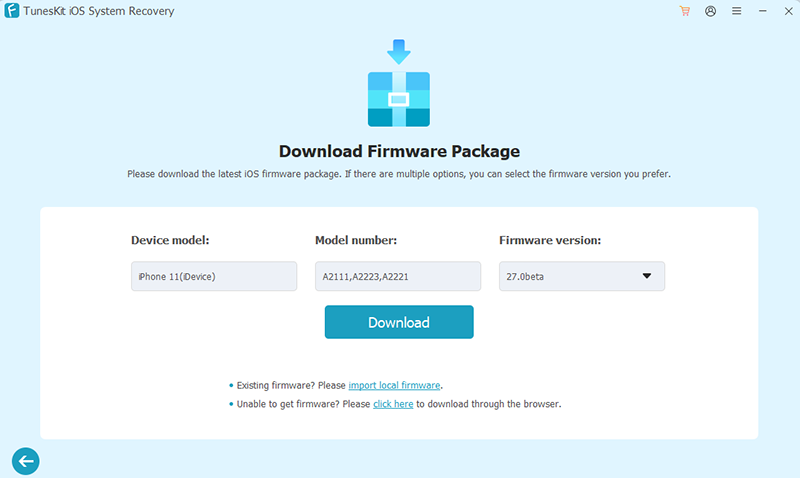
Step 4 Fix iPhone Unable to Check for Update
After that, you need to click the Start Standard Repair icon to start the process. When all is done, the latest iOS version is installed to your iPhone.

FAQs About Unable to Check for Update on iPhone
-
Why does Unable to Check for Update appear even though Wi-Fi works?
A working Wi-Fi connection does not always mean the iPhone can reach Apple's update services correctly. The problem may involve the network route, VPN or proxy settings, Apple services, or a temporary iOS issue.
-
Does Unable to Check for Update mean Apple's servers are down?
Not necessarily. Apple service problems can cause the alert, especially if several devices on different networks are affected. However, the same error can also come from a local network or iPhone software issue.
-
What is the difference between Checking for Update and Unable to Check for Update?
Checking for Update means the update check is still in progress. Unable to Check for Update means the request has already failed and iOS has returned an error.
-
Can I update my iPhone with a computer instead?
Yes. Use Finder on Mac or Apple Devices on Windows to check for and install the update if the on-device update check keeps failing.
Conclusion
The Unable to Check for Update alert indicates that your iPhone could not complete the update request. Start by retrying the update check, then test another network if the error returns. Move to a computer-based update if the problem continues. When standard troubleshooting does not work, TunesKit iOS System Recovery provides an alternative way to resolve potential iOS system glitches. If the device still fails to update, contact Apple Support for further diagnosis.
For issues at other stages of the installation, visit our iOS update troubleshooting center to find the matching guide.


