


Can't Delete Apps on iPhone? Solved Here!
When people update their iPhones, they often encounter some system glitches after the update. For instance, some users have reported that they can't delete apps on their iPhones when they update the iOS system to the latest version. This may not affect the normal use of the devices, but it's an irritating thing. If you are encountering the same problem, read on and check why this issue occurs, and find some useful solutions to fix can't delete apps on iPhone.

- Why Can't I Delete Apps on My iPhone?
- How to Fix Can't Delete Apps on iPhone
- Method 1: Check Content & Privacy Restrictions
- Method 2: Troubleshoot Stuck or "Waiting" Apps
- Method 3: Perform a Software Restart
- Method 4: Force Deletion via Storage Settings
- Method 5: Use the App Library Instead
- Method 6: Disable Stolen Device Protection (Temporary)
- Method 7: Reset All System Settings
- Method 8: Use TunesKit iOS System RecoveryHOT
- FAQs About Can't Delete Apps on iPhone
- Conclusion
Why Can't I Delete Apps on My iPhone?
Before trying any fixes, it's important to understand why you're unable to delete apps on your iPhone. Here are the most common reasons:
- 01 Some built-in apps cannot be deleted: While you can remove most third-party apps and even some pre-installed Apple apps, certain core apps—such as Phone, Messages, Settings, and Photos—cannot be deleted.
- 02 Screen Time restrictions are enabled: If Screen Time is turned on, app deletion may be restricted. This can happen if someone else set restrictions on your device or if you enabled them unintentionally.
- 03 MDM (Mobile Device Management) restrictions: If your iPhone is managed by a company, school, or organization, it may have MDM restrictions that prevent you from deleting certain apps.
- 04 System glitches after an iOS update: Occasionally, software bugs or update issues can interfere with normal functions, including deleting apps.
- 05 Apps are still downloading or offloaded: If an app is still installing, updating, or has been offloaded to save storage, you may not be able to delete it normally.
How to Fix Can't Delete Apps on iPhone?
Now that you understand the possible reasons why you can't delete apps on your iPhone, it's time to apply the right solutions. Depending on the cause, there are several simple and effective methods you can try to regain control and remove unwanted apps from your device. Let's walk through them step by step.
Method 1: Check Content & Privacy Restrictions
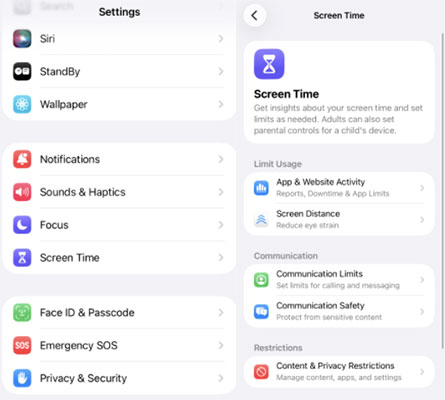
One of the most frequent reasons the "Delete App" option disappears is due to active Screen Time restrictions. Apple designed these settings to prevent accidental deletions, especially on devices used by children or managed by an organization. If this restriction is toggled on, the system-wide ability to remove any application is disabled, even if you are the device owner.
- Step 1. Launch the Settings app and navigate to Screen Time.
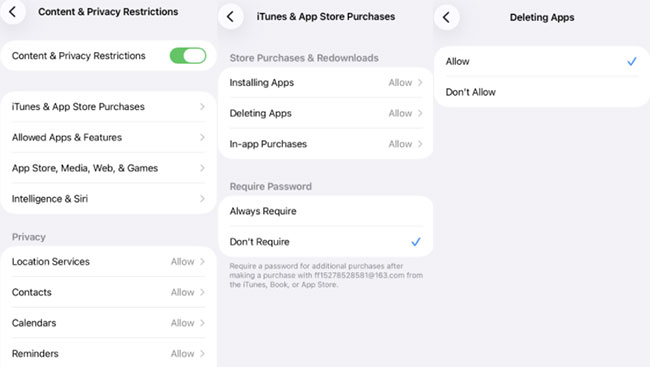
- Step 2. Tap on Content & Privacy Restrictions.
- Step 3. Select iTunes & App Store Purchases (you may be prompted for a Screen Time passcode).
- Step 4. Tap Deleting Apps and ensure the Allow option is selected.
Method 2: Troubleshoot Stuck or "Waiting" Apps
When an app is in the middle of an update or a fresh installation, it enters a "Waiting" state that can occasionally become frozen due to an unstable Wi-Fi connection or insufficient local storage. During this phase, the standard "Remove App" command is often unresponsive because the system is waiting for a server handshake that never completes.
- Step 1. Navigate to Settings > Wi-Fi and switch to a more stable network, or toggle Wi-Fi off and back on.
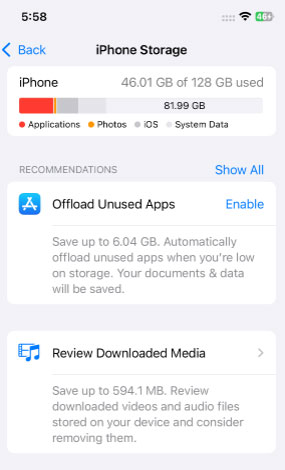
- Step 2. Check your available space by going to Settings > General > iPhone Storage to ensure your device isn't too full to process the update.
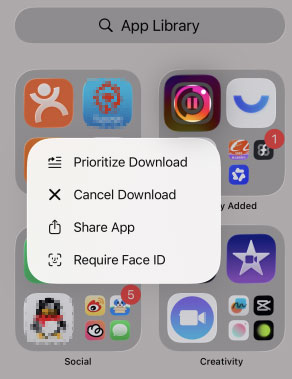
- Step 3. Long-press the "Waiting" icon and select Cancel Download to break the loop before attempting deletion.
Method 3: Perform a Software Restart
Minor software glitches in the "Springboard" (the iPhone's home screen interface) can sometimes cause the user interface to become unresponsive to long-press gestures. A full restart flushes the system cache and restarts all background processes, which often restores the hidden "Delete" menu that was suppressed by a temporary software bug.
- Step 1. Open the Settings app and select General.
- Step 2. Scroll to the very bottom and tap Shut Down.
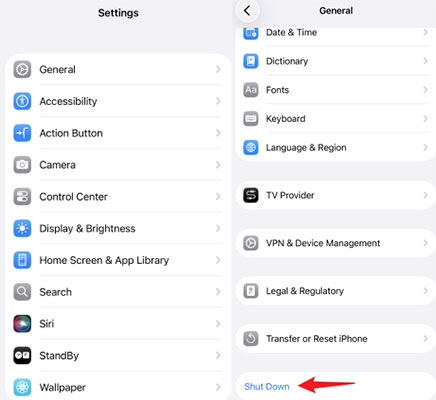
- Step 3. Drag the power-off slider to the right and wait 30 seconds for the hardware to fully cycle.
- Step 4. Press and hold the Side button until the Apple logo appears to reboot.
Method 4: Force Deletion via Storage Settings
If an app icon is "ghosted" on your home screen or simply refuses to trigger the pop-up menu, you can bypass the home screen entirely by using the system's internal storage manager. This method is highly effective because it communicates directly with the iPhone's file system to wipe the application's data packets and its associated icon.
- Step 1. Navigate to Settings > General > iPhone Storage.
- Step 2. Wait for the list of apps to populate, then scroll down and tap the specific app you want to remove.
- Step 3. Tap the red Delete App button at the bottom of the screen.
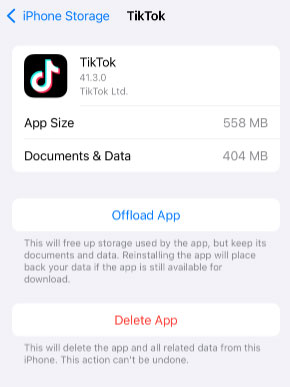
- Step 4. Confirm the deletion when the pop-up appears to permanently remove the app.
Method 5: Use the App Library Instead
Sometimes the bug is limited to the Home Screen layout. Moving to the App Library forces the system to show the full management menu.
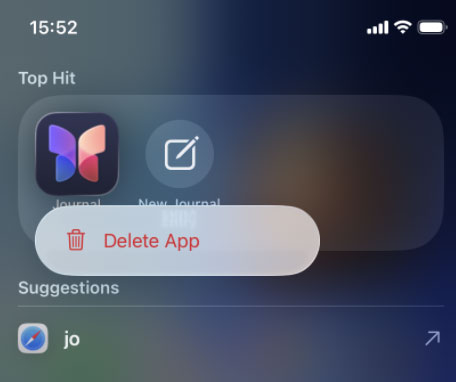
- Step 1. Swipe left past all your Home Screen pages until you reach the App Library.
- Step 2. Use the search bar to find the app you want to remove.
- Step 3. Long-press the icon and select Delete App.
Method 6: Disable Stolen Device Protection (Temporary)
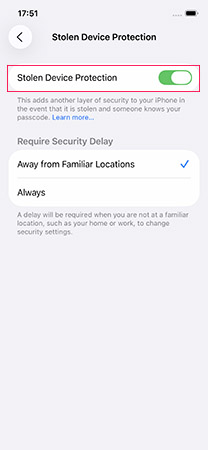
In iOS 26, if you are away from a "Familiar Location" (like your home or work), Stolen Device Protection may prevent significant system changes—including deleting certain core or security-linked apps—to protect your data.
- Step 1. Go to Settings > Face ID & Passcode.
- Step 2. Locate Stolen Device Protection and turn it off (this may require a one-hour security delay if you are in an unfamiliar location).
- Step 3. Try deleting the app again once the protection is disabled.
Method 7: Reset All System Settings
If none of the previous methods work, there may be a deep-seated configuration error within your iOS settings. Resetting all settings reverts your personalized preferences—such as network configurations, location permissions, and privacy toggles—back to their factory defaults. This is a "safe" reset, meaning it will not erase your photos, messages, or apps, but it will clear the software conflict preventing app deletion.
- Step 1. Go to Settings > General and scroll down to Transfer or Reset iPhone.
- Step 2. Tap Reset at the bottom of the screen.
- Step 3. Select Reset All Settings from the list of options.
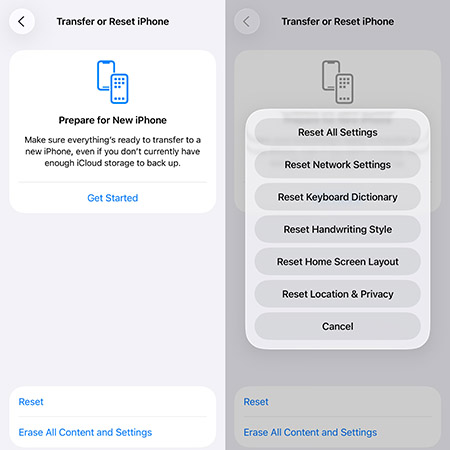
- Step 4. Enter your device passcode and confirm the reset; your iPhone will automatically restart once finished.
Method 8: Use TunesKit iOS System Recovery
If you can't delete apps from iPhone, you can try to fix your iOS system, because this issue is generally caused by some system glitches on your iPhone. In this case, using a professional iOS fixing program to repair your iPhone is a better choice for you. Here, I want to recommend TunesKit iOS System Recovery.
It is a dedicated and professional iOS fixing tool that can help you fix more than 150 system errors, like can't delete apps from iPhone, iPhone black screen, iPhone apps won't open, iPhone won't turn on, and more. Using this tool, you can fix your iPhone with only several steps, and don't need to worry about losing your data.

TunesKit iOS System Recovery
Quickly resolves issues that prevent apps from being deleted on your iPhone by fixing underlying system errors without risking your data.
 600,000+ Downloads
600,000+ Downloads
600,000+ Downloads
Step 1Connect Your iPhone to PC
The first thing you need to do is to make your iPhone connected to the PC. Then, launch TunesKit iOS System Recovery on your PC and wait for your iPhone to be detected. After that, you can move to the next page by tapping on the iOS System Repair button. Then click the Start button to continue.

Step 2Select Standard Repair
You will see two repair modes on the main interface, including Standard Repair and Deep Repair. Standard Repair is more recommended because you won't lose data with this mode.

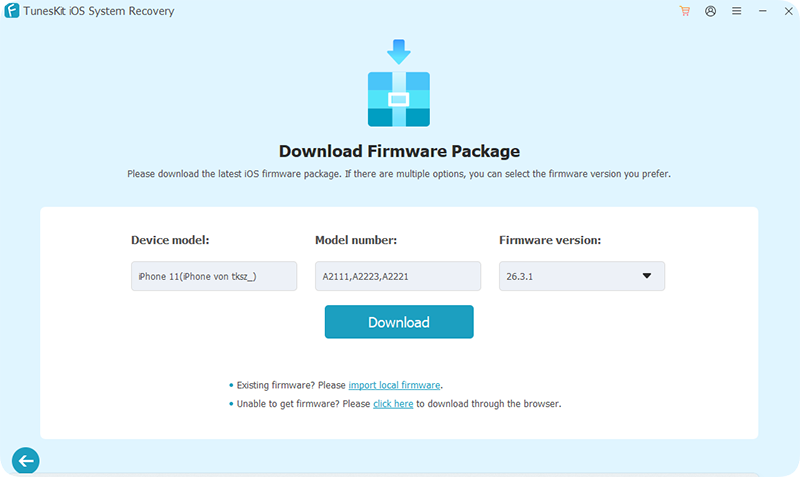
Step 3Download firmware package
Then, you can tap on the Download option to get the firmware package downloaded.
Step 4Fix can't delete apps from iPhone
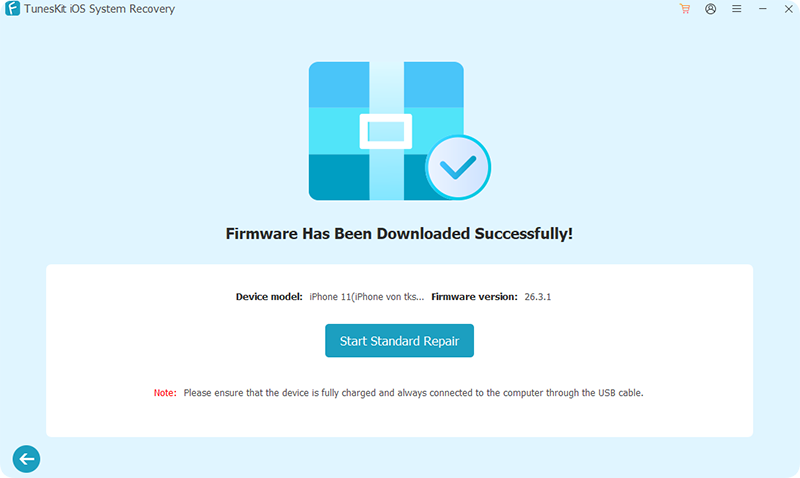
After the downloading is over, it's time for you to tap on the Start Standard Repair button to fix your iPhone. When the repairing process finishes, you can try to delete apps from your iPhone again.
FAQs About Can't Delete Apps on iPhone
-
Can I delete pre-installed Apple apps like Safari or Photos?
No, certain core system apps like Phone, Messages, Settings, and Photos cannot be deleted because they are essential to the iOS architecture. However, you can "Remove from Home Screen" to hide them in the App Library, or delete other built-in apps like Mail, Calculator, and Weather and re-download them later from the App Store.
-
Does deleting an app also cancel my paid subscription?
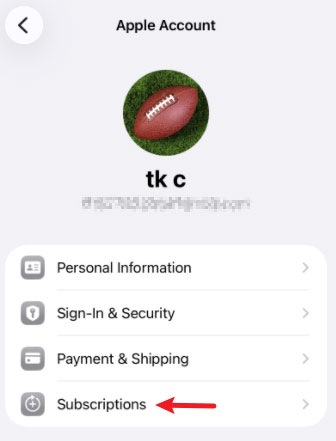
No. Deleting an app only removes the software and local data from your iPhone. Your billing is handled through your Apple Account.
To Cancel: Go to Settings > [Your Name] > Subscriptions to manage and cancel any recurring payments before deleting the app.
Conclusion
That's all for what you can do when you can't delete apps from iPhone. You are suggested to take one or more methods here to help you fix your device. If you often meet such system errors, TunesKit iOS System Recovery is a good choice for you. Then, using this tool, you don't need to worry about how to fix your iOS devices without losing your data.


