


Top 7 Methods – How to Fix 5G Not Working on iPhone
"Help! I bought a new iPhone 13 recently, but I can't use 5G network on this device. Why is my 5G not working on my iPhone? What can I do to fix 5G not working on iPhone 13?"
As we all know, 5G is the world's fastest wireless network technology now. Apple has also launched several models of iPhones that support 5G network, which allows users to experience faster network connection. However, some people complain at the forum that 5G doesn't work on their iPhones. In this article, we'll explore the common causes behind these issues and show you how to fix 5G not working on iPhone with practical, easy-to-follow solutions.

Why Is My 5G Not Working on My iPhone?
If 5G isn't working on your iPhone, it’s usually something simple—but there are a few possible causes. Here are the most common reasons.
- 01 Your iPhone model or carrier doesn't support 5G connectivity. You need to check if you meet the requirements of 5G before you fix it.
- 02 The SIM card you use is not 5G compatible. Some old SIM card don't allow your iPhone to use Wi-Fi network.
- 03 The region you are located in is unavailable for 5G. Although 5G covers almost all over the world, there are still some places unable to use 5G network.
- 04 Some system errors on your iPhone affect the 5G connection of it.
Simple Checks Before Fixing This Issue
Before you dive into complex software resets or hardware repairs, it is essential to rule out these foundational requirements.
- Confirm Device Compatibility. 5G is only available on iPhone 12 through iPhone 17 models and iPhone SE (3rd Gen or later). Older devices lack the necessary internal antennas.
- Check Local Coverage. Verify your carrier's 5G Coverage Map. In 2026, 5G signals can still be blocked by thick walls or limited in rural areas, forcing your phone to default to LTE.
- Audit Plan and SIM. Ensure your data plan specifically includes 5G. If you are using an old physical SIM, consider upgrading to an eSIM via settings to support the latest 5G Standalone (SA) bands.
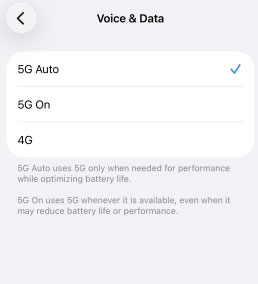
- Verify iOS 26 Settings. Go to Settings > Cellular > Cellular Data Options > Voice & Data. Ensure 5G On or 5G Auto is selected. Also, disable Low Data Mode, which can throttle 5G performance.
How to Fix 5G Not Working on iPhone
After understanding the common reasons why 5G may not be working on your iPhone, and having done the simple checks. The next step is to apply the right fixes. Fortunately, most 5G issues can be resolved quickly with a few simple adjustments to your settings or network. In the following section, we'll walk you through practical and effective methods to restore your 5G connection and get your iPhone back to optimal performance.
Fix 1: Enable "Allow More Data on 5G"
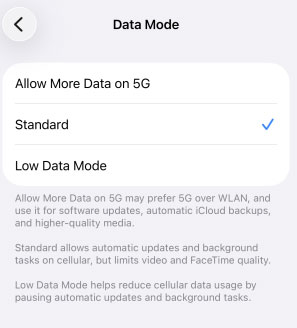
If 5G is active but apps won't update or high-quality video won't stream, your Data Mode is likely restricted. iOS 26 often defaults to "Standard" to save bandwidth, but "Allow More Data" is required for the fastest 5G experience.
- Step 1. Open Settings and tap Cellular.
- Step 2. Select Cellular Data Options > Data Mode.
- Step 3. Choose Allow More Data on 5G. This prioritizes 5G for system tasks and high-definition content.
Fix 2: Toggle Airplane Mode
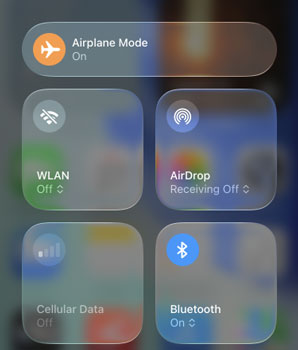
A quick toggle forces your iPhone to drop its current tower handshake and reconnect to the nearest high-speed 5G node. This is the most effective fix for "Ghost 5G," where the icon shows but data is stalled.
- Step 1. Swipe down from the top-right to open Control Center.
- Step 2. Tap the Airplane Mode icon to turn it on (wait 10 seconds).
- Step 3. Tap it again to turn it off and let your iPhone re-scan for 5G signals.
Fix 3: Disable Low Power Mode
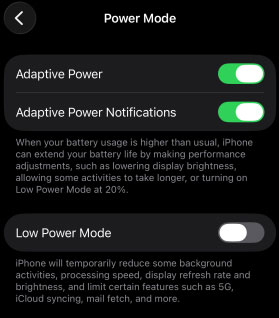
Low Power Mode (the yellow battery icon) is designed to save energy by disabling 5G Standalone and high-speed data. To get full 5G speeds, you must ensure your battery is sufficiently charged and this mode is off.
- Step 1. Go to Settings > Battery > Power Mode.
- Step 2. Toggle Low Power Mode to Off.
- Step 3. Alternatively, charge your iPhone above 80% to allow the system to re-enable 5G automatically.
Fix 4: Re-seat SIM or Refresh eSIM
Physical SIM cards can shift or accumulate dust, causing intermittent 5G "Detection Errors." If you use an eSIM, a simple restart replaces the "re-inserting" process by refreshing the digital credentials.
- Step 1. For physical SIMs: Use an ejector tool to remove the tray, wipe the card with a dry cloth, and re-insert it.

- Step 2. For eSIMs: Go to Settings > Cellular and toggle your "Cellular Plan" off and back on.
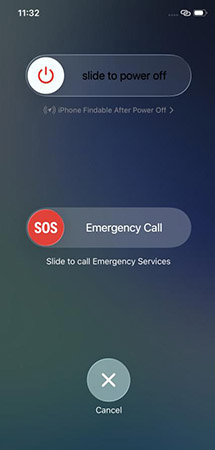
- Step 3. Restart your iPhone by holding the Side Button and Volume Up until the power-off slider appears. Drag the slider to the right to turn off your iPhone, wait a while, press the Side button to power on your iPhone.
Fix 5: Reset Network Settings
This is the "nuclear option" for software-related signal issues. It clears all cellular caches, Wi-Fi passwords, and Bluetooth pairings to fix deep-seated 5G configuration bugs in iOS 26.
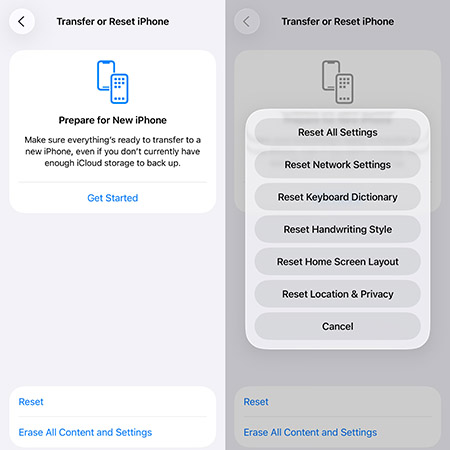
- Step 1. Navigate to Settings > General > Transfer or Reset iPhone.
- Step 2. Tap Reset and select Reset Network Settings.
- Step 3. Enter your passcode and confirm. Your iPhone will reboot with factory-default network configurations.
Fix 6: Use TunesKit iOS System Recovery
When you meet this 5G error on your iPhone, you are recommended to fix it with a professional iOS system fixing tool. That is TunesKit iOS System Recovery. As a powerful repair program, it is able to repair about 150 iOS system-related errors, such as iPhone 5G not working, SHSH host not working, iPhone stuck on black screen, iPhone won't turn on, etc.
Thanks to its straight interface and clear guidance, it's rather simple for you to fix your iOS devices with this program. More importantly, you won't lose your data if you choose Standard Repair. Standard Repair can help you fix almost all of system errors you encounter.

TunesKit iOS System Recovery
TunesKit iOS System Recovery offers a one-click solution to fix iPhone 5G issues by repairing underlying system glitches without data loss.
 600,000+ Downloads
600,000+ Downloads
600,000+ Downloads
Step 1Connect iPhone to PC
First of all, please download and run TunesKit iOS System Recovery on your personal computer. Then, plug your iPhone into the computer via a fitted cable. Then, choose the iOS System Repair option to the next page when your iPhone is detected. And click the Start button to move on.

Step 2Choose Standard Repair
In this step, you will be asked to choose a mode to repair your iPhone. Select Standard Repair that enables you to fix your iPhone without losing data. If the Standard Repair doesn't work, you need to turn to Deep Repair after saving your data.

Step 3Download firmware package
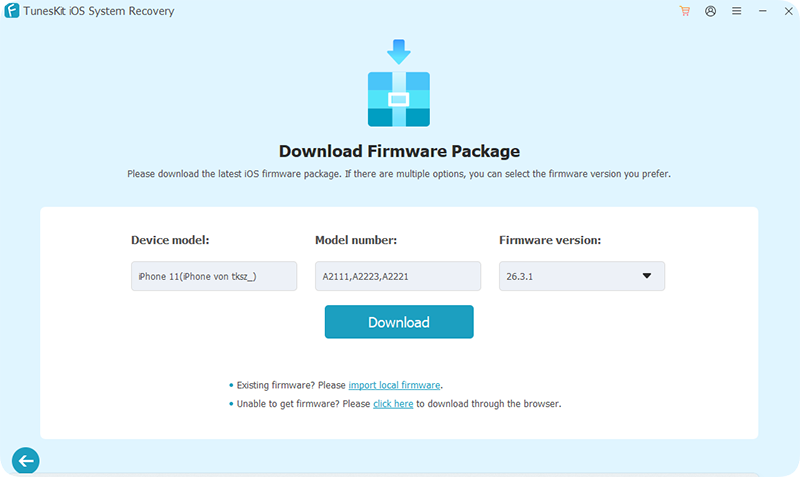
Now, you need to check whether the on-screen device information is matched with your iPhone. Then, hit on the Download button to initiate the downloading process of the firmware package.
Step 4Fix 5G not working on iPhone
Click the Start Standard Repair button, TunesKit iOS System Recovery will begin to fix your iPhone when the downloading process is finished. After that, your iPhone will be able to connect to 5G network successfully.

Fix 7: Contact Apple Support for Professional Help
If you have exhausted all software fixes and your 5G is still not working, the issue may be hardware-related, such as a faulty Apple C2 modem or a damaged internal 5G antenna. In this case, reaching out to Apple's technical experts is the most reliable final step. Visiting an authorized service provider can resolve complex connectivity bugs without the risk of data loss from a factory reset.
- Step 1. Open the Apple Support app on your iPhone or visit the official Apple Support website to start a chat or call.
- Step 2. Use the "On-device Diagnostics" tool if prompted; this allows Apple to scan your 5G modem for hardware failure.
- Step 3. If a repair is needed, book a Genius Bar appointment. Bringing your iPhone to a specialist ensures you get an official diagnostic report and keeps your warranty or AppleCare+ coverage intact.

Related FAQs About iPhone 5G Not Working
-
How to check if I am using 5G?
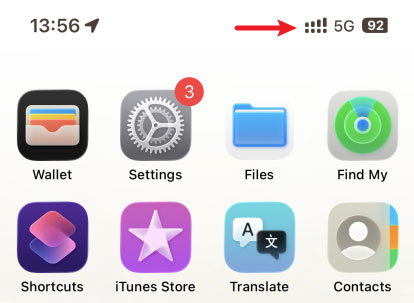
It's not hard for you to see what kind of network your iPhone is using. Go to the Home screen, and then check the status bar in the top-right corner. If you see 5G, 5G E, 5G+, 5G UW, or 5G UC in the status bar, it means that your iPhone is using 5G network.
-
How to turn on iPhone data roaming when it's connected to 5G?
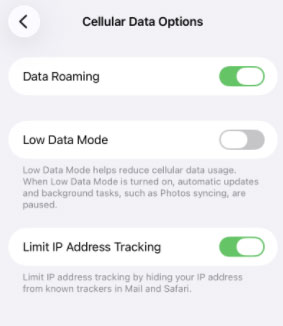
You need to first ensure that your data plan and location support data roaming. Then, navigate to Settings > Cellular, and then choose Cellular Data Options. Next, turn on the toggle next to Data Roaming.
-
Does using 5G drain my battery faster on iOS 26?
Yes, but the impact is decreasing. Recent 2026 benchmarks show that while 5G uses about 15–25% more power than Wi-Fi, the gap between 4G and 5G is now minimal thanks to the Apple C2 modem efficiency.
Use 5G Auto (Smart Data Mode). It automatically switches to LTE when 5G speeds won't provide a "noticeably better experience," saving significant battery life. -
What is the difference between 5G, 5G+, and 5G UC?
These icons indicate the type of 5G you are connected to:
5G: Standard low-band 5G (broad coverage, similar to 4G speeds).
5G+ / 5G UW / 5G UC: High-frequency "Mid-Band" or "mmWave" 5G. These provide the "lightning-fast" gigabit speeds you expect from next-gen networks.
5G SA: If you see this in your Field Test Mode, you are on a Standalone network, which offers the lowest latency and best battery efficiency.
The Bottom Line
After reading this post, you must have learned more about 5G not working on iPhone and how to fix it. All solutions listed above are effective and proven. If what you want is an easy and efficient method to fix this 5G issue, we recommend you to try TunesKit iOS System Recovery. This advanced tool can help you deal with almost all common system-related errors on your iOS device without data loss.


