


iPhone Clicking on Its Own? 8 Fixes for Ghost Touch
Is your iPhone opening apps or typing messages without you even touching the screen? This frustrating and uncanny glitch is commonly known as "ghost touch". When your screen starts clicking on its own, it can easily lead to accidental phone calls, deleted data, or unwanted in-app purchases.
Fortunately, you don't have to live with a possessed device. Read on to discover exactly why your iPhone keeps pressing things on its own and the exact steps you can take to fix it fast.

Why Is My iPhone Glitching and Pressing Random Things?
If your iPhone is glitching and pressing random things, it could be due to several hardware and software issues. Below are the most common reasons.
- Dirty or Wet Screen: Dust, grease, or water droplets on your iPhone's screen can interfere with touch sensitivity, causing it to behave erratically.
- Faulty or Poor-Quality Screen Protector: A low-quality or misaligned screen protector may interfere with touchscreen sensitivity, leading to unintended touches.
- iOS Software Glitch or Bug: A iOS system bug can cause random screen interactions, especially after a recent update.
- Touchscreen Hardware Damage: If your iPhone was dropped, the screen may have developed a loose connection or suffered internal damage, causing iPhone clicking on its own.
- Water or Moisture Damage: Water exposure can short-circuit the touchscreen sensors, causing ghost touches. Even minor humidity or condensation inside the device can trigger this issue.
How to Fix iPhone Clicking on Its Own? [8 Methods]
Knowing why this problem occurs, the following are 8 proven ways to fix the iPhone clicking or typing on its own. Without further delay, let's get started!
Try TunesKit iOS System Recovery
Safely fix iPhone clicking on its own without data loss! It's a powerful desktop tool that repairs deep-rooted iOS firmware errors.
 600,000+ Downloads
Way 1. Clean the Display
People tend to overlook this simple first step. It might just be sweat droplets or skin oils wreaking havoc on your iPhone's screen sensors, mimicking an internal hardware failure. You would only need a quick wipe to solve all the problems in that case.
- Step 1. Prepare a soft, lint-free microfiber cloth to safely clean your display.
- Step 2. Slightly dampen the cloth with water and gently wipe the screen to remove any smudges, oils, or debris without damaging the surface.
- Step 3. Test your iPhone's touch screen to see if the random clicking has stopped.

Way 2. Remove the Screen Protector
Screen protectors are excellent for preventing cracks, but a damaged, misaligned, or low-quality protector can easily interfere with your display's touch sensitivity. Keep in mind that peeling off a glass screen protector will usually ruin the protector itself, so you will likely need to purchase a replacement.
- Step 1. Carefully peel off your current screen protector, starting gently from one of the corners.
- Step 2. Wipe down the newly exposed screen with a microfiber cloth to remove any leftover adhesive or trapped dust.
- Step 3. Test your device to see if the erratic clicking is finally resolved.

Way 3. Inspect for Water Damage
Water exposure can easily short-circuit your display's internal sensors and trigger a ghost touch. If you suspect liquid damage, avoid using heat sources like hair dryers, and instead check your device's internal moisture sensor.
- Step 1. Eject your SIM card tray to locate the Liquid Contact Indicator (LCI) slot on the side of your iPhone.
- Step 2. Shine a flashlight into the opening to see if the indicator has turned from white or silver to red.
- Step 3. Contact Apple Support or a professional technician if the LCI is red, as this confirms liquid has breached the device.

Way 4. Force Restart Your iPhone
A simple restart often clears out the temporary software bugs causing your screen to click on its own. If the ghost touch prevents you from using the normal slide-to-power-off screen, you will need to force restart your device.
For iPhone 8, X, 11, 12, 13, 14, 15, and newer models:
- Step 1. Quickly press and release the Volume Up button.
- Step 2. Quickly press and release the Volume Down button.
- Step 3. Press and hold the Side power button until the screen goes black and the Apple logo appears.
 Note:
Note:
For iPhone 7, hold the Volume Down and Power buttons simultaneously. For iPhone 6s and earlier, hold the Home and Power buttons.

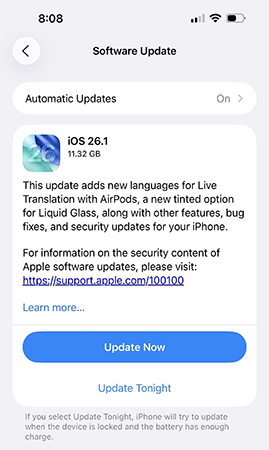
Way 5. Update Your iOS Version
Apple frequently releases iOS updates to patch known bugs, including those that cause touchscreen glitches. If a widespread software flaw is causing your ghost touch, installing the latest update is often the quickest fix.
- Step 1. Open the Settings app on your iPhone, tap General, and select Software Update.
- Step 2. Tap Update Now (or Download and Install) if a newer version of iOS is available.
- Step 3. Wait for the installation to finish and check if the ghost touch issue is resolved once your device restarts.
Way 6. Repair the iOS System Using a Recovery Tool
If you are dealing with persistent software bugs causing erratic screen behavior, utilizing a dedicated repair tool is highly recommended. TunesKit iOS System Recovery is a one-stop solution designed to repair Apple devices directly from your computer. It can eliminate ghost touch and resolve 150+ other iOS system errors without compromising your personal data.
This software is incredibly user-friendly and requires absolutely no technical expertise to operate.
- Step 1. Download and launch the TunesKit iOS System Recovery application on your computer, then connect your glitching iPhone using a USB cable.
- Step 2. Select iOS System Repair and then Standard Repair mode to ensure your data remains intact during the process.

- Step 3. Verify your device information on the screen, correct any mismatched details using the dropdown menus, and click Download to fetch the appropriate firmware package.
- Step 4. Click Repair once the firmware is ready, and the software will automatically begin fixing the internal errors causing your screen to click on its own.
Way 7. Reset All Settings on iPhone
Resetting your iPhone's settings to their factory defaults can eliminate deep-rooted software conflicts causing your screen to glitch. This process restores your network, display, and privacy preferences without deleting any of your personal photos, messages, or apps.
- Step 1. Open the Settings app on your iPhone, tap General, and scroll down to select Transfer or Reset iPhone.
- Step 2. Tap Reset at the bottom of the screen, then choose Reset All Settings from the pop-up menu.
- Step 3. Enter your device passcode and tap Reset All Settings again to confirm and begin the process.

Way 8. Perform a Factory Reset
If a standard settings reset fails to eliminate the ghost touch, a full factory reset is your last software resort. This complete wipe resolves any deeply embedded system corruption that might be causing your iPhone screen to click on its own.
Make sure you back up all your data first, as this process will permanently erase everything on your device.
- Step 1. Open the Settings app, tap General, and scroll down to select Transfer or Reset iPhone.
- Step 2. Tap Erase All Content and Settings at the bottom of your screen.
- Step 3. Follow the on-screen prompts to enter your passcode and confirm the total erasure of your device.

FAQs About iPhone Clicking on Its Own
-
Is my iPhone hacked if it is pressing random things?
It is highly unlikely. While malware exists, random screen tapping is almost exclusively a symptom of hardware damage or a localized software glitch, not a remote hacker controlling your device.
-
Does ghost touch go away on its own?
In some cases, ghost touch may resolve itself after a software update or a simple restart. However, if it's caused by a hardware issue (like screen damage), it will likely persist or worsen over time, requiring professional repair.
-
Is ghost touch covered under Apple warranty?
If your iPhone is still under Apple's standard warranty or AppleCare+, a repair or replacement may be covered, especially if the issue is due to a manufacturing defect. However, if the damage is accidental (e.g., a cracked screen), you may have to pay for repairs.
Conclusion
Next time when your friend complains to you that "why is my iPhone doing things on its own?" Simply follow the ways above, there's a chance to repair this annoying issue.
By using TunesKit iOS System Recovery, your iPhone will have a higher chance of successfully being repaired, as well as providing better safety and security. If you feel confused or aren't able to follow the process, contact us for technical support services by leaving your comments below.


