


iMessage Not Syncing Between iPhone and Mac? 7 Ways to Fix It
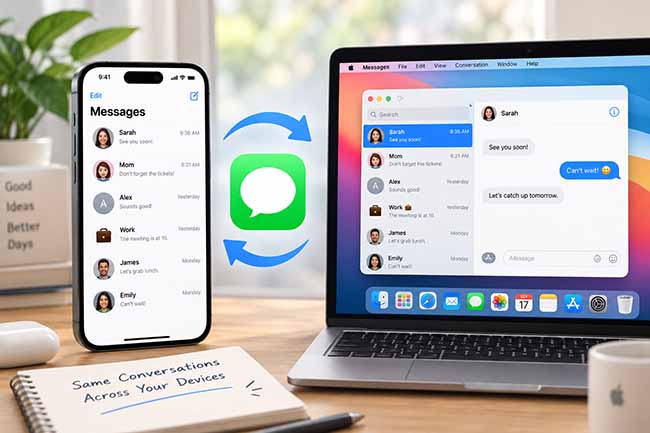
When iMessage is working properly, your conversations can stay up to date across your iPhone and Mac when both devices use the same Apple Account. However, you may sometimes notice that new messages appear on your iPhone but not on your Mac, older conversations are missing, or messages take a long time to sync.
If iMessage is not syncing between your iPhone and Mac, the issue may be related to your Apple Account, iMessage settings, Messages in iCloud, or the network connection. This guide covers 7 practical ways to get your messages syncing normally again.
- Why Are My iMessages Not Syncing Between iPhone and Mac
-
How to Fix iMessage Not Syncing Between iPhone and Mac
- Method 1. Check Your Apple Account and iMessage Send & Receive Settings
- Method 2. Turn On Messages in iCloud and Sync Messages
- Method 3. Check Text Message Forwarding
- Method 4. Turn iMessage Off and Back On
- Method 5. Restart Your iPhone and Mac
- Method 6. Update iOS and macOS
- Method 7. Repair Possible iOS Issues with TunesKit iOS System Recovery HOT
- The Bottom Line
Why Are My iMessages Not Syncing Between iPhone and Mac
If your iMessages are not syncing between your iPhone and Mac, the issue is usually related to account settings, iCloud syncing, network conditions, or message configuration. Common causes include:
- 01 Your iPhone and Mac are using different Apple Accounts. iMessage syncing works best when both devices are signed in with the same Apple Account.
- 02 Messages in iCloud is disabled. If Messages in iCloud is turned off on either device, your conversations may not stay updated across your iPhone and Mac.
- 03 Your Send & Receive settings don't match. Different phone numbers or email addresses selected for iMessage can cause some conversations to appear on only one device.
- 04 Your Mac is not receiving SMS, MMS, or RCS messages from your iPhone. Some messages are sent through your carrier rather than iMessage, so they may not automatically appear on your Mac under certain settings.
- 05 One of your devices has an unstable internet connection. iMessage and iCloud syncing depend on an active internet connection, so network problems can delay or interrupt synchronization.
- 06 iCloud syncing is delayed. A large message history, many attachments, limited iCloud storage, or temporary Apple service issues can make syncing take longer than expected.
- 07 Your iPhone or Mac software is outdated. Older versions of iOS or macOS may sometimes cause compatibility or syncing problems with Messages.
How to Fix iMessage Not Syncing Between iPhone and Mac
If iMessage is not syncing between your iPhone and Mac, start by checking your account and Messages settings before moving on to system-level troubleshooting. Try the following methods in order.
Method 1. Check Your Apple Account and iMessage Send & Receive Settings
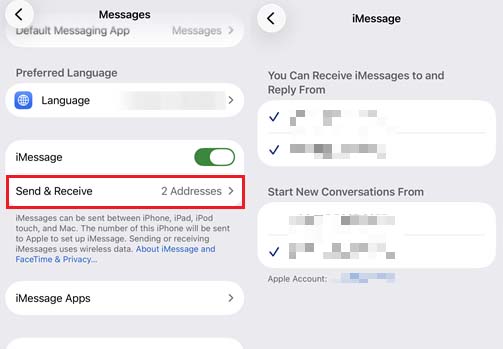
Your iPhone and Mac should use the same Apple Account for iMessage. You should also make sure that the same phone number and email addresses are enabled for receiving messages on both devices.
On iPhone:
- Step 1. Open Settings > Apps > Messages.
- Step 2. Tap Send & Receive.
- Step 3. Check the Apple Account shown on the screen and make sure your phone number and preferred email addresses are selected.
On Mac:
- Step 1. Open the Messages app.
- Step 2. Click Messages > Settings > iMessage.
- Step 3. Make sure you're signed in to the same Apple Account used on your iPhone and check the phone number and email addresses available for iMessage.
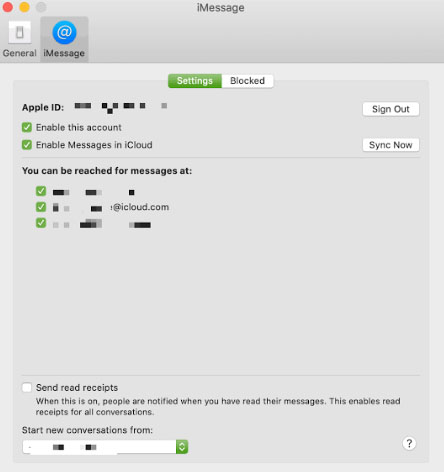
If the two devices are using different accounts or addresses, some conversations may appear on only one device.
Method 2. Turn On Messages in iCloud and Sync Messages
Messages in iCloud keeps your message history updated across Apple devices signed in to the same Apple Account. If it is disabled on one device, your conversations may not stay synchronized.
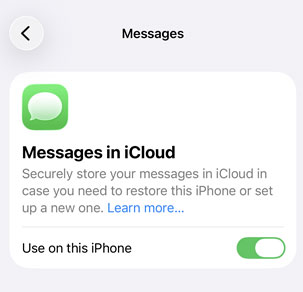
On iPhone:
- Step 1. Open Settings and tap your name.
- Step 2. Go to iCloud > Messages. If you don't see Messages, tap See All under the Saved to iCloud section.
- Step 3. Turn on Use on this iPhone.
On Mac:
- Step 1. Open Messages > Settings > iMessage.
- Step 2. Check the box to Enable Messages in iCloud.
- Step 3. Click Sync Now if you want your Mac to immediately check for messages stored in iCloud.
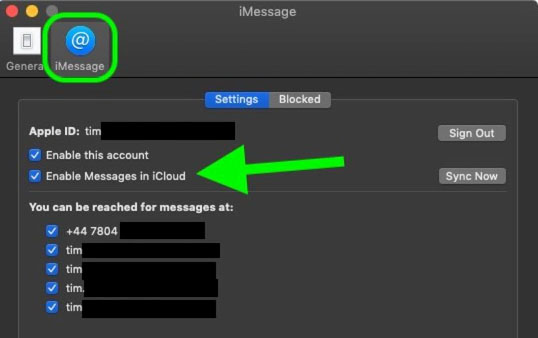
Keep both devices connected to the internet while the messages are syncing. A large message history or many attachments may take some time to appear across devices.
Method 3. Check Text Message Forwarding
If iMessages sync correctly but green-bubble SMS, MMS, or RCS messages are missing from your Mac, check Text Message Forwarding option.
- Step 1. On your iPhone, open Settings > Apps > Messages.
- Step 2. Tap Text Message Forwarding.
- Step 3. Find your Mac and turn it on.
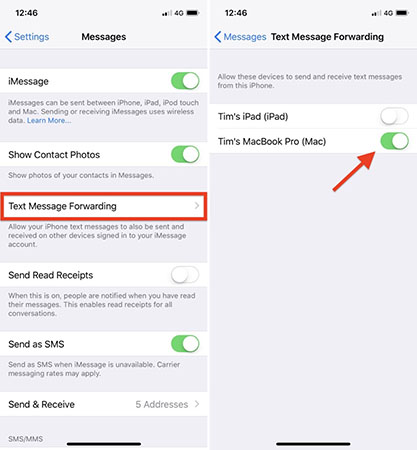
Make sure your iPhone and Mac are signed in to the same Apple Account. If you're already using Messages in iCloud, Apple includes text message forwarding as part of that feature, so you usually don't need to configure it separately.
Method 4. Turn iMessage Off and Back On
If your account and syncing settings are correct but new iMessages still aren't appearing on both devices, restarting the iMessage service may clear a temporary activation or connection issue.
On iPhone:
- Step 1. Go to Settings > Apps > Messages.
- Step 2. Turn off iMessage.
- Step 3. Wait briefly, then turn iMessage back on.
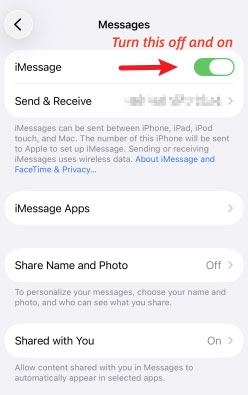
After iMessage is activated again, check Send & Receive to make sure your phone number and Apple Account information are still selected correctly.
Method 5. Restart Your iPhone and Mac
Temporary software or network processes can sometimes interrupt Messages syncing. Restarting both devices gives iMessage and iCloud services a fresh connection.
To restart your iPhone for different models, here's how:
- For iPhone with Face ID, press and hold the Side button and either Volume button, drag the power-off slider, and then hold the Side button to turn it on.
- For iPhone with Home button, press and hold the Side button until the power-off slider appears. Drag the slider to turn off your iPhone, then wait about 30 seconds. After the device turns off completely, press and hold the Side button again until the Apple logo appears.
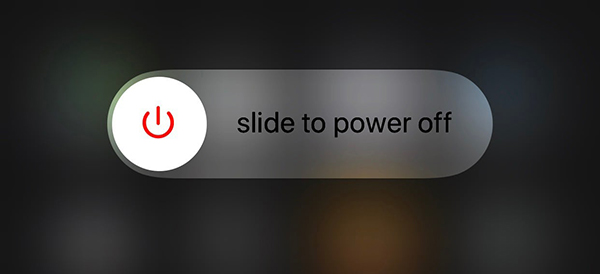
You can also go to Settings > General > Shut Down.
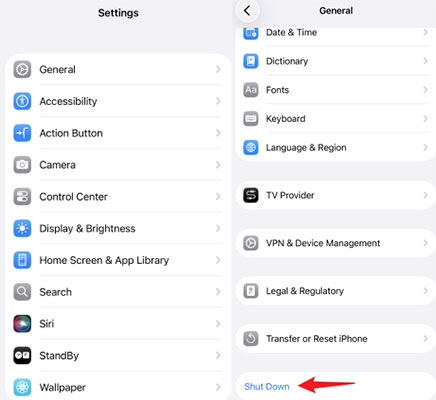
To restart your Mac: Click the Apple menu > Restart.

After both devices restart, open Messages and give them a moment to reconnect and sync.
Method 6. Update iOS and macOS
If the syncing issue started after a software change or persists despite correct Messages settings, check whether updates are available for both devices. Software updates can include bug fixes and improvements for built-in services such as Messages and iCloud.
On iPhone: Go to Settings > General > Software Update, then tap the Update Now button to install an available update.
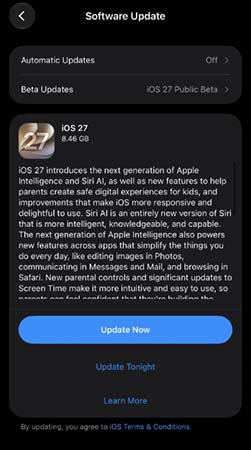
On Mac: Open System Settings > General > Software Update and check for an available macOS update.

After updating, restart the devices and check Messages again.
Method 7. Repair Possible iOS Issues with TunesKit iOS System Recovery
If you've checked the Apple Account, Messages in iCloud, Send & Receive settings, network connection, and software updates but iMessage still fails to sync properly, the problem may involve an iOS system glitch on the iPhone. In this situation, you can try TunesKit iOS System Recovery. It is designed to repair iOS system problems on iPhone and iPad and supports the latest iOS versions. It can also fix other iOS issues like iPhone stuck on Hello screen, AirDrop not working, and iPhone software update failed, etc.
For this type of issue, start with Standard Repair, which is designed to repair common iOS problems while keeping existing data. Deep Repair is intended for more serious system problems and erases the data on the device, so it should only be considered when necessary.
Key Features of TunesKit iOS System Recovery
Fix iMessage not syncing between iPhone and Mac caused by iOS bugs without data loss & Repair other common iOS and iPadOS system problems
 600,000+ Downloads
Let's see the detailed tutorial in fixing iMessage not syncing between iPhone and Mac.
Step 1. Connect Your iPhone to TunesKit
Launch TunesKit iOS System Recovery on your Windows PC or Mac. Connect your iPhone to the computer with a USB cable. Choose iOS System Repair from the main interface, and then click Start.
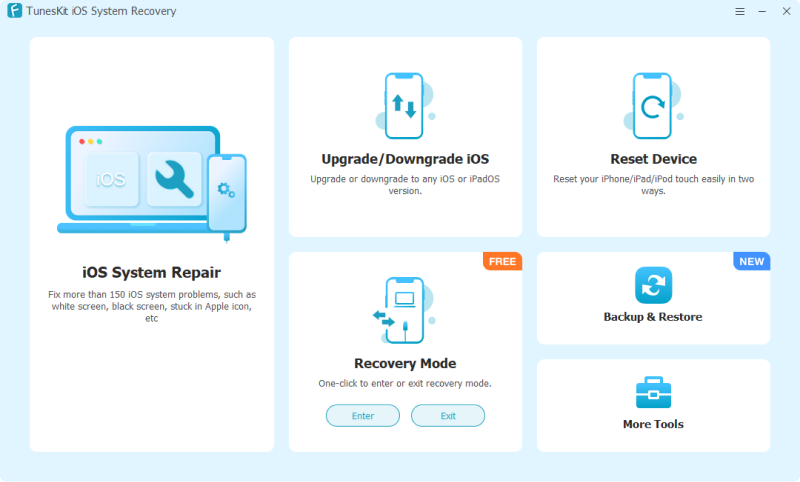
Step 2. Choose Standard Repair
Select Standard Repair first. This mode is designed for common iOS system issues and keeps your existing iPhone data during the repair process.

Step 3. Download Firmware Package
Confirm that TunesKit has detected the correct iPhone model and firmware information. Then click Download to get the firmware package required for the repair. Keep your iPhone connected to the computer while the firmware is being downloaded and verified.
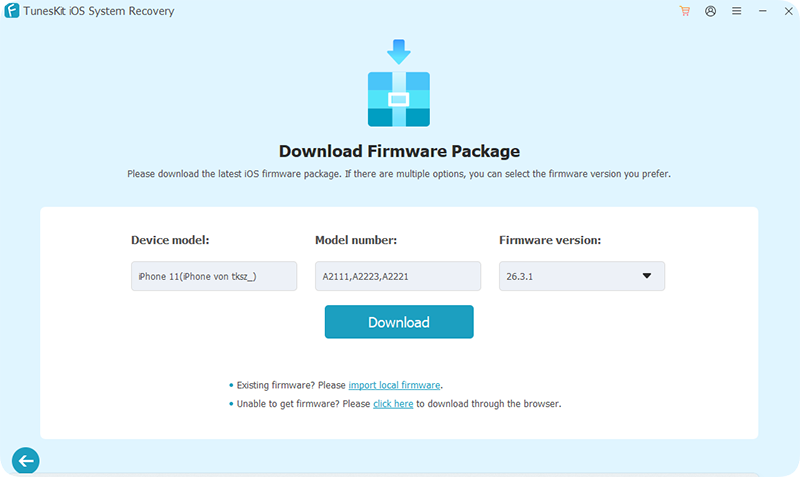
Step 4. Repair the iOS System
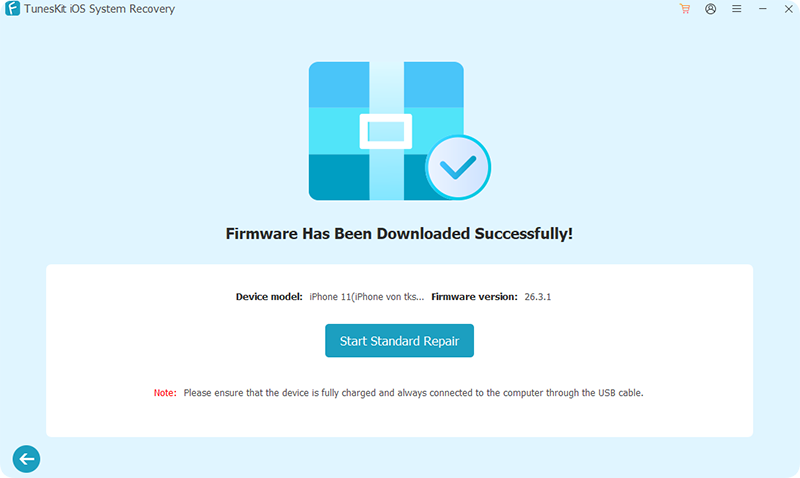
Once the firmware package is ready, click Start Standard Repair to start repairing the iOS system. Keep the iPhone connected until the process is complete. Finally, TunesKit iOS System Recovery will fix your iPhone after downloading, and the iMessage will sync between iPhone and Mac normally.
The Bottom Line
If iMessage is not syncing between your iPhone and Mac, check your Apple Account, iCloud, Messages settings, network connection, and software updates first. If the problem continues and appears to be related to an iOS system glitch, TunesKit iOS System Recovery can be used as an additional troubleshooting option, with Standard Repair designed to fix common iOS issues without data loss.