


iPhone Bricked? How to Fix a Bricked iPhone Without Losing Data
A bricked iPhone may stay on a black screen, get stuck on the Apple logo, keep restarting, or enter Recovery Mode repeatedly. This can happen after an iOS update, beta installation, failed restore, or system crash. In many cases, the iPhone is only soft-bricked, which means it may still be fixed.
This guide shows why it happens and how to fix a bricked iPhone safely, starting with low-risk methods first.

| Problem | Best First Fix |
|---|---|
| iPhone black screen | Charge it, then force restart |
| iPhone stuck on Apple logo | Wait first, then force restart |
| iPhone keeps restarting | Try Standard Repair or Recovery Mode Update |
| iPhone stuck in Recovery Mode | Update with Finder, Apple Devices, or iTunes |
| iPhone bricked after iOS update | Force restart, then use Recovery Mode Update |
| iPhone bricked after iOS 27 beta | Check the iOS 27-specific guide for no-power issues |
- What Does a Bricked iPhone Mean?
- Why Your iPhone May Become Bricked
-
How to Fix a Bricked iPhone [8 Methods]
- Fix 1. Wait If the iPhone Is Still Updating
- Fix 2. Charge Your iPhone and Check the Cable
- Fix 3. Force Restart Your iPhone
- Fix 4. Fix Bricked iPhone Without Data Loss Using TunesKit iOS System Recovery HOT
- Fix 5. Update iPhone in Recovery Mode with Finder, Apple Devices, or iTunes
- Fix 6. Restore Your iPhone If Update Fails
- Fix 7. Try DFU Mode Restore as the Last Software Fix
- Fix 8. Free Up Storage If Your iPhone Can Still Start
- Bricked iPhone After iOS 27 Beta Update?
- FAQ About Bricked iPhone
- Final Thoughts
What Does a Bricked iPhone Mean?
A bricked iPhone means the device cannot start or work normally. It may look "dead," but the cause is not always hardware damage. There are two main types of bricked iPhone problems: soft-bricked iPhone and hard-bricked iPhone.
A soft-bricked iPhone is usually caused by a software problem, such as a failed update, system crash, or beta installation error. This is the more common case and is often fixable.
A hard-bricked iPhone is more serious. It may have no charging response, fail to show the Apple logo after a force restart, or remain undetected by Finder, Apple Devices, or iTunes. This can be caused by hardware damage, battery failure, liquid damage, or deeper firmware issues.
Why Your iPhone May Become Bricked
A bricked iPhone can happen for several reasons. Understanding the cause can help you choose the right fix.
- Failed iOS Update: If an iOS update is interrupted, the system may fail to boot. This can happen because of weak Wi-Fi, low battery, low storage, or a damaged update file.
- iOS Beta Bugs: Beta software is made for testing. It may contain bugs that cause black screen, boot loop, Apple logo stuck, or Recovery Mode problems. This is more likely when installing an early iOS beta version.
- Low Storage: If your iPhone storage is almost full, the system may not have enough space to complete an update or restart normally.
- Battery or Charging Problems: A fully drained battery, bad cable, damaged adapter, dirty charging port, or battery health problem can make your iPhone look bricked.
- App or System Crash: An app conflict, system crash, or corrupted iOS file can freeze your iPhone or cause repeated restarts.
- Hardware Damage: If your iPhone was dropped, exposed to water, or physically damaged, the issue may not be software-related.
How to Fix a Bricked iPhone [8 Methods]
Here, you'll learn 8 ways to fix a bricked iPhone step by step. To protect your data, try charging, force restart, Standard Repair, and Recovery Mode Update before using Restore or DFU Mode. First, let's watch a video tutorial.
Fix 1. Wait If the iPhone Is Still Updating
If your iPhone is stuck on the Apple logo with a progress bar, it may still be installing or restoring iOS. Large updates can take longer than expected, especially after a major iOS update or beta installation.
Wait for at least 30 minutes if the progress bar is still moving. Do not disconnect the iPhone or force restart it too early.
Fix 2. Charge Your iPhone and Check the Cable
If your iPhone shows a black screen or no response, the battery may be fully drained. Sometimes, an iPhone can take several minutes to show the charging icon after deep battery drain.
- Step 1. Connect your iPhone to a wall charger via an original or certified cable.
- Step 2. Charge the device for at least 30–60 minutes.
- Step 3. If it doesn't work, try another charger and cable. Don't forget to check the charging port for dust or debris.

Fix 3. Force Restart Your iPhone
A force restart can refresh the system when your iPhone is frozen, stuck on the Apple logo, or not responding. It does not erase your data.
-
For iPhone 8 or Later
Step 1: Quickly press and release the Volume Up button.
Step 2: Quickly press and release the Volume Down button.
Step 3: Press and hold the Side button until the Apple logo appears. -
For iPhone 7 or iPhone 7 Plus
Step 1: Press and hold the Volume Down button and the Side button at the same time.
Step 2: Keep holding both buttons until the Apple logo appears. -
For iPhone 6s or Earlier
Step 1: Press and hold the Home button and the Side or Top button at the same time.
Step 2: Keep holding both buttons until the Apple logo appears.

If your iPhone restarts normally, the issue may only be a temporary system freeze. If it returns to the same screen, try the next method.
Fix 4. Fix Bricked iPhone Without Data Loss Using TunesKit iOS System Recovery
If your iPhone is stuck on the Apple logo, black screen, boot loop, Recovery Mode, or frozen screen after an iOS update, the issue may be related to the iOS system. In this case, you can consider using an iOS system repair tool after basic fixes fail.
TunesKit iOS System Recovery provides a Standard Repair mode for common iOS system problems. This mode is designed to fix many system issues without erasing your iPhone data. The software is easy to use and provides a clear on-screen instruction.
- Step 1. Install and open TunesKit iOS System Recovery on your computer. Connect your iPhone with a USB cable. Choose iOS System Repair and click Start.
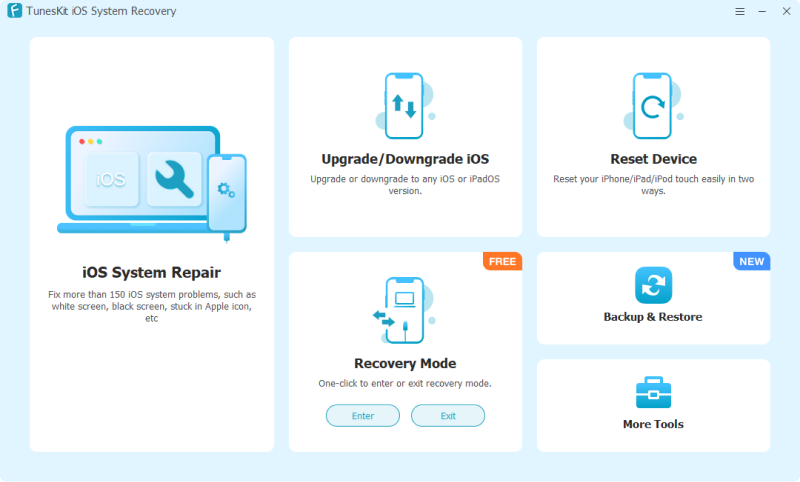
- Step 2. Select Standard Repair if you want to fix common iOS system issues without losing data. Follow the on-screen instructions to put your iPhone into Recovery Mode or DFU Mode if needed.

- Step 3. Check the device information and download the matching firmware package. Click Start Standard Repair and keep your iPhone connected until the process is complete.
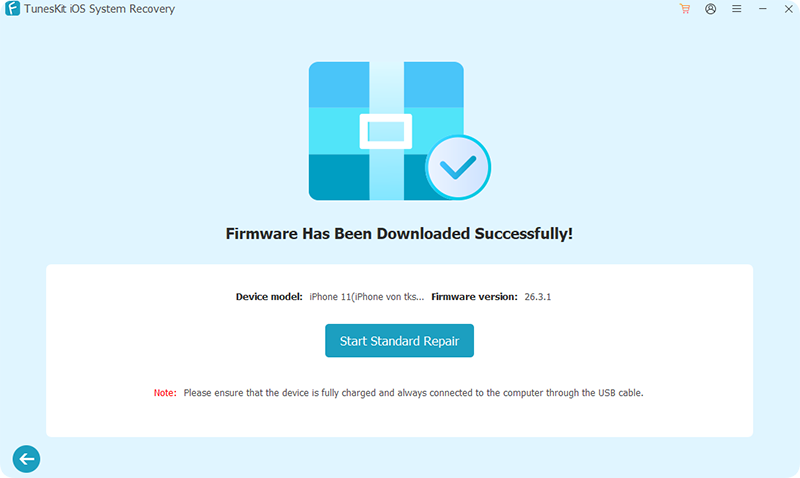
After the repair, your iPhone should restart. Check whether it can boot normally, exit Recovery Mode, or pass the Apple logo screen.
 Note
Note
Deep Repair is for more serious iOS problems and may erase your iPhone. Try Standard Repair first if you want to keep data.
Fix 5. Update iPhone in Recovery Mode with Finder, Apple Devices, or iTunes
If your iPhone is still bricked, you can put it into Recovery Mode and update it with a computer. Use Finder on Mac, Apple Devices app on Windows, or iTunes on older macOS or Windows without Apple Devices.
When your computer detects the iPhone, you may see two options: Update and Restore. Choose Update first. This tries to reinstall iOS without erasing your data. If Update fails, you may need to choose Restore.
- Step 1. Connect your iPhone to a computer. Open Finder, Apple Devices, or iTunes.
- Step 2. Put your iPhone into Recovery Mode. For iPhone 8 or later, quickly press and release Volume Up. Quickly press and release Volume Down. Press and hold the Side button. Keep holding until the Recovery Mode screen appears.
- Step 3. When your computer detects the iPhone, choose Update first. Wait for the process to finish. Do not disconnect your iPhone.
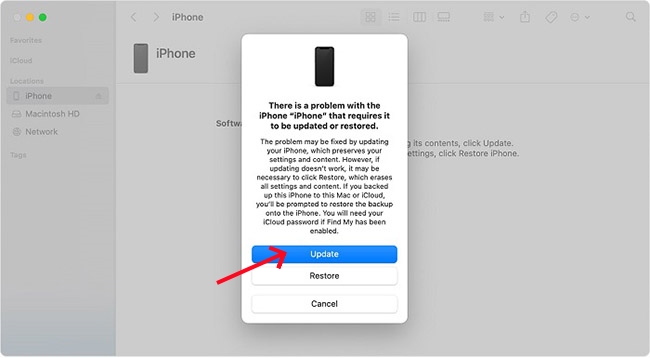
If the update takes too long and your iPhone exits Recovery Mode, repeat the steps and try again.
Fix 6. Restore Your iPhone If Update Fails
If Recovery Mode Update cannot fix the bricked iPhone, you may need to restore the device. Restore can fix deeper software problems, but it erases your iPhone. After the restore, you can set up the device again and restore data from an iCloud or computer backup.
- Step 1. Connect your iPhone to a computer. Open Finder, Apple Devices, or iTunes on the computer.
- Step 2. Put your iPhone into Recovery Mode manually or use the one-click Enter/Exit Recovery Mode feature in TunesKit iOS System Recovery.
- Step 3. When your computer detects the iPhone, choose Restore. After it's done, restore your iPhone from a backup.
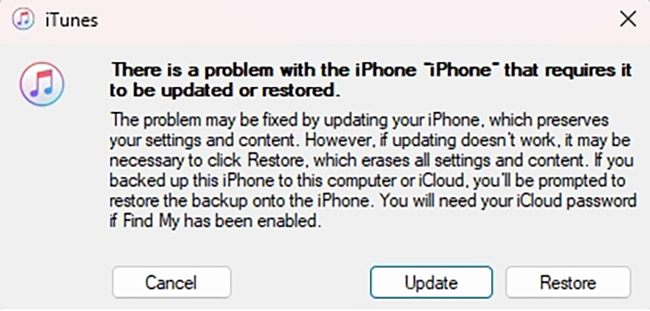
Use Restore only when:
- Recovery Mode Update fails
- iPhone still cannot boot
- iPhone stays in a boot loop
- iPhone returns to Recovery Mode repeatedly
- You have a backup or accept data loss
Note
If your iPhone was running a beta version, remember that a backup made on a newer beta may not restore to an older public iOS version. For the safest result, use a backup created before you installed the beta.
Fix 7. Try DFU Mode Restore as the Last Software Fix
DFU Mode is a deeper restore mode than Recovery Mode. It can help when Recovery Mode does not work, but it is more advanced and usually erases the iPhone.
- Step 1. Connect your iPhone to a computer with a reliable USB cable. Then open Finder on Mac, Apple Devices on Windows, or iTunes if you are using an older setup.
- Step 2. Put your iPhone into DFU Mode. For iPhone 8 or later, quickly press and release Volume Up. Quickly press and release Volume Down. Press and hold the Side button until the screen turns black. When the screen goes black, hold the Side button and Volume Down button together for about 5 seconds. Release the Side button, but keep holding the Volume Down button for about 10 seconds. If the screen stays black and your computer detects an iPhone in recovery mode, the device is in DFU Mode.
- Step 3. Once the computer detects your iPhone, follow the on-screen prompt and choose Restore iPhone. This will reinstall iOS and erase the device. After the restore, you can set up your iPhone again and restore your data from an iCloud or computer backup if available.
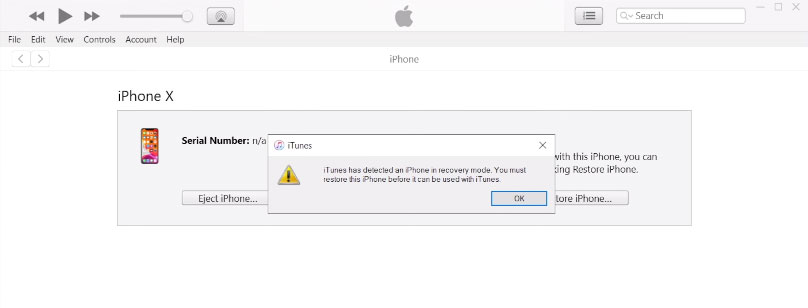
Use DFU Mode only if:
- Recovery Mode fails
- Finder, Apple Devices, or iTunes can still detect the iPhone
- You are comfortable with advanced steps
- You have backed up your data or accept data loss
If DFU Mode fails or your computer cannot detect the device at all, stop trying software fixes and contact Apple Support.
Fix 8. Free Up Storage If Your iPhone Can Still Start
Low storage can cause update failures, freezing, and slow startup. If your iPhone can still open Settings, free up storage before trying another update. Try to keep several gigabytes of free space before installing a major iOS update.
- Step 1. Go to Settings > General > iPhone Storage.
- Step 2. Delete unused apps, remove large videos or downloads, or clear app caches if possible.
- Step 3. Delete old iOS update files. Restart your iPhone and try the update again.

Note
This method only works if your iPhone can still boot sometimes. If your iPhone is completely black or cannot start at all, skip this fix.
Bricked iPhone After iOS 27 Beta Update?
Some users may describe their device as "bricked" after installing iOS 27 beta. In many cases, it may not be a permanent hardware failure. It may be a black screen, failed beta update, boot loop, deep battery drain, Apple logo stuck, or Recovery Mode loop.
If your iPhone seems bricked after iOS 27 beta, try these steps first:
- Charge the iPhone for at least 30 minutes.
- Force restart the device.
- Try Recovery Mode Update with Finder, Apple Devices, or iTunes.
- Use TunesKit iOS System Recovery Standard Repair if the issue is system-related.
- Restore or downgrade only if other methods fail.
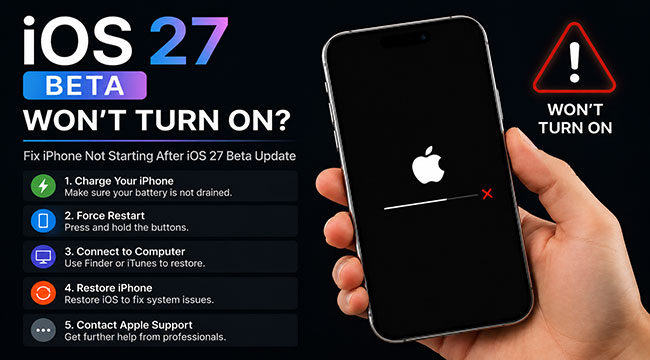
If your main issue is that your device will not power on after installing iOS 27 beta, read our full guide on iOS 27 beta won't turn on for more specific fixes.
FAQ About Bricked iPhone
-
Can I fix a bricked iPhone without losing data?
It depends on the problem. Force restart, charging, Recovery Mode Update, and TunesKit Standard Repair may help without erasing data. Restore and DFU Mode usually erase the iPhone.
-
Is my iPhone really bricked if it shows a black screen?
Not always. A black screen may be caused by deep battery drain, system freeze, display issue, or failed update. Charge the iPhone first, then try a force restart.
-
What should I do if my iPhone is bricked after an iOS update?
Wait if the update is still installing. If the iPhone is frozen, charge it, force restart it, and try Recovery Mode Update. If it still cannot boot, you can consider Standard Repair or Restore.
-
Can TunesKit fix a bricked iPhone?
Yes. TunesKit iOS System Recovery can be used for many software-related iOS problems, such as Apple logo stuck, black screen, Recovery Mode loop, boot loop, and failed update. It cannot fix hardware damage, battery failure, or devices that cannot be detected at all.
-
Will restoring a bricked iPhone erase data?
Yes. Restore and DFU Mode usually erase your iPhone. Try charging, force restart, Recovery Mode Update, or Standard Repair first if you want to keep data.
-
When should I contact Apple Support?
Contact Apple Support if your iPhone has no charging response, cannot be detected by a computer, cannot enter Recovery Mode or DFU Mode, or may have hardware damage.
Final Thoughts
A bricked iPhone is not always permanently damaged. If the problem is caused by iOS software, you may still fix it with charging, force restart, Recovery Mode Update, or a system repair tool.
Start with low-risk methods first. If your iPhone is stuck on the Apple logo, black screen, boot loop, or Recovery Mode, TunesKit iOS System Recovery can be one possible option after basic fixes fail.
Restore and DFU Mode may erase your iPhone, so use them carefully. If your iPhone has no charging response, cannot be detected by a computer, or may have hardware damage, contact Apple Support.